Is Dollar-Cost Averaging Still the Best Way to Buy Bitcoin?
Bitcoin has swung 44% in three months yet sits 25% below where it stood a year ago, and the strategy most newcomers swear by may actually cost them more than they realize depending on one factor few consider.

This post may contain links from our sponsors and affiliates, and Flywheel Publishing may receive compensation for actions taken through them.

When we talk about dollar-cost averaging in Bitcoin, we mean consistently investing a fixed amount into Bitcoin (CRYPTO: BTC) on a regular schedule, such as every Friday or on the first of each month, regardless of the price. This approach is often recommended for crypto newcomers.
In an episode of The Pomp Podcast from August 2026 featuring NBA champion Tristan Thompson, who buys Bitcoin every day, he summarized the advice succinctly: “Don’t worry about the price.”
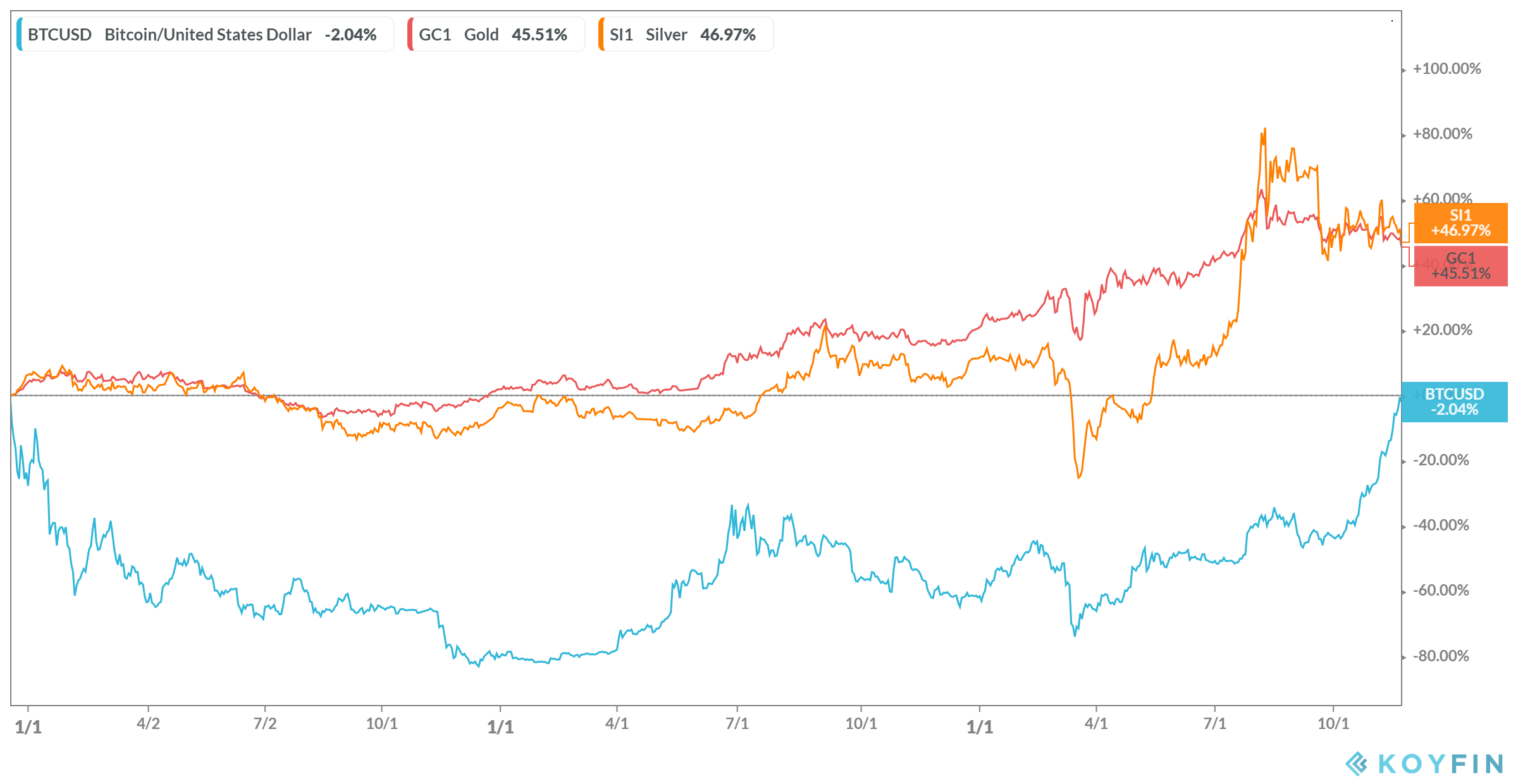
However, Bitcoin’s volatility tests that advice. While it has climbed 44% in just three months, it remains down about 25% year over year and trades near $83,070 as of September 30, 2026—about 34% below its October 2025 peak of $126,080. So, is dollar-cost averaging still the optimal way to accumulate Bitcoin despite these dramatic price swings?
Dollar-Cost Averaging Protects Bitcoin Buyers From One Bad Entry
Investing all your money in Bitcoin at once means your returns depend on the price at that single moment. Conversely, a buyer who spreads investments over a year averages out many prices, reducing the risk that a poorly timed purchase affects the overall outcome.
This method also helps remove emotional decision-making. Retail investors often jump in after big price increases and hesitate when prices drop. A fixed investment plan helps keep the focus on consistent buying, independent of market hype or fear.
However, there is a downside. Research from Vanguard shows that lump-sum investing outperformed dollar-cost averaging about two-thirds of the time, primarily because markets tend to rise more often than they fall. Money waiting for its turn can lose potential gains, as later entries may buy at higher prices. Dollar-cost averaging doesn’t guarantee profits, as a structured approach can still lead to losses in various market conditions.
Bitcoin’s Swings Cut Both Ways for Scheduled Buyers

During Bitcoin’s recent 44% rally, each scheduled investment bought less Bitcoin than earlier buys. So, someone who lumped all their money in at the start of the rally would have fared better than a dollar-cost averaging buyer.
On the other hand, the drop since Bitcoin’s record high worked in favor of those using a scheduled buying approach. This method allowed them to accumulate more Bitcoin at lower prices. However, all those purchases will stay “underwater” until Bitcoin climbs back above the prices paid. In fact, Bitcoin needs to rebound by about 52% to reclaim its previous record, though purchases made lower in the decline could return to profit well before that.
Even a single day’s price change can influence a buyer’s results. For example, on September 28, Bitcoin fluctuated between $82,581 and $84,945, so a buyer’s final price depended on exactly when their order was executed.
A 5.17% Treasury Yield Changes the Math for Lump-Sum Buyers
While cash is typically held for dollar-cost averaging, cash investments have recently paid off well. On September 25, the 10-year U.S. Treasury yielded 5.17%, while Bitcoin itself earns no interest.
This high yield makes the podcast’s claim harder to justify. While the podcast suggested Bitcoin outperforms most yields, Bitcoin’s return depends entirely on price movement. Over the past year, Bitcoin has declined by 25%, while a 10-year U.S. government bond now yields 5.17%.
For those considering a lump-sum investment, a higher yield reduces the cost of waiting. Cash held between purchases earns about 5%, meaning that spreading out a lump sum over a few months loses less potential gain than it would have when cash yields were near zero. If yields decline in the future, the cost of waiting to invest may rise.
Is Dollar-Cost Averaging Still the Best Way to Buy Bitcoin?
For most individuals, dollar-cost averaging remains a solid strategy for buying Bitcoin, especially for those who invest through paychecks or who might panic-sell after market downturns. This method eliminates the burden of decision-making by sticking to a predetermined schedule.
However, individuals with a large sum to invest often benefit more from investing it all at once. Also, anyone who needs access to their funds within a year or two should rethink investing in Bitcoin, regardless of strategy.
One key drawback of dollar-cost averaging is that it keeps buying during market declines, which underscores the importance of setting a reevaluation point. If Bitcoin successfully climbs back above $126,080—roughly 52% higher—then all purchases made during the downturn may return to profit.
On the other hand, if Bitcoin’s one-year performance remains negative, continuing a scheduled buying plan could still lead to further losses, so buyers should stay informed about price trends.
Contact [email protected] for any questions or corrections.
Sam Daodu is a crypto analyst who's spent nearly a decade making blockchain understandable—no easy task when most whitepapers read like fever dreams. He writes for 24/7 Wall St., covering Bitcoin, altcoins, and crypto market analysis for investors. Before crypto, he was a tech writer (back when explaining "the cloud" was peak innovation). Since 2018, he's written for CoinTelegraph, Yahoo Finance, The Block, Cryptonews, Zypto, Rain, and more—basically anywhere people want crypto news without the headache. Sam runs MacLabs Marketing, a content agency for crypto brands tired of sounding like AI wrote their website. He also publishes free crypto education on his site for Web3 enthusiasts who think "gas fees" is a typo. When he's not writing or staring at charts, Sam's either: - Watching anime (currently convinced One Piece has better tokenomics than most altcoins) - At the gym sculpting himself into a Greek god - Listening to the music your mum warned you only bad boys listen to Connect: LinkedIn | Email | MacLabs Marketing