XRP Ledger Stablecoin Supply Rose 8% in a Week and Is $50 Million From Passing Avalanche
Stablecoin supply on the XRP Ledger surged this week, putting it within striking distance of overtaking Avalanche, but the rally may say more about one company's minting decisions than it does about real demand for XRP.

This post may contain links from our sponsors and affiliates, and Flywheel Publishing may receive compensation for actions taken through them.

The stablecoin supply on the XRP Ledger, which underpins XRP (CRYPTO:XRP), increased by about 8% in the week leading up to October 6, 2026. During this time, roughly $100 million in dollar-pegged tokens were added, bringing the total to $1.31 billion, according to data from DefiLlama, a resource that tracks cryptocurrency values across blockchains.
This increase leaves the XRP Ledger just $74 million short of Avalanche (CRYPTO:AVAX), which holds $1.39 billion in stablecoins and ranks just ahead at 11th place. Unlike the XRP Ledger, Avalanche’s stablecoin total hardly changed during the same week.
While the XRP token itself moved little, trading at $1.51 as of October 6 (down 0.6% for the week and about 49% over the past year), the growth in stablecoin supply raises questions. Does this uptick indicate rising demand for XRP, or is it a number that may not mean much for holders?
What XRP Ledger Stablecoin Supply Measures and What It Misses

Stablecoins are cryptocurrencies designed to maintain a steady value, typically equal to one U.S. dollar, backed by reserves like cash or short-term government debt. The total stablecoin supply on a blockchain represents the total value of these tokens issued on that network or transferred from another blockchain.
Analysts watch stablecoin supply because it indicates how much money is available for payments and trading on the network. A larger supply suggests more funds are ready to be used, but DefiLlama counts tokens sitting idle in wallets the same as those actively traded. So, an increase in stablecoin supply could mean higher transaction activity, or it could mean more money is just sitting around.
In addition, this figure is distinct from the value of each blockchain’s native cryptocurrency. Currently, XRP’s market value is approximately $95 billion, while Avalanche’s AVAX token has a market cap of about $5 billion. These figures reflect the coins’ trading values, while the stablecoin totals represent dollars stored on these networks.
Ripple’s RLUSD Makes Up 93% of XRP Ledger Stablecoins

Recent growth in stablecoins on the XRP Ledger is driven largely by one issuer—Ripple’s RLUSD—which makes up about 93% of the total stablecoin supply, or roughly $1.22 billion. Valtorum USD accounts for about $73 million, while USDC holds approximately $5 million.
When Ripple issues more RLUSD, it causes the total supply to rise, irrespective of whether new users are entering the market. Notably, the stablecoin supply has increased by 16.5% over the last 30 days, likely reflecting Ripple’s own decisions to mint more tokens.
Smaller networks can also show significant percentage growth from relatively modest dollar amounts. For instance, Tempo’s stablecoin supply doubled over the week to about $738 million, and Arc’s rose 14% to around $532 million, according to DefiLlama’s rankings.
Why XRP’s Price Isn’t Following the Stablecoin Growth
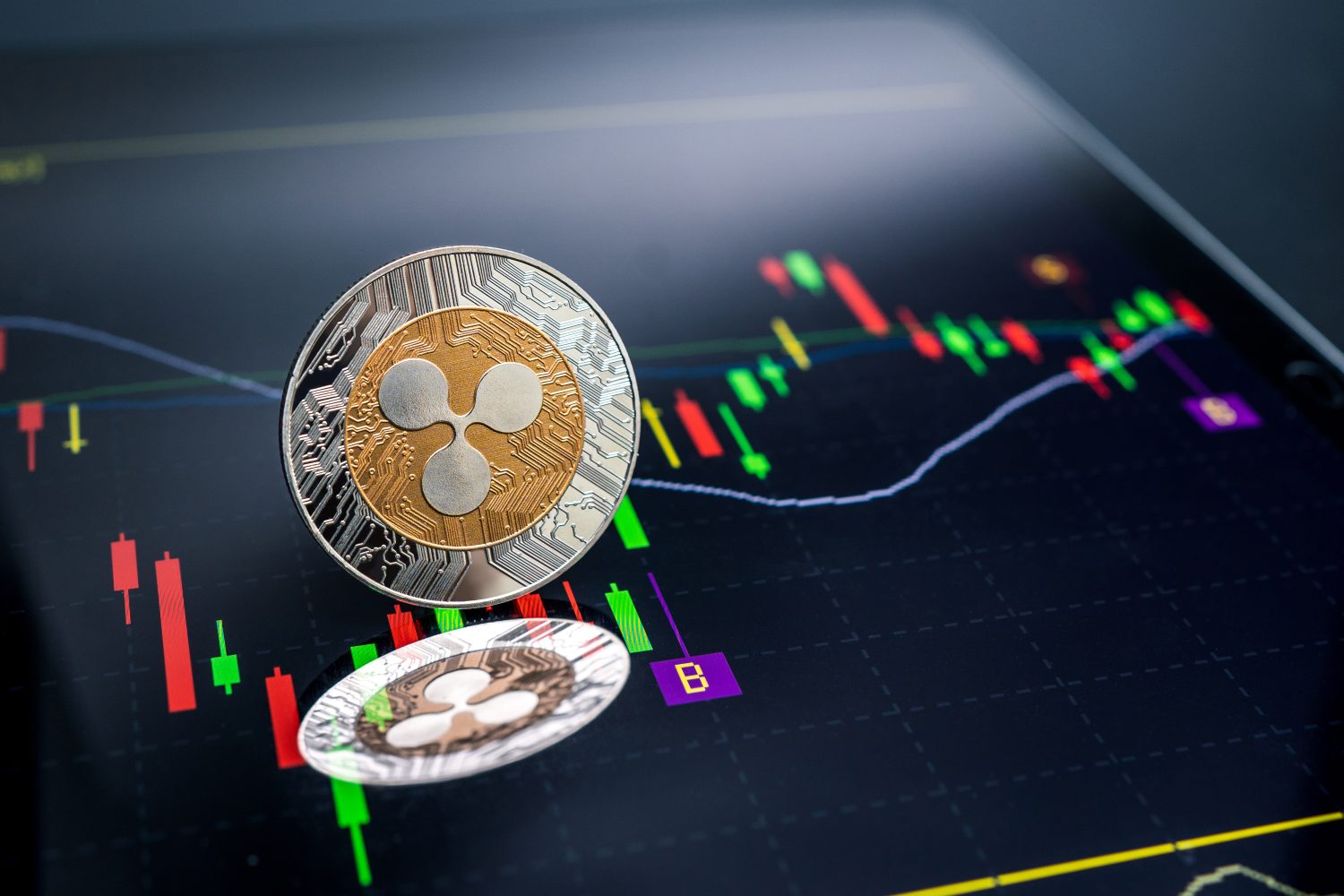
Stablecoin holders on the XRP Ledger hold tokens that represent dollars, not XRP itself. Users typically need only small amounts of XRP to cover transaction fees and meet the ledger’s account reserve requirement of 1 XRP, so a large stablecoin supply can move through the network without significantly affecting demand for XRP.
This division is evident in recent trends. While the XRP Ledger’s stablecoin supply climbed by 8%, XRP’s price fell by 0.6%. In contrast, Avalanche’s stablecoin supply remained flat, yet its AVAX token rose by 2.5% this week, reaching $11.56.
Additionally, most XRP trading occurs off-ledger, as exchanges match buyers and sellers internally, so trades bypass the blockchain. Previous analyses of RLUSD and its effects on XRP confirm this disconnect between the stablecoin’s growth and the token’s pricing.
Does Rising XRP Ledger Stablecoin Supply Help XRP’s Price?
Not necessarily. The increase in stablecoin supply on the XRP Ledger is a modest positive for the network as a facilitator of digital dollars, but it is largely tied to Ripple’s RLUSD and does not have a clear connection to the price of XRP. A significant weekly increase driven mainly by one issuer cannot support a claim of widespread adoption.
While surpassing Avalanche could make headlines, a single large RLUSD issuance could close the $74 million gap, and a single redemption—where a holder exchanges stablecoins for cash—could widen it again. This metric may matter more if other issuers increase activity and the XRP Ledger maintains its lead over Avalanche for an extended period. For XRP holders, the primary test will be whether XRP can rise and stay above $1.51 while the stablecoin supply continues to grow.
Contact [email protected] for any questions or corrections.
Sam Daodu is a crypto analyst and the editor of 24/7 Wall St.'s Crypto Desk, where he covers Bitcoin, XRP, Ethereum, Solana and the altcoins investors search for most. His work focuses on price levels, spot ETF flows, on-chain data and the regulatory decisions that move crypto markets, written so a first-time buyer and a seasoned trader can both use it.
Sam has written about crypto professionally since 2019 and has published more than 2,000 articles. Before joining 24/7 Wall St., he wrote for crypto media outlets and Web3 companies and ghostwrote for crypto founders and token launches. His analysis is syndicated on Yahoo Finance, MSN and AOL and has been cited by other crypto news sites. He also founded MacLabs Marketing, a content and personal branding agency for crypto founders and executives.
When he isn't reading charts, Sam is usually at the gym or watching One Piece, a series he maintains has better tokenomics than most altcoins.