Retail Money Shifts From Crypto to Event Contracts, Says Eric Liu: Could This Explain Why Dogecoin and XRP Are Lagging Behind Bitcoin?
Retail investors may be abandoning crypto for a surprising new playground, and Dogecoin and XRP holders could be paying the steepest price. But is a mass exodus really driving their losses, or does a simpler market force explain everything?

This post may contain links from our sponsors and affiliates, and Flywheel Publishing may receive compensation for actions taken through them.

Retail traders are pulling their money and focus away from cryptocurrency, according to Eric Liu, co-founder of Vanda Research, which tracks individual investor trends. If Liu is right, this shift may help explain why Dogecoin (CRYPTO: DOGE) and XRP (CRYPTO: XRP)—two cryptocurrencies mainly driven by retail investors—have fallen more than Bitcoin (CRYPTO: BTC) over the past year.
As of October 9, 2026, Dogecoin trades around $0.085, about 88% below its 2021 all-time high of $0.73. Meanwhile, XRP trades around $1.40, and Bitcoin trades near $82,600.
So, is the exodus of retail money from crypto why Dogecoin and XRP are falling behind Bitcoin, or is there a simpler reason for these trends?
Vanda’s Eric Liu Sees Retail Money Shifting Away From Crypto

Liu shared his thoughts on Schwab’s On Investing podcast released on October 2. He observed that retail trading activity in stocks and crypto has moved in the opposite direction from event-contract platforms. These platforms allow traders to buy contracts tied to outcomes like Federal Reserve rate decisions. “You are seeing a share shift happening,” Liu remarked, suggesting that as retail cash moves into one market, it corresponds to a decline in another.
While Liu focused mainly on equities, he pointed to a peak in retail single-stock trading in October and November 2023. He included crypto as part of a larger retail trend, without specifically commenting on individual cryptocurrencies.
Liu also pointed out two opposing trends occurring simultaneously. While the timing may correlate, that link doesn’t imply causation—other factors, such as a broader market sell-off, could be driving both trends.
Dogecoin and XRP Have Declined More Than Bitcoin Over the Past Year

The numbers support Liu’s observations. In the year to October 4, Bitcoin fell about 30%, Ethereum (CRYPTO: ETH) by about 40%, and Solana (CRYPTO: SOL) around 47%. By comparison, XRP fell about 50%, and Dogecoin dropped about 63%.
Bitcoin has strong institutional backing, with U.S. spot Bitcoin ETFs holding about 1.29 million BTC, which may explain its less severe decline. In contrast, Dogecoin—originally created as a joke in 2013—still relies mostly on retail investors, leading to a sharper drop. XRP, which has a loyal retail following, falls somewhere in between Solana and Dogecoin in terms of losses.
This ranking seems to confirm Liu’s theory of a shift in retail investment. According to 24/7 Wall St., retail investors have been pulling back from crypto, with Dogecoin dropping 5% in a week when Bitcoin, Ethereum, XRP, and Solana all increased in early October.
Beta Explains the Dogecoin and XRP Losses Just as Well
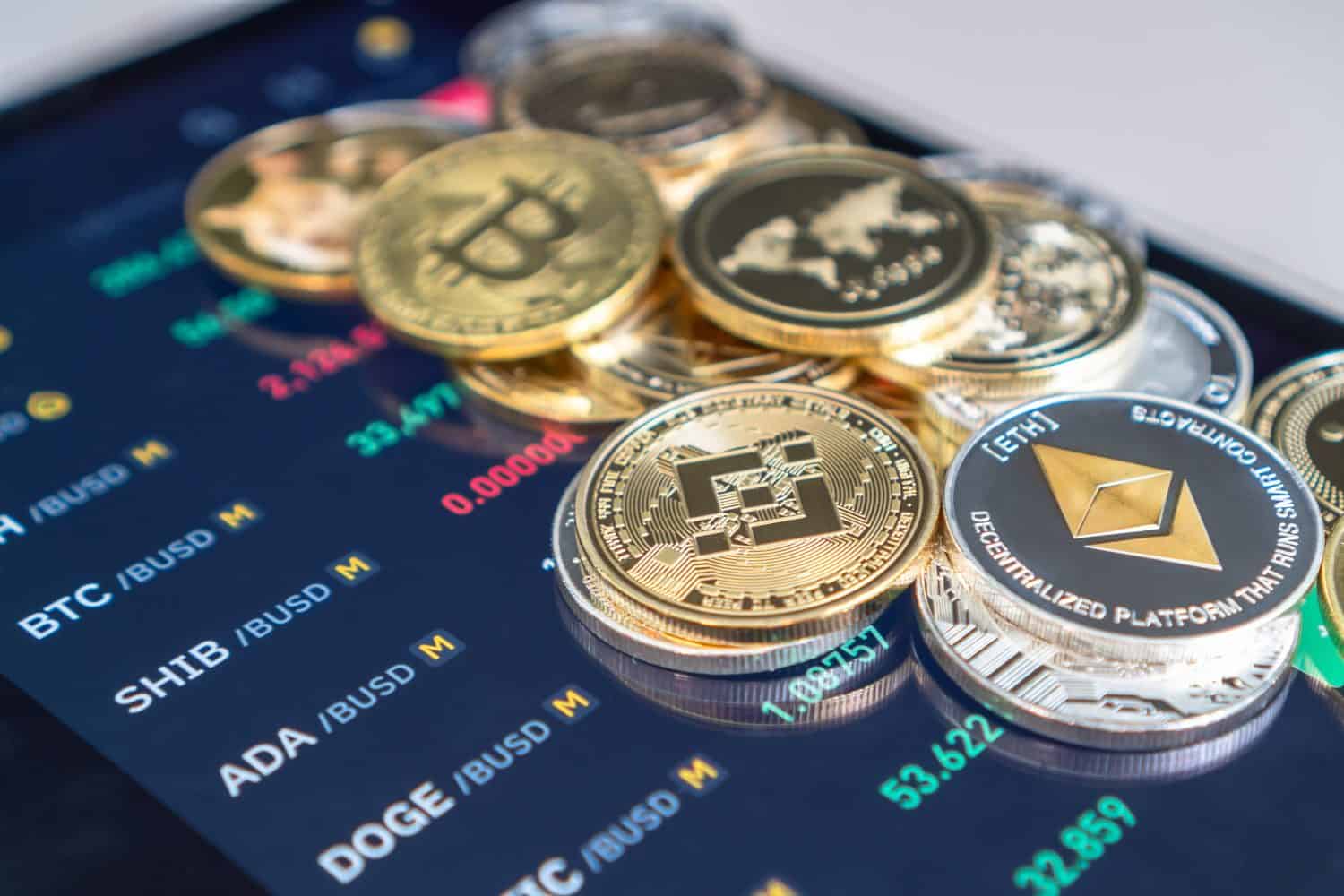
However, the same pattern appears in nearly every major crypto sell-off. Beta measures a coin’s volatility relative to the broader market, so cryptocurrencies with a beta above one tend to drop more than Bitcoin when the market falls.
For instance, in the week leading up to October 9, Bitcoin fell 4.1%, while XRP dropped 8.4%, Ethereum 8.6%, Solana 9.2%, and Dogecoin 11.5%—nearly three times Bitcoin’s decline. Given that Bitcoin declined about 30% over the year, Dogecoin’s and XRP’s increased volatility can be explained by beta alone, without considering movement to event contracts.
Furthermore, because most retail crypto trading happens on exchange order books, any sale appears as selling pressure without revealing where the money went next. So, for example, a Dogecoin holder who transferred funds to an event-contract account looks the same as one who switched to Bitcoin, bought stocks, or used the cash for rent.
Does the Retail Shift Explain Why Dogecoin and XRP Lag Bitcoin?
The notion that retail money is leaving crypto doesn’t explain Dogecoin and XRP’s sharper declines any better than beta does. Both cryptocurrencies have dropped in line with what beta predicts during market declines, falling significantly more than Bitcoin in the week ending October 9. If Liu is right about stocks, Dogecoin and XRP holders may pay the price: these coins tend to lose two to three times more than Bitcoin during sell-offs.
A future crypto rally could clarify this situation. Beta suggests that high-volatility coins should outperform Bitcoin when the market rises. If Dogecoin climbs back above $0.10—about 17% higher—faster than Bitcoin, beta holds true. However, if Bitcoin rallies while Dogecoin and XRP lag, it may suggest retail money has found a new home, lending more credibility to Liu’s theory of a shift in asset allocation.
Contact [email protected] for any questions or corrections.
Sam Daodu is a crypto analyst who's spent nearly a decade making blockchain understandable—no easy task when most whitepapers read like fever dreams. He writes for 24/7 Wall St., covering Bitcoin, altcoins, and crypto market analysis for investors. Before crypto, he was a tech writer (back when explaining "the cloud" was peak innovation). Since 2018, he's written for CoinTelegraph, Yahoo Finance, The Block, Cryptonews, Zypto, Rain, and more—basically anywhere people want crypto news without the headache. Sam runs MacLabs Marketing, a content agency for crypto brands tired of sounding like AI wrote their website. He also publishes free crypto education on his site for Web3 enthusiasts who think "gas fees" is a typo. When he's not writing or staring at charts, Sam's either: - Watching anime (currently convinced One Piece has better tokenomics than most altcoins) - At the gym sculpting himself into a Greek god - Listening to the music your mum warned you only bad boys listen to Connect: LinkedIn | Email | MacLabs Marketing