Dogecoin Fell 5% While Bitcoin, Ethereum, XRP and Solana All Rose. Why Is Dogecoin Lagging the Majors?
Bitcoin, Ethereum, XRP, and Solana are all climbing while Dogecoin slides in the opposite direction. The reasons behind this growing divide reveal a structural problem that no wave of whale buying has yet managed to fix.

This post may contain links from our sponsors and affiliates, and Flywheel Publishing may receive compensation for actions taken through them.
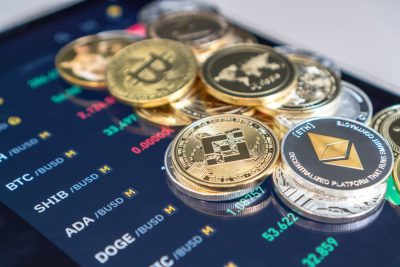
Dogecoin (CRYPTO:DOGE) fell 4.7% to around $0.095, while major cryptocurrencies posted gains. Bitcoin (CRYPTO:BTC) rose 1.3%, Ethereum (CRYPTO:ETH) gained 0.7%, XRP (CRYPTO:XRP) climbed 0.6%, and Solana (CRYPTO:SOL) edged up 0.3%.
While Dogecoin surged in late summer—up 15% over the past month and 33% over the last two months—its weekly change turned negative, down 1.6%. This raises the question: why is Dogecoin falling behind its major competitors even as they continue to rise? (FLAG: colon in body copy)
Dogecoin Fell With Zcash and NEAR as Traders Sold Speculative Coins

Dogecoin wasn’t alone in its October 1 decline. Zcash (CRYPTO:ZEC), a privacy-focused coin, fell by 6.6%, and NEAR Protocol, a blockchain designed for running applications, dropped by 9.1%. The overall selling trend suggests traders are pulling out of smaller, more speculative coins as Bitcoin gains traction. Just days earlier, in late September, Bitcoin’s market share had dipped below 60% as more investors sought to diversify into smaller coins.
Coins like Dogecoin tend to be more volatile because they often have fewer dedicated buyers at lower price levels. As a result, even small waves of selling can cause a drastic price drop, which is less likely for larger, more established coins like Bitcoin. Conversely, the same thin demand that allows Dogecoin to soar quickly can also lead to sharper declines when traders become cautious.
Dogecoin’s 22% Gain Over 90 Days Trails Bitcoin, Ethereum, XRP and Solana
While a single day of losses might reflect traders’ mood more than any inherent issue with Dogecoin, the broader trends paint a more concerning picture. (FLAG: “picture” is on the banned list)
Over the 90 days leading up to October 1, Dogecoin gained 22%. However, that lagged behind the significant increases seen in Ethereum (53%), Solana (43%), Bitcoin (33%), and XRP (31%). Although Dogecoin performed well in August and September, its gains were overshadowed by those of the major cryptocurrencies.
The disparity grows even more apparent over longer periods. Dogecoin is down by 20% in 2026 and 62% over the past year. This means that an investor who put $1,000 into DOGE a year ago would now only have about $378. Additionally, Dogecoin currently trades about 87% below its all-time high of $0.73, reached in May 2021.
Dogecoin Adds About 5 Billion New Coins a Year With No Supply Cap

A significant reason for Dogecoin’s struggle is its supply dynamics. With approximately 156 billion DOGE currently in circulation and no maximum supply cap, the situation differs significantly from Bitcoin’s.
Miners on the Dogecoin network earn 10,000 new DOGE for each block they mine, with a new block added roughly every minute. This amounts to about 5 billion new DOGE entering the market annually, worth roughly $500 million at the current price of $0.095.
In contrast, Bitcoin has a capped supply of 21 million coins, and its mining rewards halve about every four years, leading to a gradual decrease in new supply. Meanwhile, Ethereum’s model burns a portion of transaction fees, which helps offset new supply.
Dogecoin lacks both a fee-burn mechanism and significant revenue generation, which means the market must absorb about $1.4 million worth of new DOGE every day for its price to rise.
In late September, large holders bought around 1.14 billion DOGE, valued at about $110 million over four days. This purchase matched roughly 2.6 months’ worth of Dogecoin’s new supply, yet such bursts of whale activity are infrequent and may sometimes simply involve transfers between wallets rather than new investments. (FLAG: “simply” is on the banned list)
Why Is the Dogecoin Price Lagging Bitcoin, Ethereum, XRP and Solana?
In summary, Dogecoin’s price trails the major cryptocurrencies mainly because new DOGE enters the market daily, while Bitcoin’s new supply keeps shrinking and Ethereum burns part of its transaction fees to offset new supply. On October 1, traders also sold off speculative coins like Dogecoin, leading to its decline alongside Zcash and NEAR while the top coins rose. (FLAG: “In summary” reads as AI phrasing)
This means Dogecoin needs a consistent influx of fresh investment just to maintain its current standing. As a result, its price increases often fade first.
If Dogecoin’s 90-day gain surpasses Bitcoin’s 33%, it would indicate that buyers are absorbing the new supply more effectively than during the previous quarter. Regaining a price above $0.118—about 24% higher—would help Dogecoin recover from its 2026 losses and start closing the gap with major cryptocurrencies. (FLAG: gerund opener “Regaining”)
Contact [email protected] for any questions or corrections.
Sam Daodu is a crypto analyst who's spent nearly a decade making blockchain understandable—no easy task when most whitepapers read like fever dreams. He writes for 24/7 Wall St., covering Bitcoin, altcoins, and crypto market analysis for investors. Before crypto, he was a tech writer (back when explaining "the cloud" was peak innovation). Since 2018, he's written for CoinTelegraph, Yahoo Finance, The Block, Cryptonews, Zypto, Rain, and more—basically anywhere people want crypto news without the headache. Sam runs MacLabs Marketing, a content agency for crypto brands tired of sounding like AI wrote their website. He also publishes free crypto education on his site for Web3 enthusiasts who think "gas fees" is a typo. When he's not writing or staring at charts, Sam's either: - Watching anime (currently convinced One Piece has better tokenomics than most altcoins) - At the gym sculpting himself into a Greek god - Listening to the music your mum warned you only bad boys listen to Connect: LinkedIn | Email | MacLabs Marketing