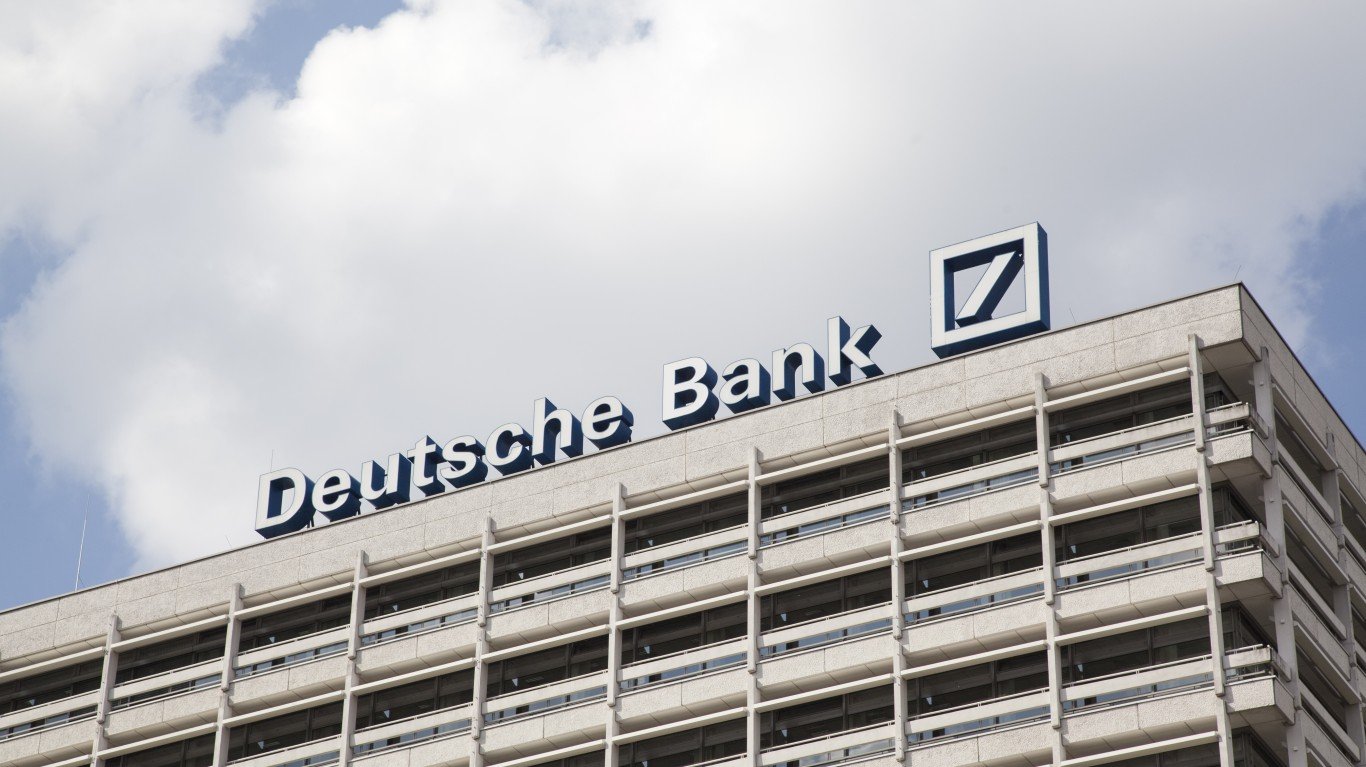
Deutsche Bank Is Weeks From Holding Bitcoin and Ethereum for Clients. Could Other Big Banks Follow?
Deutsche Bank is weeks away from letting German institutions park Bitcoin and Ether with a regulated custodian, and the move raises a bigger question: will a wave of bank entries finally translate into lasting price pressure, or just more plumbing…


Deutsche Bank (NYSE:DB | DB Price Prediction) is just weeks away from providing custody services for Bitcoin (CRYPTO:BTC) and Ether (CRYPTO:ETH) to clients in Germany, according to Gerald Podobnik, co-head of the bank’s corporate bank. The announcement was made on October 16, 2026, and Deutsche Bank’s crypto custody service is set to expand into Asian financial centers in 2027.
Custody refers to holding private keys, the secret codes that let users manage their cryptocurrencies. By holding these keys, a bank allows institutions like pension funds or corporate treasuries to own cryptocurrency without needing to handle the keys themselves. For many organizations, partnering with a regulated bank is the only option that meets their compliance requirements.
Bitcoin and Ether prices barely moved after the news. Bitcoin is trading at approximately $81,497 as of October 17, down 0.7% in the past day, while Ether has dropped 0.8% to around $2,428. So, will Deutsche Bank’s move encourage other big banks to follow suit, and could that influx of interest boost these cryptocurrencies’ prices?
Deutsche Bank to Launch Crypto Custody in Germany, With Asia Next in 2027

Deutsche Bank first announced its custody service on September 16, pledging that European institutional and corporate clients would have access to regulated custody by the end of 2026, pending regulatory approvals. The service will include Bitcoin, Ether, and two stablecoins, USD Coin (CRYPTO:USDC) and EURC (CRYPTO:EURC), linked to the dollar and the euro.
In its latest October update, Deutsche Bank has shortened its timeline, saying the launch is now just weeks away and will focus initially on Germany. Additional services, such as stablecoin offerings, tokenized deposits (which record traditional bank deposits on a blockchain), and digital bonds, will follow, but no specific dates have been set.
This service targets institutions and corporations, so individual account holders will not be able to use it to store cryptocurrencies. It will operate within the corporate bank, which already serves the treasurers and fund managers most likely to seek regulated crypto solutions.
However, Deutsche Bank has not yet shared information about fees, committed client assets, or revenue targets. Custody banks typically charge a small annual fee, so this business model will be sustainable primarily if clients entrust them with significant assets.
BNY and U.S. Bancorp Already Hold Bitcoin for Clients

BNY (NYSE:BK) has pioneered crypto custody, starting services for Bitcoin and Ether in October 2022 after receiving approval from New York’s financial regulator. It became the first of the eight U.S. banks deemed systemically important—banks whose failure could impact the wider economy—to safely hold digital currencies.
U.S. Bancorp (NYSE:USB) resumed institutional Bitcoin custody in September 2025 after a three-year hiatus, partnering with the crypto firm NYDIG as a sub-custodian. In Europe, both Standard Chartered and BBVA are already offering regulated crypto custody services.
State Street (NYSE:STT) launched its Digital Asset Platform on January 15, providing services for tokenized money market funds, ETFs, tokenized deposits, and stablecoins. However, its release does not mention Bitcoin or Ether. Citi has announced plans to introduce crypto custody in 2026, but it has not yet provided a specific launch date.
Bank Custody Adds Access, but Not New Buyers

While bank custody services provide more access to crypto, they do not create new buyers. Custodians hold assets that clients have already chosen to purchase. As of now, Deutsche Bank has not revealed any major clients, committed asset targets, or purchase intentions, so any impact on prices will depend on client usage.
Over the past year, banks and brokers have kept introducing crypto products, yet prices have struggled. For instance, Morgan Stanley launched a spot Bitcoin ETF in April, and Charles Schwab (NYSE:SCHW) completed its retail crypto rollout by mid-October, even as Bitcoin fell 23.4% over the year and Ether fell 36.9%.
Easing Regulations and Client Demand Could Encourage More Banks to Offer Crypto Custody

According to State Street’s March regulatory update, regulators have confirmed that banks may provide and outsource crypto custody and execution services. The Basel Committee, which develops global bank capital rules, discussed reviewing its crypto regulations in February, suggesting that easing these standards could make it more financially viable for banks to enter the crypto market.
Client demand may also motivate banks to get involved. Schwab’s CEO Rick Wurster noted in July 2025 that clients prefer to keep their investments in one place and want their crypto stored alongside their traditional assets. However, politics may slow banks’ adoption of crypto services, as Aaron Cutler warned that crypto firms and those that received regulatory relief could face congressional probes after Democrats won the midterms.
Will Other Big Banks Follow Deutsche Bank Into Crypto Custody?
More big banks are likely to follow, as the rules ease and clients ask for it. Deutsche Bank gains a fee business and German institutions gain easier access, but Bitcoin and Ether gain buying pressure only if those institutions place orders. Both coins had also climbed before the news, with Bitcoin up 26.1% and Ether up 26.3% over 60 days, so that rally cannot be credited to a service that has not launched.
For holders, the Deutsche Bank crypto custody launch is solid business news but a weak price signal. If Citi or State Street announces a dated go-live for Bitcoin custody before December 31, the follow-the-leader view gains hard evidence. If Deutsche Bank’s German launch arrives without a named client or disclosed assets in custody, it could be plumbing for demand that hasn’t shown up yet.
Contact [email protected] for any questions or corrections.
Sam Daodu is a crypto analyst who's spent nearly a decade making blockchain understandable—no easy task when most whitepapers read like fever dreams. He writes for 24/7 Wall St., covering Bitcoin, altcoins, and crypto market analysis for investors. Before crypto, he was a tech writer (back when explaining "the cloud" was peak innovation). Since 2018, he's written for CoinTelegraph, Yahoo Finance, The Block, Cryptonews, Zypto, Rain, and more—basically anywhere people want crypto news without the headache. Sam runs MacLabs Marketing, a content agency for crypto brands tired of sounding like AI wrote their website. He also publishes free crypto education on his site for Web3 enthusiasts who think "gas fees" is a typo. When he's not writing or staring at charts, Sam's either: - Watching anime (currently convinced One Piece has better tokenomics than most altcoins) - At the gym sculpting himself into a Greek god - Listening to the music your mum warned you only bad boys listen to Connect: LinkedIn | Email | MacLabs Marketing