Multicoin Just Made HYPE Its Largest Hedge Fund Holding. Is Hyperliquid a Buy After a 14% Monthly Drop?
Multicoin Capital just named Hyperliquid its largest hedge fund holding, yet HYPE keeps sliding. Before you treat that endorsement as a buy signal, there are several uncomfortable questions about what the announcement actually guarantees.

This post may contain links from our sponsors and affiliates, and Flywheel Publishing may receive compensation for actions taken through them.

Multicoin Capital, a cryptocurrency investment firm managing $2.7 billion, has named Hyperliquid (CRYPTO: HYPE) its largest hedge fund holding, according to general partner Spencer Applebaum on October 19, 2026. Although Applebaum said the firm bought the tokens on the public market, he did not disclose the size of the investment.
Despite this news, HYPE has not seen a price increase. As of October 20, the token trades at about $78, down 4% over the past week and 13.5% over the past month, and 20% below its $98 peak on September 23. So, does backing from a well-known fund give Hyperliquid a nudge upward?
What Multicoin Acquired and How Hyperliquid Generates Revenue

Multicoin’s investment gives it exposure to a decentralized exchange (DEX), a platform where on-chain code matches trades and securely manages user funds. Hyperliquid’s main offering is perpetual futures—contracts that track a cryptocurrency’s price indefinitely, allowing traders to hold positions as long as they provide enough collateral.
Hyperliquid makes money through trading fees, and its Assistance Fund channels most of these fees into automated purchases of HYPE on the open market. As a result, demand for the token fluctuates with trading activity, making HYPE a proxy for the exchange’s overall performance.
Martin Gaspar, senior crypto market strategist at prime broker FalconX, noted that Hyperliquid’s open interest—representing the total value of active futures contracts—nearly doubled in the third quarter, reaching $12.2 billion. This figure is approaching the $13.4 billion recorded by CME Group (NASDAQ: CME | CME Price Prediction), the Chicago derivatives exchange. Since FalconX profits more when derivatives trading increases, Gaspar speaks as an interested party.
Gaspar also pointed out that open interest in futures beyond Bitcoin (CRYPTO: BTC) and Ethereum (CRYPTO: ETH) rose 70%, suggesting traders are seeking leverage beyond the two leading cryptocurrencies, the market Hyperliquid has targeted to build volume.
Hyperliquid’s Legal Concerns and Growing U.S. Competition

One of Hyperliquid’s main risks is its legal situation. The Hyperliquid Policy Center, which advocates for the exchange, submitted a comment letter to the SEC on October 19, asking for clarification on rules regarding airdrops, token buybacks, and secondary trading. The letter emphasizes the need for the SEC to clarify whether unregistered on-chain protocols can facilitate trading in tokens linked to investment contracts.
The group’s letter stated, “Our comment asks the Commission to provide that clarity when the SEC adopts the rule, using the authority and tools the Commission already has.” Because buybacks help increase demand for HYPE, clear SEC guidance on these matters could reduce legal risk around the token’s main support.
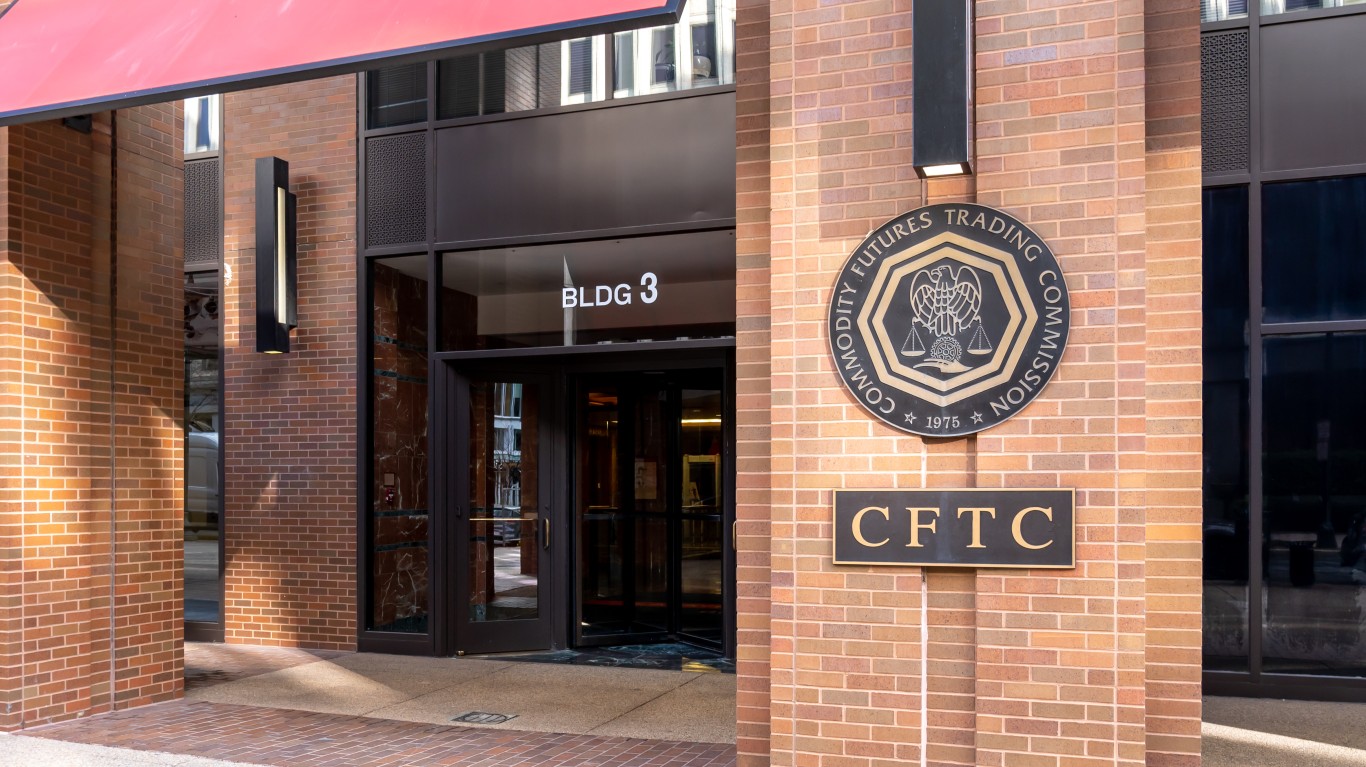
Meanwhile, competition for Hyperliquid’s primary product is intensifying in regulated markets. The CFTC has approved crypto perpetual futures for regulated U.S. exchanges, starting with a Bitcoin perpetual contract, while CME has filed a lawsuit challenging that approval. In a September motion, the CFTC asked a federal judge to dismiss CME’s lawsuit, arguing that any registered exchange, including CME, has the right to list similar products.
If the CFTC prevails, U.S. traders may access perpetual futures on licensed platforms that would directly compete with Hyperliquid.
Multicoin’s Claim Doesn’t Guarantee More Trading on Hyperliquid

Multicoin’s announcement does not commit the firm to any specific actions; it did not disclose details such as position size, entry price, holding duration, or lockup terms, allowing them to sell the tokens whenever they choose. Additionally, a publicly purchased token does not increase trading volume on Hyperliquid, and trading volume is essential for funding buybacks.
The claim of being the “largest holding” may be less significant than it appears. Multicoin described HYPE as one of the top positions in its liquid fund in a June 2026 research note, so its top status could reflect price increases rather than new purchases. The $2.7 billion figure also includes client funds across the entire firm and does not break down the hedge fund’s specific share.
Moreover, supply factors add further pressure. Currently, only 222.4 million HYPE tokens—about 22% of the 1 billion maximum supply—are in circulation, so future releases could increase selling pressure that buybacks need to manage.
Is Hyperliquid a Buy After Its 14% Monthly Drop?
Given the current situation, we do not think Multicoin’s announcement provides a compelling reason to buy HYPE at about $78. While Hyperliquid’s business model offers stronger support for the token than many other altcoins, backing from a well-known fund doesn’t guarantee price appreciation since the purchases have already been made.
HYPE’s 13.5% decline over the past month, despite rising open interest, suggests that robust exchange data hasn’t been able to maintain its price. Fourth-quarter open interest data could provide a clearer picture going forward. If Hyperliquid surpasses CME’s $13.4 billion and HYPE reclaims its $98 record, it could signal that the business is pulling the token higher.
Contact [email protected] for any questions or corrections.
Sam Daodu is a crypto analyst and the editor of 24/7 Wall St.'s Crypto Desk, where he covers Bitcoin, XRP, Ethereum, Solana and the altcoins investors search for most. His work focuses on price levels, spot ETF flows, on-chain data and the regulatory decisions that move crypto markets, written so a first-time buyer and a seasoned trader can both use it.
Sam has written about crypto professionally since 2019 and has published more than 2,000 articles. Before joining 24/7 Wall St., he wrote for crypto media outlets and Web3 companies and ghostwrote for crypto founders and token launches. His analysis is syndicated on Yahoo Finance, MSN and AOL and has been cited by other crypto news sites. He also founded MacLabs Marketing, a content and personal branding agency for crypto founders and executives.
When he isn't reading charts, Sam is usually at the gym or watching One Piece, a series he maintains has better tokenomics than most altcoins.