The CFTC Just Cleared Stock Perpetual Futures for U.S. Exchanges. Does That Hurt Hyperliquid?
The CFTC just opened the door for regulated stock perpetual futures on U.S. exchanges, putting Hyperliquid's offshore dominance directly in the crosshairs. Whether HYPE survives depends on one partnership that has yet to materialize.

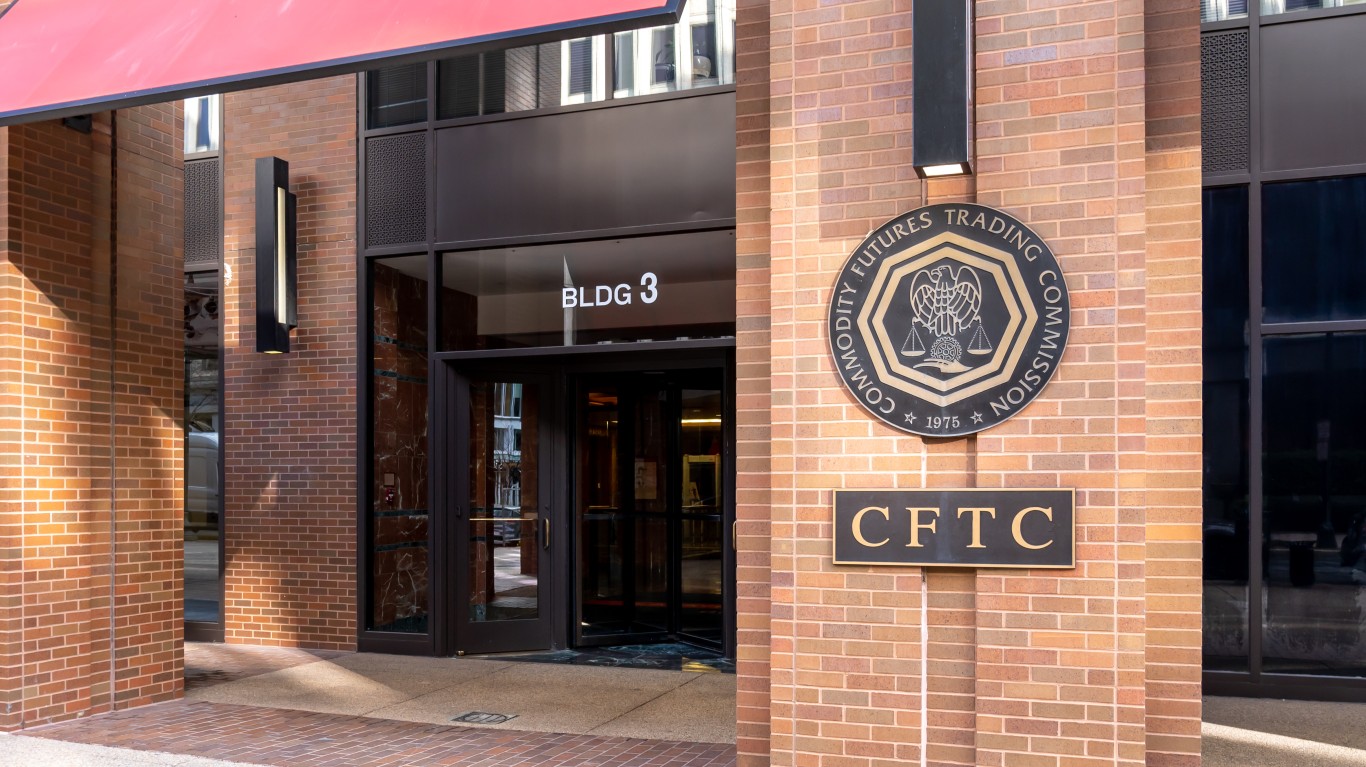
The Commodity Futures Trading Commission (CFTC), which regulates futures markets in the U.S., has recently approved stock perpetual futures. This means that contracts based on individual stocks can now begin trading for the first time on CFTC-registered exchanges. This decision sets up a regulated alternative to the offshore market that Hyperliquid (CRYPTO: HYPE) has established.
A stock perpetual future, or “perp,” is a type of futures contract that applies to a single stock and never expires. Traders on one side of the contract make regular payments to the other side, ensuring the contract price closely aligns with the stock price.
CFTC Chairman Michael Selig announced the approval, saying the contracts passed the agency’s review without objection. The CFTC and the Securities and Exchange Commission (SEC) will now share oversight of these contracts, with only exchanges registered with the SEC allowed to list them.
HYPE is trading at $86, up 2.5% in 24 hours and 7% over the past week, but still 12% below its all-time high of $98. Most of this weekly gain occurred before the CFTC announcement, suggesting the current price may not fully reflect traders’ sentiment about the ruling.
The CFTC Ruling Covers U.S. Exchanges, Not Hyperliquid

Chairman Selig emphasized the importance of this ruling in keeping American traders onshore, allowing them to trade these products within the protections of the CFTC’s regulatory framework instead of resorting to offshore, often unregulated venues. Since Hyperliquid operates outside the U.S., this ruling does not cover its platform.
Furthermore, the CFTC did not specify which exchange will be the first to list these stock perps, nor did it mention any token or crypto asset for settlement. However, several exchanges are poised to take the lead.
Coinbase (NASDAQ: COIN | COIN Price Prediction) and Kraken parent Payward, via its Bitnomial exchange, filed in mid-September to offer perps on individual U.S. stocks. Additionally, OG.com, a spin-off from Crypto.com, has also aimed to list cash-settled stock futures that never expire and are available for trading 24 hours a day, five days a week, closely resembling Hyperliquid’s always-open trading model.
Hyperliquid’s Token Depends on Trading Fees

Hyperliquid operates as a decentralized exchange (DEX), meaning it conducts trades on its blockchain rather than through traditional brokers that manage customer funds. Over the past year, Hyperliquid has generated approximately $713 million in revenue, primarily through trading fees. It uses these fees to buy back HYPE on the open market via its Assistance Fund, making demand for the token largely dependent on trading volume.
Hyperliquid supports stock perpetual futures trading through HIP-3, a feature that lets outside developers create their own markets. Hyperliquid receives a portion of the trading fees from these HIP-3 markets. The most notable HIP-3 developer is trade(xyz), which already facilitates Hyperliquid’s stock and index perps. If regulated U.S. exchanges begin offering stock perps, American traders may get leveraged exposure to single stocks alongside customer protections, potentially reducing Hyperliquid’s market appeal.
CME and ICE Are Rivals and Possible Partners

CME Group (NASDAQ: CME) already offers a similar product called Single Stock Futures, available for 55 large U.S. companies and with set expiration dates. According to CME executive Tim McCourt, they’ve traded just over 350,000 contracts valued at around $3.5 billion. However, CME is currently in litigation against the CFTC over the approval of perpetual futures, and CEO Terry Duffy has not publicly addressed whether they will list perps.
Duffy has also highlighted the potential systemic risks from the high leverage offered by overseas perp platforms, which can range from 25 to 250 times. Both CME and the Intercontinental Exchange (NYSE: ICE) have urged U.S. regulators to impose limitations on Hyperliquid, so their warnings come from competitors with an interest in the outcome. After the CFTC announcement, neither stock moved significantly, with CME at $306 (down 0.2%) and ICE at $171 (down 1%).
Hyperliquid’s optimal path may align with ICE. ICE and trade(xyz) are considering a U.S. market for Hyperliquid perps, featuring its own clearing process to ensure all parties receive payments and conducting its own customer checks. The CFTC’s recent approval process could provide the framework ICE needs for stock contracts.
Do CFTC Stock Perpetual Futures Hurt Hyperliquid?
While the evidence points to a potential challenge for Hyperliquid, the immediate threat seems modest and may take time to materialize. Current indications offer little reason for HYPE holders to anticipate a price increase. The exchanges closest to launching U.S. stock perps—Coinbase, Bitnomial, and OG.com—do not use Hyperliquid’s platform, making its expansion contingent on ICE’s still-undeveloped plan.
For now, the next key indicator will be ICE’s contract filing for the trade(xyz) platform in the CFTC’s public database, which could provide more clarity. If that filing includes a fee share for Hyperliquid’s HIP-3 or a role for HYPE, the opening could outweigh the threat, while a standalone ICE platform could leave HYPE’s buyback where it was.
Contact [email protected] for any questions or corrections.
Sam Daodu is a crypto analyst and the editor of 24/7 Wall St.'s Crypto Desk, where he covers Bitcoin, XRP, Ethereum, Solana and the altcoins investors search for most. His work focuses on price levels, spot ETF flows, on-chain data and the regulatory decisions that move crypto markets, written so a first-time buyer and a seasoned trader can both use it.
Sam has written about crypto professionally since 2019 and has published more than 2,000 articles. Before joining 24/7 Wall St., he wrote for crypto media outlets and Web3 companies and ghostwrote for crypto founders and token launches. His analysis is syndicated on Yahoo Finance, MSN and AOL and has been cited by other crypto news sites. He also founded MacLabs Marketing, a content and personal branding agency for crypto founders and executives.
When he isn't reading charts, Sam is usually at the gym or watching One Piece, a series he maintains has better tokenomics than most altcoins.