You Can Now Let ChatGPT or Claude Trade Crypto Futures for You on Telegram. Is That a Good Idea?
Telegram's crypto app Walt now lets ChatGPT and Claude open and close leveraged futures trades on your behalf, but a single bad day in crypto wiped out $19 billion in positions the last time markets turned ugly.

This post may contain links from our sponsors and affiliates, and Flywheel Publishing may receive compensation for actions taken through them.

Walt, the Telegram crypto app formerly known as Wallet in Telegram, has introduced a feature that lets users connect AI agents to trade perpetual futures directly in the chat app. This innovative approach merges AI crypto trading with the one platform many people use daily.
The app features three AI agents: Mira, a Telegram-specific assistant, along with OpenAI’s ChatGPT and Anthropic’s Claude. Once you connect these agents, they can conduct market research, manage positions and assess liquidation risk, open and close trades, set take-profit and stop-loss orders, monitor positions 24/7, and execute straightforward, rules-based strategies.
The agents can only trade using a dedicated account you fund; they cannot withdraw or transfer funds. Order execution is switched off by default, and users can disconnect the agents at any time.
Bitcoin (CRYPTO:BTC) is trading at $81,511, down 0.7% over the last 24 hours. The Telegram-linked token, Gram (CRYPTO:GRAM), is currently valued at $1.34, down 2% for the week. Interestingly, while Gram is closely associated with Walt, the recent AI announcement doesn’t mention it.
Should traders trust a chatbot with a leveraged account? And how does this impact the price of Gram?
Walt Introduces AI Agents for Perpetual Futures Trading
Walt rebranded on September 28 and now offers various services including trading, yield products, tokenized assets, and perpetual futures within Telegram. The separate Gram wallet lets users hold their own keys for everyday payments, positioning Walt as the app’s trading and investment segment.
Perpetual futures are contracts that track a cryptocurrency’s price and have no expiry date. Traders typically use these contracts with leverage, meaning they trade with borrowed funds, amplifying both profits and losses. If losses exceed the cash a trader has put up, known as margin, the platform will close the position in a process called liquidation.
While Walt has not disclosed its revenue or fees, trading apps commonly charge a fee for each transaction. AI agents that monitor the markets continuously could potentially place more trades than a trader who checks in only occasionally, increasing the app’s revenue from these fees.
Walt’s CEO Also Runs the Company Behind Mira

Mira is part of The Open Platform (TOP), a Telegram developer that launched the agent worldwide in May. Andrew Rogozov, the founder and CEO of both TOP and Walt, highlights that traditional trading tools like terminals and charts require a learning curve, making this AI integration a significant shift.
Moreover, Mira builds on agentic wallets developed by TOP’s infrastructure team, TON Tech, introduced in April, which let Telegram bots handle transfers, swaps, staking, and automated trading.
Robinhood and Gemini Launched AI Trading Agents First
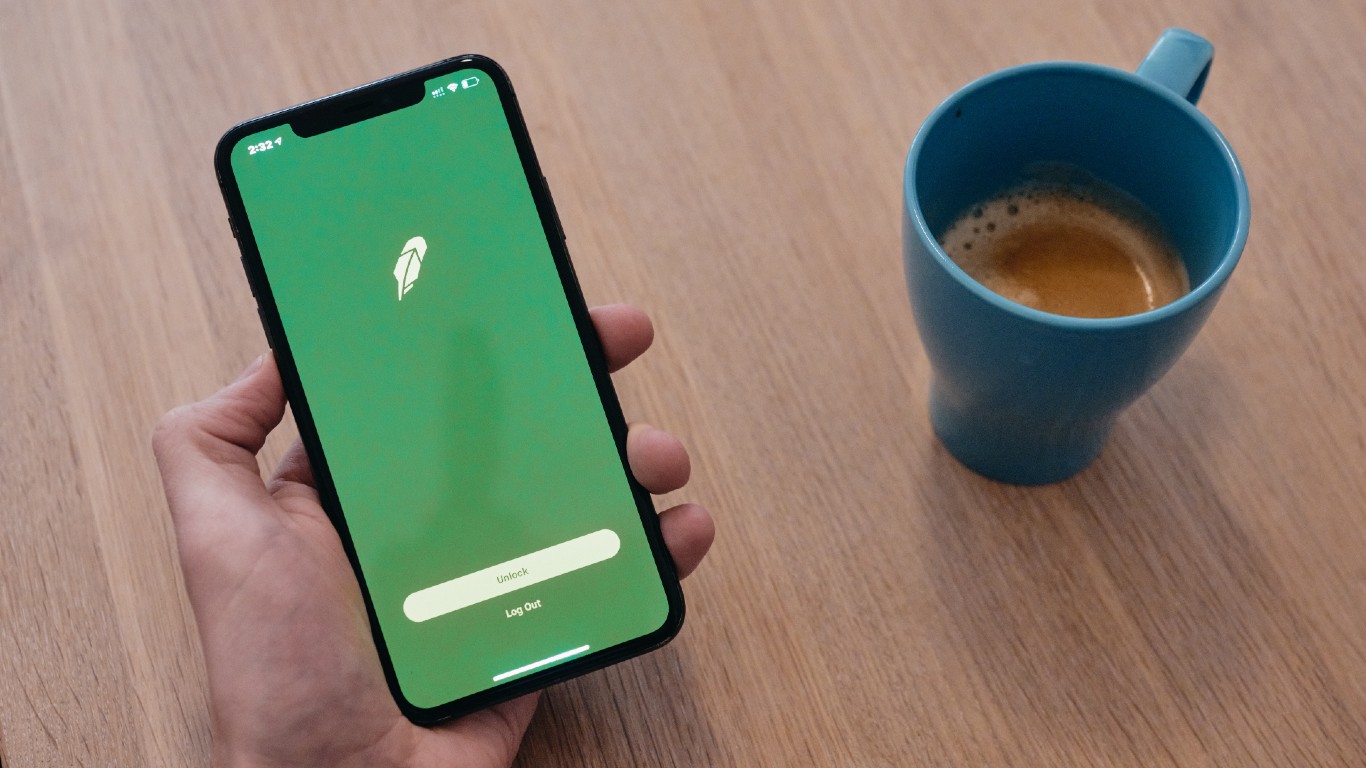
Earlier in 2026, U.S. platforms like Robinhood (NASDAQ:HOOD | HOOD Price Prediction) and Gemini (NASDAQ:GEMI) introduced similar AI trading agents. Robinhood launched its agents at the HOOD Summit in September, giving users a dedicated trading account and a trade-approval setting enabled by default. Gemini launched in April, letting users connect AI models such as Claude and ChatGPT to their accounts.
Meanwhile, Interactive Brokers (NASDAQ:IBKR) offers clients AI research assistance while leaving final investment decisions to users. Robinhood and Gemini require users to open separate brokerage applications, while Walt integrates this functionality into a platform users already use regularly.
An AI Agent Can Still Lose the Whole Account
While the withdrawal restriction helps prevent agents from sending funds elsewhere, it doesn’t eliminate the risk of losing the entire account due to poor trading decisions. Walt notes that over $19 billion in leveraged crypto positions were liquidated in a single day back in October 2025. This underscores the importance of keeping leveraged trading within a strictly controlled portion of a portfolio, as outlined in our free speculation guide.
AI models can sometimes provide misleading information, giving confident assessments that may not reflect market realities, especially in volatile conditions. For example, a simple rule like “buy every dip” could lead to significant losses during a market crash if it is not carefully managed.
On October 15, Bitcoin’s price fluctuated from a high of $82,555 to a low of $79,676 before closing at $82,131, showing that even minor price movements can lead to substantial liquidations, especially for positions leveraging high amounts.
Is AI Crypto Trading on Telegram a Good Idea?
For many traders, AI crypto trading may not be ideal yet. It may not suit those who lack experience or familiarity with trading’s complexities, especially when leverage is involved. While AI trading in Telegram is convenient, caution is advised before fully leveraging these advanced tools.
As for Gram, the launch gives the token little. The announcement does not require Gram for margin or fees, so agent trades could run without any Gram changing hands unless Walt makes Gram the margin asset or fee currency for agent accounts.
Contact [email protected] for any questions or corrections.
Sam Daodu is a crypto analyst who's spent nearly a decade making blockchain understandable—no easy task when most whitepapers read like fever dreams. He writes for 24/7 Wall St., covering Bitcoin, altcoins, and crypto market analysis for investors. Before crypto, he was a tech writer (back when explaining "the cloud" was peak innovation). Since 2018, he's written for CoinTelegraph, Yahoo Finance, The Block, Cryptonews, Zypto, Rain, and more—basically anywhere people want crypto news without the headache. Sam runs MacLabs Marketing, a content agency for crypto brands tired of sounding like AI wrote their website. He also publishes free crypto education on his site for Web3 enthusiasts who think "gas fees" is a typo. When he's not writing or staring at charts, Sam's either: - Watching anime (currently convinced One Piece has better tokenomics than most altcoins) - At the gym sculpting himself into a Greek god - Listening to the music your mum warned you only bad boys listen to Connect: LinkedIn | Email | MacLabs Marketing