Bitcoin Cash vs Litecoin: Which Payment Coin Has More Upside in 2026?
CME futures launched, ETF filings hit the SEC, and two rival payment coins are pulling in opposite directions heading into year-end. One of them just made a 46% move in a single week, and the other can barely attract a…

This post may contain links from our sponsors and affiliates, and Flywheel Publishing may receive compensation for actions taken through them.
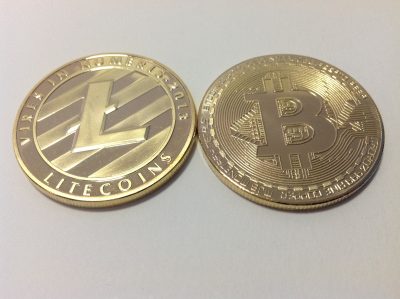
Bitcoin Cash (CRYPTO:BCH) and Litecoin (CRYPTO:LTC) were created to offer cheaper, faster transactions than Bitcoin (CRYPTO:BTC). Both coins have attracted new Wall Street interest this fall of 2026: CME Group (NASDAQ:CME | CME Price Prediction) launched Bitcoin Cash futures, while Grayscale filed to convert its Bitcoin Cash and Litecoin trusts into ETFs. So, in the Bitcoin Cash vs. Litecoin battle, which coin has more potential to rise before December 31?
Bitcoin Cash is trading around $284, up 3.7% in the past 24 hours and 3.2% over the week. This rebound comes after a rough month for BCH, which saw prices swing between a high of $349 on September 24 and a low of $256 on October 15.
In contrast, Litecoin is trading near $58, down 1.2% in the past day and 2.8% over the week. It peaked at $80 on September 24 before slipping to about $57 by October 18.
Bitcoin Cash Has Further to Recover Than Litecoin
Market value, or market cap, is calculated by multiplying a coin’s price by the number of coins in circulation. Bitcoin Cash has a market cap of about $5.7 billion and trades 92.5% below its all-time high of $3,786. Litecoin, by comparison, has a market cap of about $4.5 billion and trades 85.9% below its peak of $410.
Both of these all-time highs may seem distant for the rest of 2026. This year, BCH has dropped 52.5% from $599 on December 31, 2025, while LTC has fallen about 24%. By comparison, Bitcoin has decreased only 7.2%, even as October has brought some weakness to the crypto market.
The volatility of BCH has been notable this year. It soared to $687 in mid-January but crashed to $180 by late June. Since July 25, however, BCH has risen by 31.2%, outperforming LTC’s 26.0% and Bitcoin’s 26.3%.
A reasonable 2026 goal for each coin is a return to its late-September highs. For BCH, that means reaching $366, which is about 28.8% above its current price. For LTC, that would mean returning to $80, a jump of about 38.7%.
CME Futures Boosted Bitcoin Cash, Yet Initial Trade Impact Was Minimal

Futures contracts let large funds trade BCH prices without holding the coin. CME announced these contracts on September 22, and by October 20, FalconX and GSR had executed the first block trade.
Initially, BCH surged after the announcement. In the week ending September 27, prices climbed from $250 to $366, marking a 46.5% range on the highest weekly volume seen since November 2025.
However, the coin moved little after the first trade, closing at $283 on October 20 and $275 on October 22—a 3.0% drop. Moreover, futures can also encourage traders to take short positions, which profit when prices decline.
Bitcoin Cash Is Still Waiting for an ETF Approval, While Litecoin’s ETF Has Gone Quiet
Grayscale submitted an updated registration with the SEC on September 11 to convert its Bitcoin Cash Trust into a spot ETF on NYSE Arca. A spot ETF would hold BCH directly, creating new demand whenever shares are purchased. The trust trades over the counter under the ticker BCHG, but the filing does not specify an approval timeline.
If approved, this could be BCH’s first U.S. spot ETF—a major potential boost for the coin.
Litecoin already has a spot ETF, the Canary Litecoin ETF (NASDAQ:LTCC), which trades in the U.S. Grayscale also filed in September to convert its Litecoin Trust to an ETF. However, demand for LTCC has been weak. LTCC saw no net flows on October 21, marking its second consecutive flat session.
LTC’s spike in September was short-lived; after reaching $80 on September 24 amid thin trading, it quickly fell back. Litecoin’s next halving, which will reduce the supply of new coins, is expected to occur in mid-2027, after the 2026 window closes.
Bitcoin Cash vs Litecoin: Which Has More Upside in 2026?
In summary, Bitcoin Cash appears to have more room to grow in 2026, especially if the SEC approves Grayscale’s BCHG conversion before December 31. BCH has experienced a deeper price drop, its September jump showed that news can move it fast, and its ETF is still a potential catalyst. Meanwhile, Litecoin’s ETF has traded with little enthusiasm, suggesting LTC may follow Bitcoin until its halving in 2027.
For BCH, important price points to watch include holding above $256 and breaking through $349 and $366. If the SEC remains quiet, a weekly close below $256 could push BCH back down to the $200 to $208 range.
Meanwhile, for LTC, breaking above $80 is crucial, while a drop below $57 could pull it down to around $54. Without a decisive SEC decision and a closing price above $366 for BCH, Litecoin’s smaller price decline may make it the more stable option.
Contact [email protected] for any questions or corrections.
Sam Daodu is a crypto analyst who's spent nearly a decade making blockchain understandable—no easy task when most whitepapers read like fever dreams. He writes for 24/7 Wall St., covering Bitcoin, altcoins, and crypto market analysis for investors. Before crypto, he was a tech writer (back when explaining "the cloud" was peak innovation). Since 2018, he's written for CoinTelegraph, Yahoo Finance, The Block, Cryptonews, Zypto, Rain, and more—basically anywhere people want crypto news without the headache. Sam runs MacLabs Marketing, a content agency for crypto brands tired of sounding like AI wrote their website. He also publishes free crypto education on his site for Web3 enthusiasts who think "gas fees" is a typo. When he's not writing or staring at charts, Sam's either: - Watching anime (currently convinced One Piece has better tokenomics than most altcoins) - At the gym sculpting himself into a Greek god - Listening to the music your mum warned you only bad boys listen to Connect: LinkedIn | Email | MacLabs Marketing