What Is the Best Crypto to Buy With $500 Right Now?
Bitcoin, TRON, and Hyperliquid each make a case for your $500, but the fees, dilution risks, and ETF outflows swirling around each coin could quietly erase your gains before the market even moves against you.

This post may contain links from our sponsors and affiliates, and Flywheel Publishing may receive compensation for actions taken through them.

In October 2026, Bitcoin (CRYPTO:BTC) has demonstrated impressive resilience compared to other major cryptocurrencies, making it a smart starting point for anyone weighing the best crypto to buy with $500. As of this morning, Bitcoin is priced at $81,781, trading in a range of $80,989 to $81,912. It has slipped only 2.8% throughout the month.
Conversely, other cryptocurrencies like Ethereum (CRYPTO:ETH), XRP (CRYPTO:XRP), and Solana (CRYPTO:SOL) have declined 11% to 12% over the same period. Additionally, the Fear and Greed Index, which measures investor sentiment on a scale from 0 to 100, reads a neutral 47.
So, where should you put your $500 to work while the market remains relatively stable? We analyzed the top 50 cryptocurrencies for momentum, revenue, distance from all-time highs, liquidity, and risk to identify the best options.
Why Bitcoin Earns the Core Spot in a $500 Portfolio
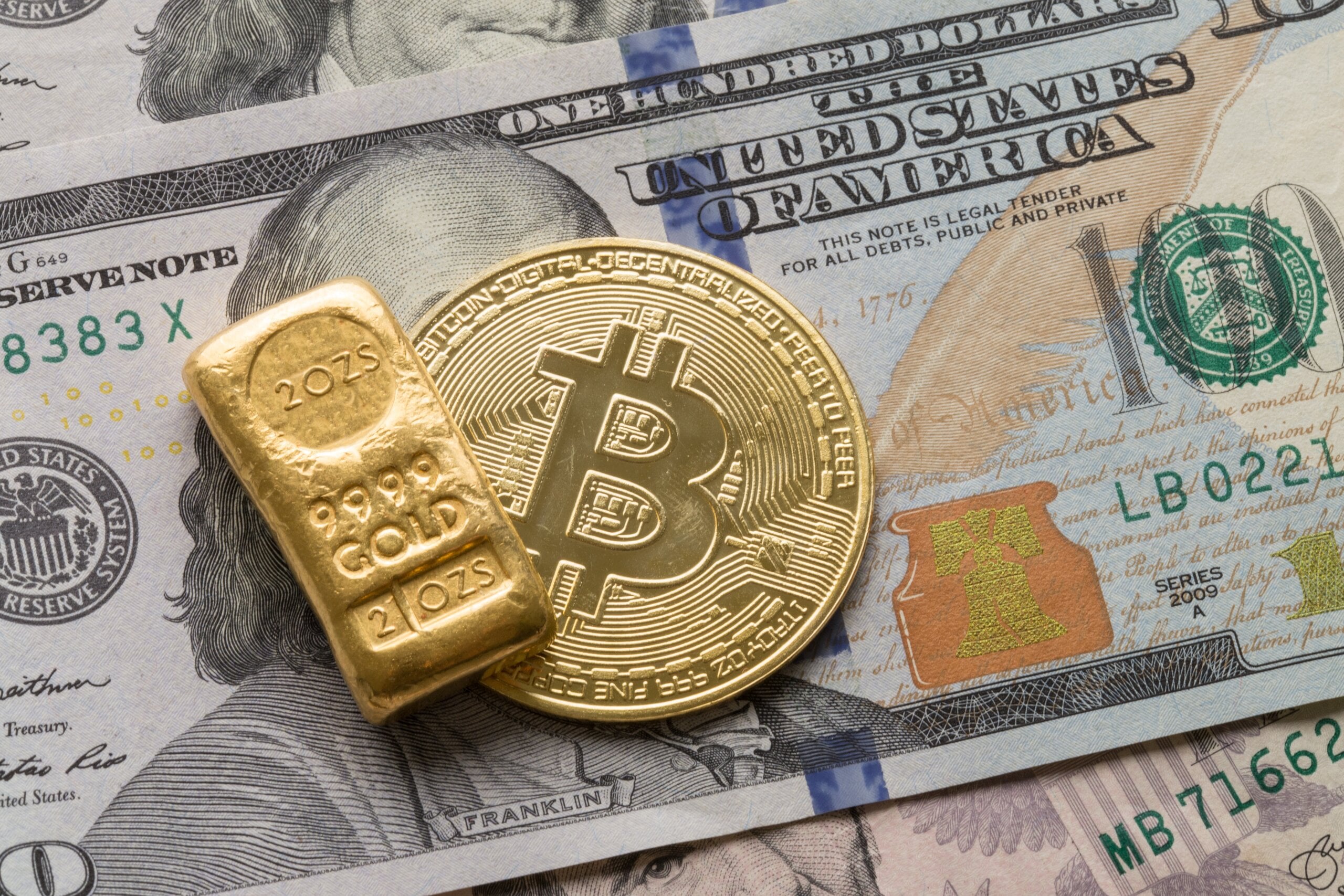
Bitcoin holds a significant position in the crypto market, accounting for 59.5% of its total value and trading around $24.8 billion daily. This high liquidity means buyers can trade easily without significantly affecting the price, which helps when making smaller purchases.
Moreover, strong demand from Wall Street reinforces Bitcoin’s stability. U.S. spot Bitcoin ETFs, which are funds that hold Bitcoin and trade on stock exchanges, have seen net inflows totaling $57.3 billion as of October 22, with net assets of $104.7 billion. However, these flows can vary significantly from day to day; for example, the funds recorded net outflows of roughly $635.5 million on October 22, following net inflows of $528.4 million the day before.
Ethereum’s market performance is less favorable. On the same day, Ethereum ETFs recorded net outflows of $110.5 million, with total inflows dropping from $14.0 billion on September 28 to $12.7 billion. This steady outflow helps explain why ETH has fallen more sharply than Bitcoin.
TRON and Hyperliquid Are the Higher-Risk Picks
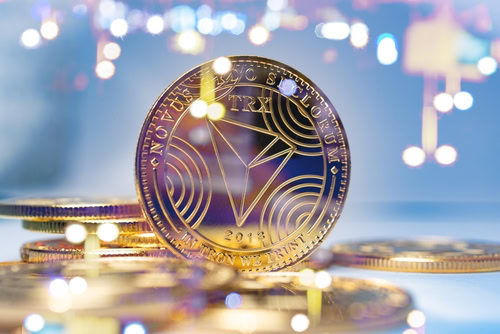
For those willing to take on more risk, TRON (CRYPTO:TRX) is an interesting option. Its blockchain is primarily used to transfer stablecoins—tokens pegged to the dollar. In the past 30 days, TRON generated $23.4 million in chain revenue, according to DefiLlama, which far exceeds Ethereum’s $6.3 million and Solana’s $3.4 million.
TRX trades at $0.33, only 23.5% below its all-time high, and it’s the only coin among the top eight by market cap that has seen a positive return over the past year, up 2.6%.
Another option is Hyperliquid (CRYPTO:HYPE), which supports a fast derivatives exchange. HYPE is its token, priced at $78, and it has risen over 100% in the past year, but it is still 20.3% below its record high.
However, it has dropped 18.4% in the last 30 days, and dilution concerns—the potential that future tokens could flood the market—pose a significant risk. Its fully diluted valuation stands at $74.5 billion, about 4.3 times its $17.4 billion market cap, suggesting the price may come under pressure as new tokens enter circulation.
PEPE and Monero Carry Far More Risk

Pepe (CRYPTO:PEPE), a meme coin driven by internet culture, has no revenue backing it. Despite a 23.4% rise over the last week, PEPE trades at $0.00000505, still 82% below its record high. It has also posted a year-on-year loss of 25.9%.
Monero (CRYPTO:XMR) stands out as a privacy coin designed to conceal the identities of its users. It rose 8.6% over the past week and 83.5% over the year. However, as a privacy-focused coin, it has attracted regulatory scrutiny, which can limit its accessibility.
Fees Take a Bigger Bite Out of a $500 Purchase
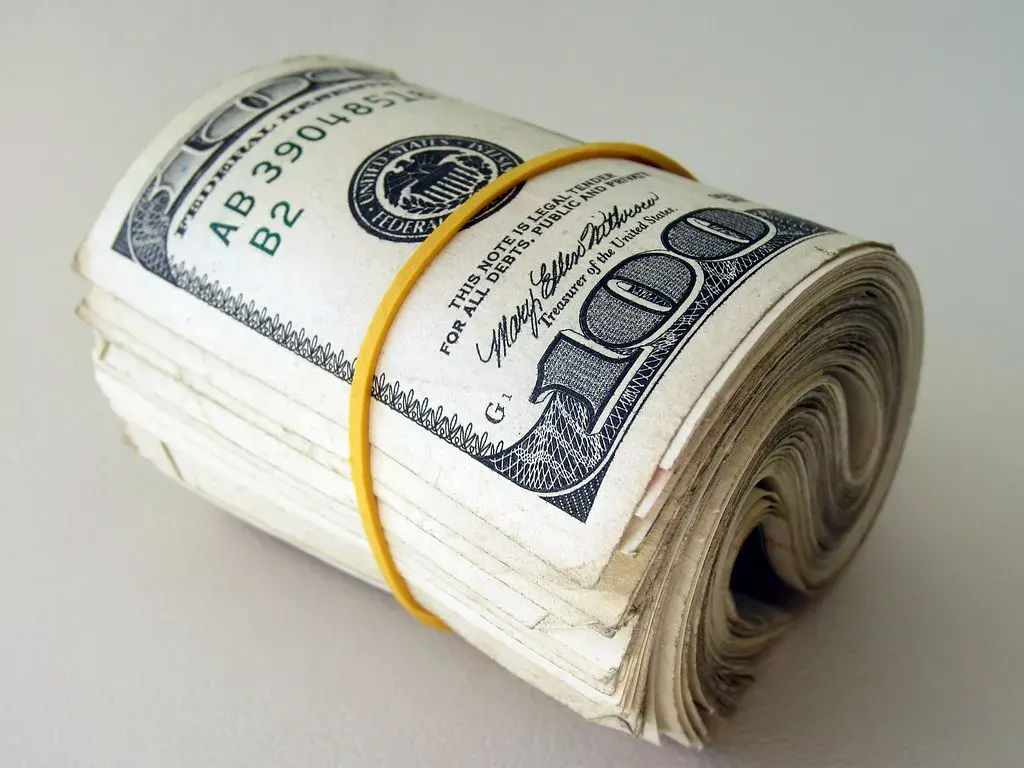
When buying crypto, remember that exchange fees and the difference between buy and sell prices—known as spreads—can take a larger share of a small investment. Therefore, spreading a $500 budget across several coins could lead to paying these costs multiple times. As a general rule, concentrating your investments in fewer coins can often yield better results.
Crypto investments are best suited for money you can afford to lose. For example, HYPE’s 18.4% drop within 30 days shows how quickly a small investment can lose value, even in a coin that has performed well overall.
What Is the Best Crypto to Buy With $500?
Based on the analysis, we suggest making Bitcoin your core holding. A balanced approach would allocate $350 to Bitcoin, $100 to TRON, and $50 to Hyperliquid. Bitcoin gets the largest share because it held up best in October, while TRON follows because it generates revenue. Hyperliquid gets the smallest allocation because its potential dilution could undermine its growth, and we advise against including PEPE altogether because of its volatility.
Keep in mind the associated risks. If Bitcoin falls below $78,982—its price on August 24, which is about 3.4% lower—it may weaken its appeal as a primary investment. Additionally, if Bitcoin ETFs consistently see outflows exceeding $635.5 million, it could further challenge price stability. Finally, a decline in TRON’s revenue lead, as reported by DefiLlama, would jeopardize the support for the TRX allocation.
Contact [email protected] for any questions or corrections.
Sam Daodu is a crypto analyst who's spent nearly a decade making blockchain understandable—no easy task when most whitepapers read like fever dreams. He writes for 24/7 Wall St., covering Bitcoin, altcoins, and crypto market analysis for investors. Before crypto, he was a tech writer (back when explaining "the cloud" was peak innovation). Since 2018, he's written for CoinTelegraph, Yahoo Finance, The Block, Cryptonews, Zypto, Rain, and more—basically anywhere people want crypto news without the headache. Sam runs MacLabs Marketing, a content agency for crypto brands tired of sounding like AI wrote their website. He also publishes free crypto education on his site for Web3 enthusiasts who think "gas fees" is a typo. When he's not writing or staring at charts, Sam's either: - Watching anime (currently convinced One Piece has better tokenomics than most altcoins) - At the gym sculpting himself into a Greek god - Listening to the music your mum warned you only bad boys listen to Connect: LinkedIn | Email | MacLabs Marketing