Only 2 of the 26 Biggest Cryptos Rose This Week. Are They Worth Buying?
While most major cryptocurrencies bled out this week, two coins defied the selloff for very different reasons, and understanding those reasons reveals what the broader market might be signaling about risk appetite and where crypto demand is quietly shifting.

This post may contain links from our sponsors and affiliates, and Flywheel Publishing may receive compensation for actions taken through them.

In the week ending October 17, 2026, only two cryptocurrencies from our analysis of 26 major coins managed to gain value: Monero (CRYPTO:XMR) and TRON (CRYPTO:TRX). Monero increased by 7.6%, reaching $569, as part of a 10.4% rise over 30 days. In contrast, TRON had a modest gain of 0.8%, bringing its price to about 33 cents.
Most of the crypto market posted losses. Bitcoin (CRYPTO:BTC) decreased by 2%, Ethereum (CRYPTO:ETH) fell 4.5%, and XRP (CRYPTO:XRP) dropped 8%. Additionally, Solana (CRYPTO:SOL) slid 6.5%, while Cardano (CRYPTO:ADA) and Sui (CRYPTO:SUI) each lost around 13%.
By October 19, Monero extended its weekly gain to 11.1%, rising to about $595, while TRON fell slightly by 0.2%. So, what kept these two coins resilient while most of the market struggled?
Bond Yields and Nervous Stock Traders Weighed on Crypto
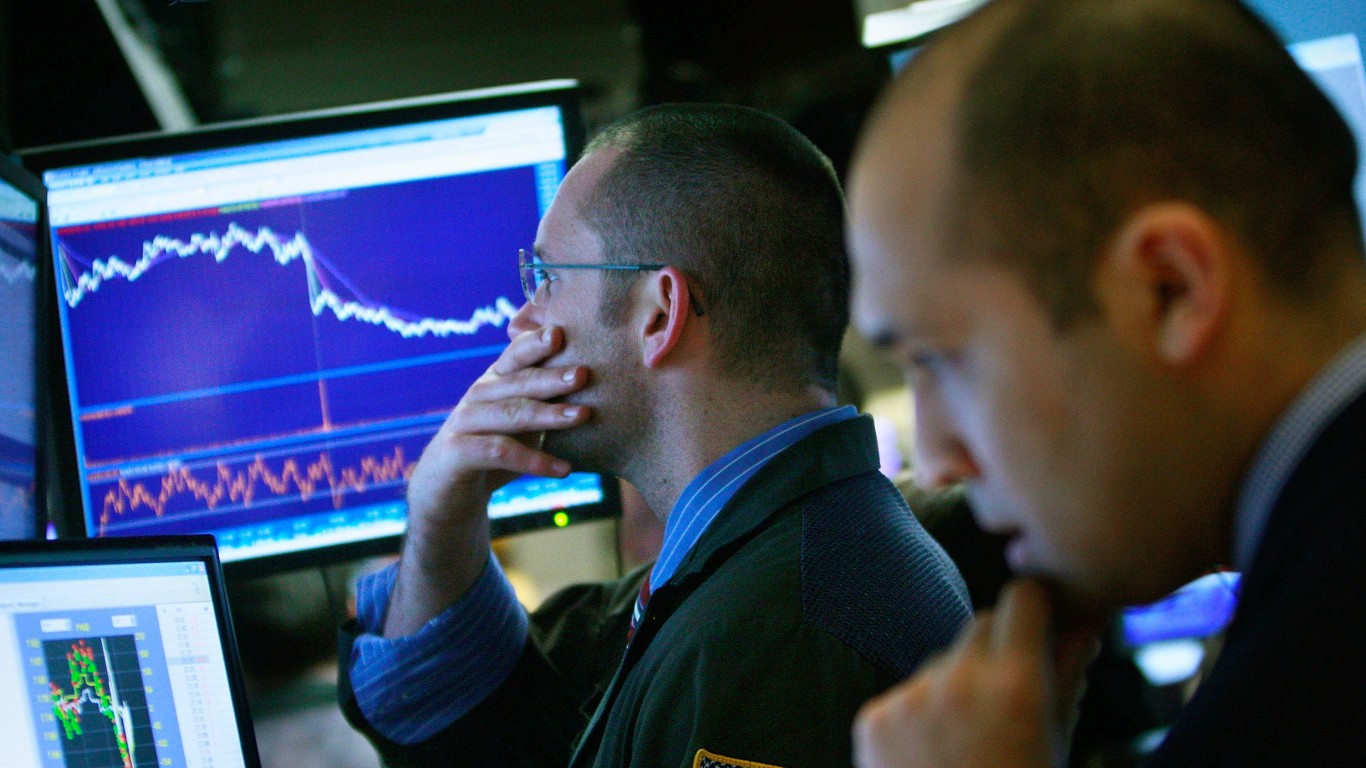
The bond market likely drove the pressure. The 10-year Treasury yield, which reflects how much the US government pays to borrow money over ten years, rose to 5.31% on October 5, up from 4.94% on September 17. When safe government bonds offer such high returns, it becomes costlier to hold interest-bearing assets like Bitcoin.
However, we can’t blame yields alone for the drop. The 10-year yield fell to 5.10% by October 15, suggesting borrowing costs were easing even as Bitcoin kept falling.
Stock traders also grew more anxious. The CBOE Volatility Index (VIX), which measures expected market turbulence, increased by 6.8% to 16.46 on October 15. While the VIX stayed within its typical range of 15 to 20, traders remained nervous without panicking.
Concerns surrounding cryptocurrency also contributed to the situation. On October 15, BlackRock CEO of BlackRock (NYSE:BLK | BLK Price Prediction) reportedly issued a serious warning about a potential Bitcoin crash. Such headlines can first drive down speculative coins. Forced selling may also have played a role, as exchanges automatically close the positions of traders who borrow funds when their losses become too high.
Bitcoin Continues to Decline From Its September High

As of October 19, Bitcoin is trading around $82,820, down from its September 21 high of $87,397 but above the September 18 low of $76,205. Sellers have dominated Bitcoin trading since its September peak.
The highest trading volume in the past month occurred on the day it hit that high, when about 14,078 BTC, worth roughly $1.2 billion, were traded. However, trading volumes in October have been lower. This decreasing volume during a decline suggests that holders are gradually moving out, indicating waning interest rather than outright panic.
Demand for Privacy Boosted Monero, but Its Thin Market Adds Risk

Monero is a privacy-focused cryptocurrency that automatically hides the sender, receiver, and transaction amount. Unlike Bitcoin and Ethereum, Monero doesn’t have a US spot exchange-traded fund, so its users are primarily individuals who prefer privacy in transactions. This isolation from large fund flows helps Monero maintain demand for privacy even when interest in speculative coins declines.
At around $595, Monero is still roughly 25% below its January 2026 record high, suggesting growth potential, yet it remains far from a breakout. Monero’s design also limits transparency, making it hard to tell whether new buyers are driving its recent price rise.
Moreover, Monero’s smaller market size carries risks; a sudden influx of sellers could quickly wipe out the recent gains. Additionally, a short squeeze—where traders who borrowed coins to sell them are forced to buy back as the price rises—may have contributed to Monero’s upward movement.
TRON Held Steady Thanks to Stablecoin Traffic Amid Broader Declines

TRON is primarily a blockchain for transferring stablecoins, which are digital tokens pegged to the US dollar. According to DeFiLlama, TRON has $94.45 billion in US dollar stablecoins, largely driven by Tether’s dollar token, which traders and businesses in emerging markets use for lower-cost transfers.
To process any transfer on TRON, users either stake TRX (locking up their coins to help run the network) or pay fees in TRX. This steady payment traffic creates demand for TRX and supports its price despite the overall market downturn, which helps explain why TRX remained stable while Ethereum and Solana fell.
In contrast, Cardano and Sui fell more sharply because of their higher volatility. When market fear rises, traders often sell these coins first, opting to hold Bitcoin instead.
Are Monero and TRON Good Investments After a Week of Declines?
In our view, Monero offers a more appealing investment opportunity because of its upside potential, while TRON appears to be a more defensive choice with no clear signs of growth. However, Monero’s recent gains rely on privacy demand, which outside observers cannot fully gauge, and TRON’s stability hinges on continued demand for Tether in the markets where it operates.
The next week will be crucial for both coins. If Monero’s performance falters, it could signal weakening interest, making it vital to monitor their future movements closely.
Contact [email protected] for any questions or corrections.
Sam Daodu is a crypto analyst who's spent nearly a decade making blockchain understandable—no easy task when most whitepapers read like fever dreams. He writes for 24/7 Wall St., covering Bitcoin, altcoins, and crypto market analysis for investors. Before crypto, he was a tech writer (back when explaining "the cloud" was peak innovation). Since 2018, he's written for CoinTelegraph, Yahoo Finance, The Block, Cryptonews, Zypto, Rain, and more—basically anywhere people want crypto news without the headache. Sam runs MacLabs Marketing, a content agency for crypto brands tired of sounding like AI wrote their website. He also publishes free crypto education on his site for Web3 enthusiasts who think "gas fees" is a typo. When he's not writing or staring at charts, Sam's either: - Watching anime (currently convinced One Piece has better tokenomics than most altcoins) - At the gym sculpting himself into a Greek god - Listening to the music your mum warned you only bad boys listen to Connect: LinkedIn | Email | MacLabs Marketing