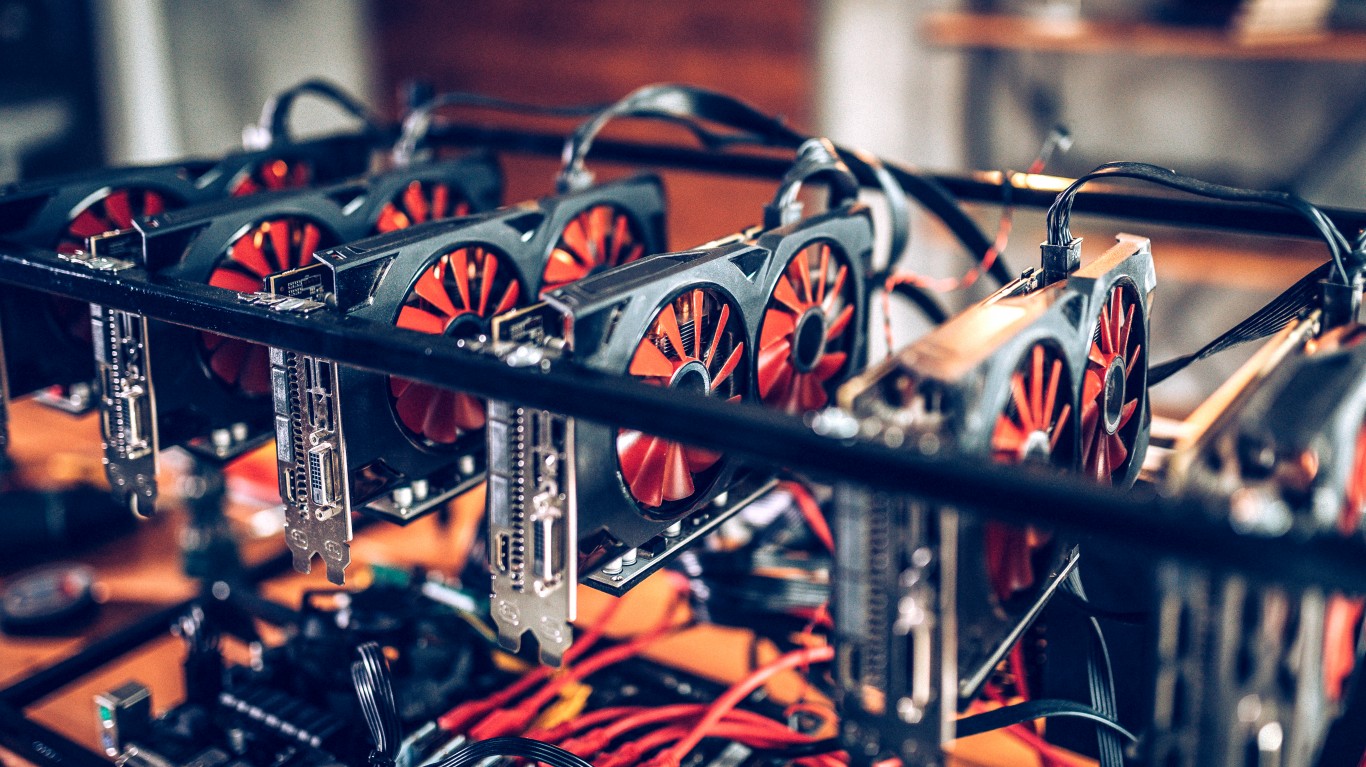
Riot Platforms Sold 79% of Its Bitcoin Last Quarter. Does Mining Bitcoin Still Pay?
Riot Platforms just sold nearly all the Bitcoin it mined last quarter, pouring the proceeds into AI data centers instead. Whether that pivot signals the death of mining economics or a smarter play with the same assets depends on costs…

This post may contain links from our sponsors and affiliates, and Flywheel Publishing may receive compensation for actions taken through them.

Riot Platforms (NASDAQ: RIOT | RIOT Price Prediction) sold 10,599 BTC in the third quarter of 2026, slashing its Bitcoin (CRYPTO: BTC) holdings from 11,380 coins at the end of June to just 2,418. Over the past nine months, the miner offloaded a total of 20,264 BTC for approximately $1.5 billion, primarily to fund the development of its AI data centers.
When one of North America’s largest Bitcoin miners liquidates nearly all its mined coins and much of its savings, we have to ask: Is Bitcoin mining still profitable?
The announcement comes alongside a major lease agreement, marking the largest in Riot’s history—a 15-year contract for 910 megawatts (MW) at its Corsicana, Texas campus, valued at about $28 billion. Following the news, Riot’s shares jumped by 13.3%, trading around $16, and are up about 25% year-to-date.
Bitcoin’s price stands at $80,360, up 3.7% over the previous 24 hours. However, it remains down roughly 8% this year and is 36% below its all-time high of $126,080 reached in October 2025.
How Riot Turned Its Bitcoin Into Cash for AI Data Centers
During the earnings call on August 10, CEO Jason Les said selling Bitcoin remains the company’s primary source of funding for operations and the equity portion of its data-center capital expenditures. The equity portion refers to the funds Riot uses from its own resources rather than relying on loans.
Les, being at the helm of the company, has every reason to present this strategy as well thought out. However, Riot’s third-quarter results reveal the reality behind these sales. Revenue increased by just 1% to $181.4 million, but net income plummeted to about $4 million, down from $104.5 million a year earlier.
Mining operations still contributed the majority of the revenue, totaling $116 million. However, this figure fell nearly 28%, as each Bitcoin mined averaged $70,855, down from $114,361 the previous year.
The significant selling did not negatively impact Bitcoin’s price. In fact, buyers acquired 10,599 BTC during a quarter when Bitcoin hit both a 90-day low on August 16 and a 90-day high on September 21. Riot has not committed to rebuilding its Bitcoin reserve, with CFO Jason Chung stating, “Our Bitcoin treasury is a key financial asset that we will continue to leverage to fund the development of our data center platform.”
Why Riot’s Power Is Worth More to AI Tenants Than to Bitcoin Miners

Power is Riot’s most valuable asset. The company has around 2 gigawatts of capacity, with 1,700 MW in Texas and 300 MW in Kentucky. Its sites in Rockdale and Corsicana have already secured grid connections, allowing them to bypass the Texas grid operator’s newer approval process for large power users, which gives Riot an advantage as AI companies seek powered land.
Before the Corsicana lease, Riot had already signed a deal for 241 MW at Rockdale worth about $9.8 billion. This included a 50 MW agreement with AMD (NASDAQ: AMD) and a 20-year, 191 MW lease worth around $9.1 billion with the same AI lab that later leased Corsicana. Riot refers to this tenant as “a leading Frontier AI Lab,” making it difficult for outsiders to assess the financial reliability that underpins its financing plans.
The build-out in Rockdale is estimated to cost between $2.1 billion and $2.3 billion, with plans to finance 80% to 90% of the project through loans. An interim loan of $573 million from Morgan Stanley is currently funding early-stage work. Long-term financing will rely on investment-grade credit support, a safeguard from an entity credit rating agencies consider unlikely to default.
All of these leases generate revenue in dollars. The Corsicana lease is a triple-net powered land lease, meaning that Riot provides the land, power, and electrical connections, while the tenant is responsible for taxes, insurance, and maintenance. The agreement with AMD generated an impressive 80% gross margin in Q3, and tenants are not required to pay in Bitcoin, hold it, or utilize the network.
Riot’s Bitcoin Mining Costs Double Once Equipment Wear Is Counted

In Q3, Riot mined 1,637 BTC at a direct cost of $39,265 per coin, down from $49,912 in the previous quarter. However, gross mining margin—the portion of revenue left after direct costs—fell to 44.6%, down from 54.6% a year earlier.
Riot enjoys a competitive edge thanks to low power costs, paying a net 3.2 cents per kilowatt-hour, aided by $24.7 million in curtailment credits (about $15,067 per Bitcoin mined). The Texas grid provides these credits when Riot temporarily shuts down its machines during power shortages, lowering its costs.
When factoring in equipment wear and depreciation, Riot’s cost per Bitcoin mined rises to $78,805, exceeding the average value of $70,855 per coin. This adjustment leads to a mining loss of $37.7 million in Q3, consistent with management’s earlier warning that Bitcoin mining was “unprofitable on a fully costed basis.”
Chung has touted Riot’s direct costs as “industry-leading efficiency,” but that’s a perspective from the finance chief assessing his own company. Riot plans to continue mining in Rockdale until it finalizes additional leases, ensuring that mining operations can fill power capacity not yet taken by data center tenants.
Is Bitcoin Mining Still Profitable for Riot?
Bitcoin mining still yields cash for a low-cost operator like Riot, but its profitability is hanging by a thread, especially when you factor in all costs.
Contact [email protected] for any questions or corrections.
Sam Daodu is a crypto analyst and the editor of 24/7 Wall St.'s Crypto Desk, where he covers Bitcoin, XRP, Ethereum, Solana and the altcoins investors search for most. His work focuses on price levels, spot ETF flows, on-chain data and the regulatory decisions that move crypto markets, written so a first-time buyer and a seasoned trader can both use it.
Sam has written about crypto professionally since 2019 and has published more than 2,000 articles. Before joining 24/7 Wall St., he wrote for crypto media outlets and Web3 companies and ghostwrote for crypto founders and token launches. His analysis is syndicated on Yahoo Finance, MSN and AOL and has been cited by other crypto news sites. He also founded MacLabs Marketing, a content and personal branding agency for crypto founders and executives.
When he isn't reading charts, Sam is usually at the gym or watching One Piece, a series he maintains has better tokenomics than most altcoins.