Bitcoin Transactions Are Public and Monero’s Are Hidden. Will Monero (XMR) Be Banned?

This post may contain links from our sponsors and affiliates, and Flywheel Publishing may receive compensation for actions taken through them.
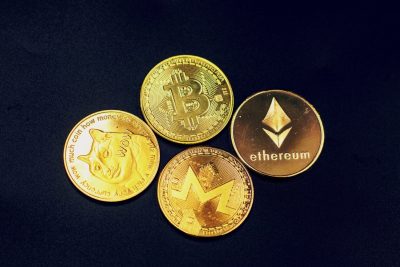
Bitcoin (CRYPTO: BTC) operates on a public ledger that anyone can access, so every Bitcoin payment can be traced. Monero (CRYPTO: XMR), by contrast, hides transaction details, including who paid whom and how much. That difference has led regulators to apply stricter rules to Monero, leaving holders with one question. Will Monero be banned?
Monero is legal to own in most countries. However, access on regulated exchanges is becoming more limited, partly because new rules in Europe could keep XMR off licensed platforms by July 10, 2027. XMR trades at $543 as of November 12, down 12.8% over the past week, after it outperformed major cryptocurrencies in October 2026. So how much more pressure could Monero face?
Monero Faces More Scrutiny Than Bitcoin Due to Its Privacy Features
Bitcoin transactions can be easily tracked on its public ledger, allowing exchanges to verify where deposits came from. In contrast, Monero is a privacy coin that hides the sender, the receiver, and the amount by default, leaving compliance teams unable to screen its payments.
Zcash (CRYPTO: ZEC), another privacy coin, makes privacy optional, letting users choose how their transactions are recorded. Grayscale brought Zcash to NYSE Arca through an ETF on August 25, and a Monero vs. Zcash comparison looks at how the two privacy coins compete.
Europe, Dubai and Major Exchanges Have Restricted Monero
| Jurisdiction | Rule | Date |
|---|---|---|
| European Union | AMLR bars providers from offering accounts that use anonymity-enhancing coins | July 10, 2027 |
| Dubai (DIFC) | DFSA has banned privacy tokens | In force |
| EEA (Kraken) | XMR trading and deposits ended | October 31, 2024 |
| Global (Binance) | XMR delisted | February 20, 2024 |
| United States | No ban on holding XMR | Not applicable |
These rules mainly target exchanges and service providers, not individual holders. For instance, the European Union’s Anti-Money Laundering Regulation (AMLR) bars licensed providers from running accounts tied to anonymity-enhancing coins. Meanwhile, Dubai’s financial regulator, the DFSA, has banned privacy tokens outright in its DIFC financial hub. However, owning XMR remains legal under each of these rules.
Exchanges were the first to act. Binance delisted XMR globally on February 20, 2024, and Kraken ended XMR trading and deposits for users in the European Economic Area on October 31, 2024.
A Delisting Cuts Off the Exchange but Leaves the Coins
When an exchange delists a coin, it stops supporting trading in that coin, but the coins stay on the Monero network. For example, Kraken gave EEA users until December 31, 2024, to withdraw their XMR. In the United States, XMR isn’t listed on Coinbase (NASDAQ: COIN | COIN Price Prediction).
Once holders move coins off an exchange, they manage their own security, and risks remain even with hardware wallets, as the Coldcard hack showed.
Will Monero Be Banned?
Although holders can legally keep their XMR, trading it on regulated exchanges in Europe may become increasingly difficult after the AMLR takes effect on July 10, 2027. The rules mainly affect access to exchanges, not ownership.
In the U.S., a complete ban would require new legislation or regulatory action. Until then, access to regulated exchanges may keep shrinking, while holding Monero will likely remain legal.
Contact [email protected] for any questions or corrections.
Sam Daodu is a crypto analyst and the editor of 24/7 Wall St.'s Crypto Desk, where he covers Bitcoin, XRP, Ethereum, Solana and the altcoins investors search for most. His work focuses on price levels, spot ETF flows, on-chain data and the regulatory decisions that move crypto markets, written so a first-time buyer and a seasoned trader can both use it.
Sam has written about crypto professionally since 2019 and has published more than 2,000 articles. Before joining 24/7 Wall St., he wrote for crypto media outlets and Web3 companies and ghostwrote for crypto founders and token launches. His analysis is syndicated on Yahoo Finance, MSN and AOL and has been cited by other crypto news sites. He also founded MacLabs Marketing, a content and personal branding agency for crypto founders and executives.
When he isn't reading charts, Sam is usually at the gym or watching One Piece, a series he maintains has better tokenomics than most altcoins.