$1,000 in Zcash or $1,000 in Monero: Which Could Be Worth More by 2028?
Zcash and Monero each have a $1,000 entry point right now, but the forces shaping their prices through 2028 pull in completely opposite directions, and only one looks positioned to survive what's coming for privacy coins in Europe.

This post may contain links from our sponsors and affiliates, and Flywheel Publishing may receive compensation for actions taken through them.
With a $1,000 investment, you can buy about 0.81 Zcash (CRYPTO:ZEC) or about 1.67 Monero (CRYPTO:XMR). Both Zcash and Monero are privacy coins that aim to keep transaction details private. The Zcash vs. Monero question remains: which of these two cryptocurrencies could be worth more by 2028?
Zcash is trading at $1,233. This marks a significant increase of 199.4% over the past year, though it has declined slightly by 9.4% over the last 30 days. During this period, ZEC’s price fluctuated, falling to $1,126 on October 17 and peaking at $1,365 on October 6.
Meanwhile, Monero is currently priced at $598 after a notable 10.9% gain over the past 30 days, making it one of the standout performers among large cryptocurrencies in October. As of now, Zcash ranks 11th by market cap, while Monero holds 13th.
What $1,000 in Zcash or Monero Could Be Worth at Different Prices
The table below illustrates what a $1,000 investment could potentially be worth at various price points for each cryptocurrency. It also shows the implied market value for each price.
| Coin/Price | Value of $1,000 Stack | Implied Market Value |
|---|---|---|
| ZEC ($800) | $649 | $13.6 billion |
| ZEC ($1,500) | $1,217 | $25.5 billion |
| ZEC ($2,000) | $1,622 | $34 billion |
| ZEC ($3,190) | $2,587 | $54.3 billion |
| XMR ($400) | $669 | $7.5 billion |
| XMR ($800) | $1,337 | $15.1 billion |
| XMR ($1,000) | $1,671 | $18.8 billion |
| XMR ($1,500) | $2,507 | $28.2 billion |
One challenge for Zcash’s growth is its historical pricing. ZEC reached an all-time high of $3,192 on its launch day in October 2016 when very few coins were available. Currently, about 17 million ZEC are in circulation out of a total cap of 21 million. Reaching that price now would imply a market value of $54.3 billion, about 2.6 times its current value.
Monero, however, has no fixed supply cap. Approximately 18.8 million XMR are currently circulating, and miners will continuously earn 0.6 XMR per block due to its tail emission model, which provides a small ongoing reward to keep the network operating. For Monero, it only needs a modest increase from its previous high of $798 on January 14 to reach $800.
Grayscale’s Zcash ETF Gives ZEC a Buyer Monero Lacks
Zcash and Monero use different methods to protect user privacy. Zcash allows users to choose between transparent accounts, similar to Bitcoin, and shielded accounts that hide transaction details. In contrast, Monero automatically conceals all transaction information.
Another factor benefiting Zcash is the availability of a buyer that Monero doesn’t have. Trading began for the Grayscale Zcash ETF (NYSEARCA:ZCSH) on August 25, and ZEC’s price surged from $483 on August 3 to a high close of $1,653 on September 26. This period clearly shows how demand from new investment funds can affect Zcash’s price. Monero, lacking an ETF, relies on direct purchases from buyers.
However, Zcash has faced some challenges, including slipping from the top 10 cryptocurrency rankings after being surpassed by Hyperliquid.
EU Privacy Rules and Zcash’s 2028 Halving Could Favor ZEC Over Monero

Upcoming EU anti-money-laundering regulations, effective July 10, 2027, may also benefit Zcash. Under Article 79, licensed crypto exchanges will be prohibited from offering anonymous accounts or dealing in cryptocurrencies that enhance anonymity. Binance removed Monero from its listings in February 2024, while Zcash remains among the coins that Binance lists as fully backed. This difference may help Zcash maintain its exchange listings while Monero could see further restrictions in Europe.
Supply dynamics might also favor Zcash. Halvings, which reduce the number of coins rewarded to miners, are set to occur, with Zcash’s next halving projected for late 2028. This event will cut the reward from 1.5625 ZEC to 0.78125 ZEC per block, decreasing the number of new coins available for sale by miners. Meanwhile, Monero’s block reward of 0.6 XMR will remain unchanged.
Zcash developers also want to end the coin’s developer funding early, affecting how new ZEC will be distributed.
The Price Levels Zcash and Monero Need to Clear by 2028
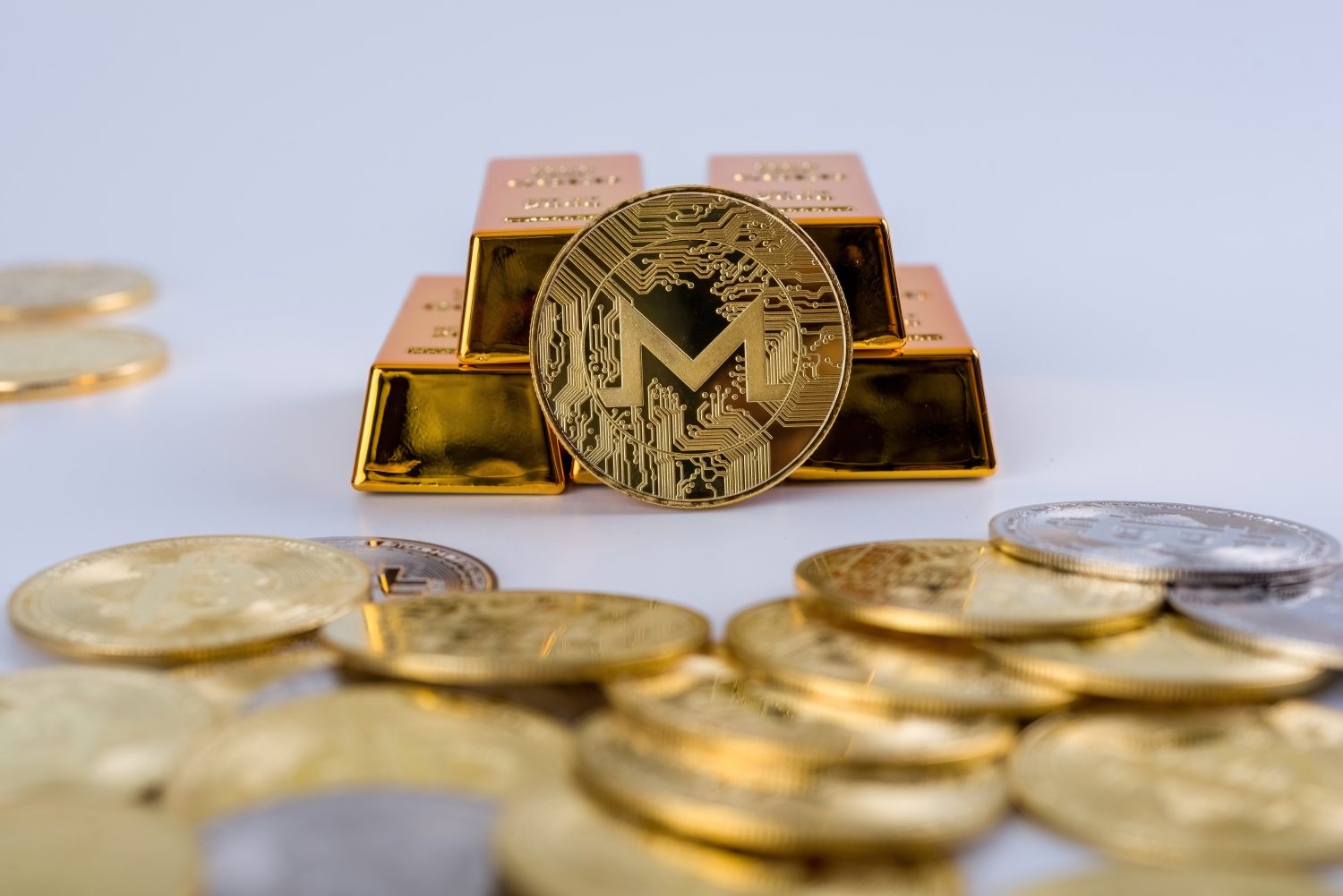
For Zcash, the journey begins with holding above the October low of $1,126. Next, it needs to reclaim its 50-day moving average, currently at $1,311. Following that, ZEC will need to surpass its September peak of $1,653 before aiming for $2,000. If it reaches $2,000, a stack of 0.81 ZEC could be worth around $1,622.
Monero has a more straightforward path, as it must first break past its October high close of $621 and then its record of $798. At $800, a stack of 1.67 XMR could be worth about $1,337.
However, if interest in the ETF wanes, ZEC could slide toward its 200-day moving average of $738, bringing the value of a 0.81 ZEC stack down to roughly $599.
Zcash vs. Monero: Which $1,000 Investment Could Be Worth More by 2028?
The outlook suggests that Zcash may have a better chance of outperforming in the long run because it has a buyer in the form of an ETF, a scheduled supply reduction, and a higher likelihood of maintaining exchange listings under the new EU regulations. Nonetheless, Zcash could also face significant declines, as shown by a drop to $197 on March 7.
Investors interested in ETF-driven potential may prefer Zcash, while those prioritizing privacy and steadier trading may gravitate toward Monero. A close above $1,653 in ZEC before July 10, 2027, could bolster confidence in this assessment. Conversely, if Monero sets a new record first while ZEC stays under $1,311, the Monero stack could take the lead.
Contact [email protected] for any questions or corrections.
Sam Daodu is a crypto analyst and the editor of 24/7 Wall St.'s Crypto Desk, where he covers Bitcoin, XRP, Ethereum, Solana and the altcoins investors search for most. His work focuses on price levels, spot ETF flows, on-chain data and the regulatory decisions that move crypto markets, written so a first-time buyer and a seasoned trader can both use it.
Sam has written about crypto professionally since 2019 and has published more than 2,000 articles. Before joining 24/7 Wall St., he wrote for crypto media outlets and Web3 companies and ghostwrote for crypto founders and token launches. His analysis is syndicated on Yahoo Finance, MSN and AOL and has been cited by other crypto news sites. He also founded MacLabs Marketing, a content and personal branding agency for crypto founders and executives.
When he isn't reading charts, Sam is usually at the gym or watching One Piece, a series he maintains has better tokenomics than most altcoins.