Industrials Are Up 17% and Still Catching the Next Wave of AI Money
Industrials have quietly stopped being a reshoring story and started being an AI infrastructure bet, and the distinction changes everything about where the rally goes from here.

This post may contain links from our sponsors and affiliates, and Flywheel Publishing may receive compensation for actions taken through them.

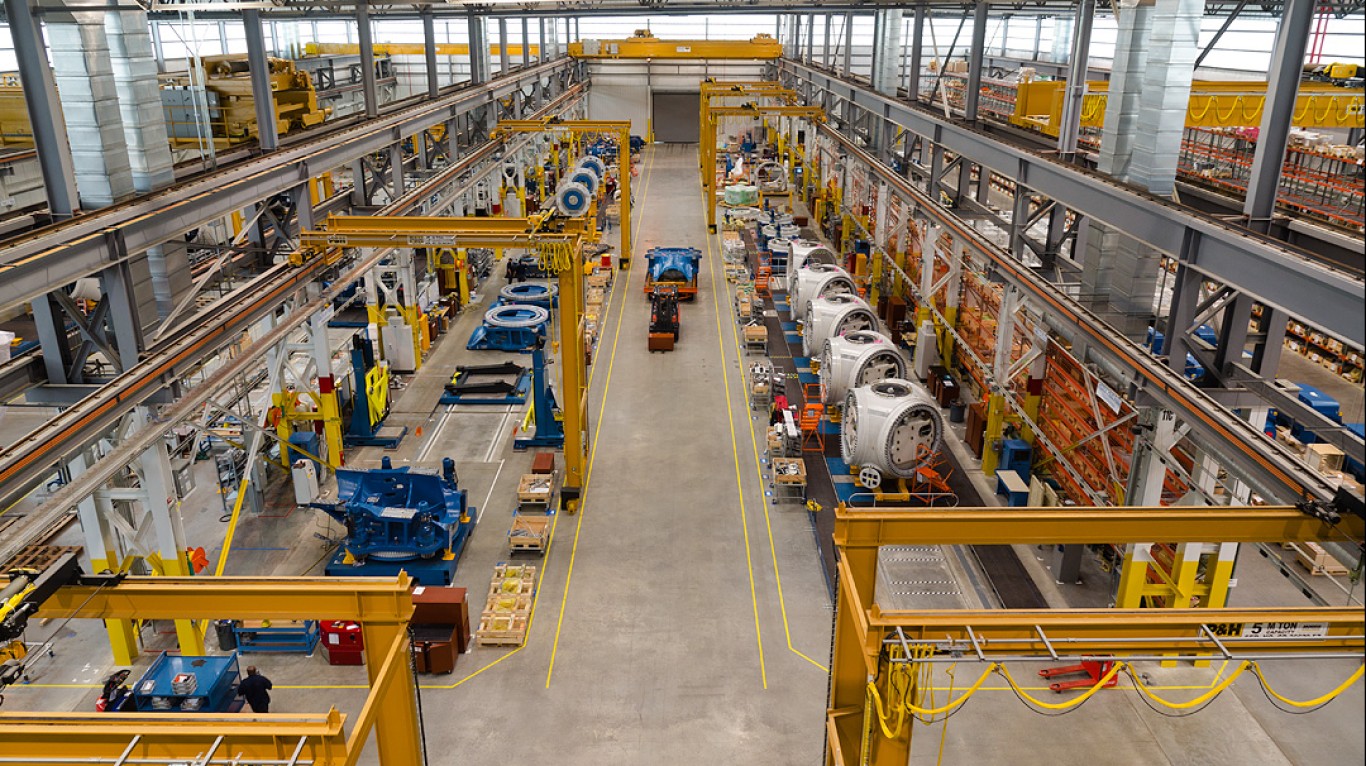
The Industrial Select Sector SPDR Fund (NYSEARCA:XLI) has climbed 16% year to date and 20% over the past year, outrunning the 9% year-to-date gain for the SPDR S&P 500 ETF Trust (NYSEARCA:SPY) by a wide margin. The story behind XLI’s leadership has quietly shifted. What began as a reshoring and defense trade in 2024 has turned into a bet on the physical layer of the AI build-out, where hyperscaler orders for power, cooling, and grid equipment now move the needle for the fund’s biggest holdings.
Manufacturing corporate profits hit $773.3 billion in the first quarter, up 12.8% year over year, with durable goods profits alone jumping to $452.9 billion from $325.6 billion a year earlier. That is the profit line feeding XLI’s rally, and it has not slowed yet.
The Macro Signal: Hyperscaler Capex Guidance
The single macro factor most likely to determine XLI’s next twelve months is the trajectory of hyperscaler AI capex, specifically the combined capital spending guidance from Microsoft, Alphabet, Meta, Amazon, and Oracle. Goldman Sachs put it directly in its 2026 outlook, warning that “a marked reversal and broad unwind of AI-related investments… could be the precursor to a hard landing for the economy”. XLI’s largest holdings, including GE Aerospace, Eaton, and Caterpillar’s Power & Energy division, all sell into that capex stream.
What to watch concretely: the 2027 capex framing on each hyperscaler’s next two quarterly earnings calls, plus the Fed’s Beige Book district commentary on data center demand. Check quarterly, not daily. History gives a fair template. Caterpillar generated a 60% total return in 2025 and now sits on a record $51 billion backlog, much of it tied to backup power for data centers. Any sequential cut to hyperscaler capex plans has historically pulled backlog-heavy industrial names down first and hardest, because their order books are the most visible casualty.
The Fund-Specific Lever: Electrification Concentration
XLI is technically diversified across aerospace, defense, machinery, and transportation, but the AI premium sits in a narrow slice of names tied to electrification and power. A March 2026 sector note flagged that industrial P/E ratios are nearly double historical averages, with the rerating driven almost entirely by Caterpillar, Eaton, GE Aerospace, and Emerson Electric. If AI-capex enthusiasm cools, those four names will carry the drawdown.
The signal to monitor is XLI’s monthly weight drift in its top ten holdings, published on the State Street SPDR fact sheet. Rising concentration in electrification names amplifies both upside and downside. Investors who want to isolate that exposure rather than dilute it with railroads, airlines, and staffing companies should look at the Global X U.S. Infrastructure Development ETF (NYSEARCA:PAVE), which returned 28% over the past year by leaning harder into electrical and construction names. For automation exposure specifically, the ROBO Global Robotics and Automation Index ETF (NYSEARCA:ROBO) is up 27% over the past year yet down 7% in the last month, a reminder that concentrated automation baskets swing harder than XLI.
What to Watch Next
The clearest tell for XLI over the next twelve months is the 2027 capex guide from the top four hyperscalers on the fall earnings calls. If combined guidance comes in flat or lower, expect the AI-linked industrial names driving XLI to give back a meaningful portion of the rerating. On the fund side, watch the monthly SPDR fact sheet for any drift above roughly a quarter of assets in the four electrification winners. That is the exposure that got investors here, and it is the exposure that will decide where XLI goes next.
Contact [email protected] for any questions or corrections.
Marc Guberti is a personal finance writer who has written for US News & World Report, Business Insider, Newsweek and other publications. He also hosts the Breakthrough Success Podcast which teaches listeners how to use content marketing to grow their businesses.