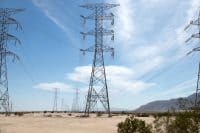
The $1.5 Trillion Grid Modernization Cycle Is Just Beginning and These 3 ETFs Own the Pure Plays Investors Keep Missing
Utility capital expenditure plans, federal modernization grants, and the power needs of AI data centers have converged into what industry estimates peg at roughly $1.5 trillion in cumulative grid investment over the next decade. Three exchange-traded funds give investors clean…


Utility capital expenditure plans, federal modernization grants, and the power needs of AI data centers have converged into what industry estimates peg at roughly $1.5 trillion in cumulative grid investment over the next decade. Three exchange-traded funds give investors clean exposure to that build-out from different angles: First Trust NASDAQ Clean Edge Smart Grid Infrastructure Index Fund (NASDAQ:GRID), Tema Electrification ETF (NASDAQ:VOLT), and Global X U.S. Infrastructure Development ETF (NYSEARCA:PAVE).
Each fund attacks the theme from a different point in the value chain. GRID concentrates on smart-grid hardware, software, and transmission equipment vendors. VOLT widens the lens to industrial electrification more broadly. PAVE wraps in the engineering, construction, and materials companies that build the physical infrastructure. All three are outperforming the S&P 500 so far in 2026.
Why the grid build-out is structurally durable
U.S. electricity demand has grown roughly 2.1% per year on average over the last five years after 15 years of flat consumption, and the Energy Information Administration’s High Electricity Demand case projects data center server energy use rising to 818 billion kilowatthours by 2050, more than 16 times the 2020 level. Goldman Sachs separately models data center power demand growing more than 175% by 2030 versus 2023.
The existing grid is aging. The average age of U.S. power grid assets is around 40 years, a structural mismatch with the load profiles that AI training, clustering, and electrified transport now require. The Department of Energy’s $30 billion grid modernization fund, layered atop utility rate-base growth and hyperscaler-funded interconnection upgrades, is the policy backdrop for the next decade of spending.
GRID: the original pure-play on smart-grid infrastructure
GRID offers the most concentrated exposure for investors seeking smart-grid value chain exposure without the railroad and building-products dilution that comes with broader infrastructure funds. The portfolio anchors itself in industrial automation and power management leaders: Eaton, Johnson Controls, National Grid, ABB, and Schneider Electric, each weighted around 7% to 8%, sit at the top of the book. Cable and transmission specialists Prysmian, Nexans, NKT, and Fujikura provide direct exposure to the high-voltage hardware required to move electrons.
The fund had $11 billion in net assets as of May 29, 2026,, with a geographic split of roughly 39% in the U.S., 45% to 50% in Europe, and 10% to 15% in Asia-Pacific. That international tilt is the structural feature most worth understanding. National Grid, E.ON, Enel, and Iberdrola anchor the European utility weighting, which means GRID is partly a bet on European transmission spending and EU electrification policy, not just on U.S. utility capex.
GRID is up about 27% year-to-date and roughly 50% over the trailing year, with shares trading around $193. The trade-off: the top five positions account for roughly 37% of the fund, so a downgrade cycle at Eaton, Johnson Controls, Schneider, or ABB would move GRID more than a broader basket would. NVIDIA and Tesla also appear in the holdings at roughly 2% each, respectively, adding unrelated AI and EV beta.
VOLT: a younger, more concentrated bet on industrial electrification
VOLT is the contrarian pick on this list. Launched in 2023 by Tema, it is the youngest and smallest of the three, which is why it tends to get missed on screens dominated by older, larger funds. Rather than concentrating on transmission and distribution equipment, VOLT targets the industrial electrification supply chain: companies whose order books grow as factories, vehicles, heating systems, and data centers replace fossil-fuel processes with electric ones.
The expense ratio runs at 0.75%, the highest of the three funds, and reflects both the actively managed structure and smaller asset base. That is the price of admission for a portfolio built specifically around picks-and-shovels names that benefit whether demand comes from EV charging build-out, hyperscaler campus electrification, or industrial heat electrification.
VOLT is up about 36% year-to-date and roughly 67% over the trailing year, with shares trading around $39. The tradeoff is concentration risk and liquidity. A newer fund with a more focused mandate will move more violently when the electrification narrative cools, and the higher fee compounds over long holding periods. Investors using VOLT typically pair it with a broader holding rather than treating it as a standalone position.
PAVE: the infrastructure build, with grid as a meaningful slice
PAVE is the broadest of the three and the largest, with about $13.54 billion in net assets as of May 29, 2026. It is a U.S. infrastructure fund in which roughly a third of the holdings are levered to grid build-out, either directly or through grid-adjacent supply chains, rather than a pure-play grid vehicle.
The grid-relevant slice is concentrated in a handful of recognizable names. Quanta Services at about 4%, Eaton at about 3%, CSX at about 3%, and Trane Technologies at roughly 3% are the most direct beneficiaries, with Emerson Electric, Hubbell, MasTec, and AECOM adding exposure to engineering and electrical products. The rest of the fund leans into railroads (Union Pacific, Norfolk Southern, CSX), construction materials (Vulcan, Martin Marietta, Nucor, Steel Dynamics), and building-systems names like Trane Technologies and Parker-Hannifin.
PAVE is up about 18% year-to-date and roughly 37% over the trailing year, lagging the two more concentrated funds because its railroad and materials exposure dilutes the pure grid signal. In a year when grid spending surges but rail volumes slip, PAVE will trail GRID. In a year where the broader U.S. construction cycle accelerates, PAVE picks up tailwinds the other two miss.
Matching the fund to the investor
An investor who wants the cleanest smart-grid exposure, accepts European utility weighting, and is comfortable with five positions driving most of the return profile gravitates toward GRID. An investor willing to pay a higher fee for a focused electrification thesis and a younger, smaller fund with more torque typically uses VOLT as a satellite to a broader infrastructure holding.
An investor who wants the U.S. infrastructure built with grid exposure baked in rather than highlighted defaults to PAVE, accepting that railroads and aggregates will move the fund as much as transmission spending does. The popular alternative most investors compare these against is a generic utilities sector fund, which captures regulated dividends but misses the equipment, automation, and engineering layers where most of the grid-modernization capex is actually being spent.
Contact [email protected] for any questions or corrections.
David Beren has been a Flywheel Publishing contributor since 2022. Writing for 24/7 Wall St. since 2023, David loves to write about topics of all shapes and sizes. As a technology expert, David focuses heavily on consumer electronics brands, automobiles, and general technology. He has previously written for LifeWire, formerly About.com. As a part-time freelance writer, David’s “day job” has been working on and leading social media for multiple Fortune 100 brands. David loves the flexibility of this field and its ability to reach customers exactly where they like to spend their time. Additionally, David previously published his own blog, TmoNews.com, which reached 3 million readers in its first year. In addition to freelance and social media work, David loves to spend time with his family and children and relive the glory days of video game consoles by playing any retro game console he can get his hands on.