Why This Leveraged S&P 500 ETF Can Lose Money Even When Stocks Rise
Leveraged ETFs promise amplified gains, but SPXL hides a counterintuitive flaw that can turn a rising market into a losing trade. Understanding what actually happens inside this fund each day changes everything about how you should use it.

This post may contain links from our sponsors and affiliates, and Flywheel Publishing may receive compensation for actions taken through them.

The S&P 500 is up approximately 10% in 2026, on track for another year of strong performance, prompting many investors to look for ways to amplify their returns. One increasingly popular option is the Direxion Daily S&P 500 Bull 3X Shares (NYSEARCA:SPXL), a leveraged ETF designed to deliver three times the daily performance of the S&P 500.
At first glance, the strategy appears straightforward. Simply put, if the index rises, SPXL should rise even more. However, leveraged ETFs are far more complex than many investors realize. Because SPXL resets its leverage daily, its long-term performance can differ significantly from three times the S&P 500’s return. In some cases, investors can even lose money over a period when the index itself finishes higher.
Before purchasing SPXL, investors should understand how daily leverage, compounding, and market volatility can influence returns, and why this fund is generally intended for short-term tactical trading rather than long-term investing.
Why Leveraged ETFs Don’t Always Deliver Multi-X Long-Term Returns
One major misconception about leveraged ETFs is that they simply multiply an index’s long-term performance. In reality, funds like SPXL are designed to deliver three times the S&P 500’s daily return, not its return over weeks, months, or years.
Because the fund resets its leverage at the end of each trading day, returns compound over time, causing performance to depend not only on where the market ends up, but also on the path it takes to get there.
This effect becomes more noticeable during times of volatility or long periods of sideways chop.
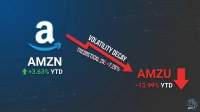
Large swings in either direction can gradually erode returns through what’s commonly known as volatility drag. This means that SPXL may significantly underperform three times the S&P 500’s cumulative gain, or in a worst-case scenario even lose money during periods when the index finishes higher.
The Mechanism behind SPXL
The Direxion Daily S&P 500 Bull 3X Shares (SPXL) seeks to deliver 300% of the daily performance of the S&P 500 Index.
Rather than purchasing three dollars’ worth of stocks for every dollar invested, the fund uses derivatives to achieve the desired goal. This includes purchasing swaps, futures, and other financial instruments to obtain leveraged exposure. This exposure is reset at the close of each trading day.
This daily rebalancing allows SPXL to closely track its stated objective over a single trading session, making it particularly popular among active traders looking to capitalize on short-term market moves. However, the same mechanism that creates amplified gains for a single trading day is also what can cause longer-term returns to diverge from a simple three-times multiple of the index.
When SPXL Performs Best
Despite its inherent risks, SPXL can be an effective tool under the right market conditions.
The fund has historically performed best during strong, sustained bull markets where the S&P 500 advances steadily with relatively low day-to-day volatility. In these environments, positive daily compounding can even work in investors’ favor, allowing returns to exceed what many might expect from simply multiplying the index’s cumulative gain. For example, five- year cumulative returns of 154.93% far exceed those of the S&P 500 over the same period. However, during this period, there were moments when SPXL also significantly underperformed. For that reason, SPXL is generally best suited for short-term tactical trades or for experienced investors with a high conviction that the market’s upward momentum will continue.
Who Should (and Shouldn’t) Own SPXL
Because the fund provides three times the S&P 500’s daily return, it can be an effective tactical tool for investors with a high-conviction bullish outlook and who are actively monitoring their positions. However, leveraged ETFs require disciplined risk management, as losses are magnified just as quickly as gains.
Despite strong performance, SPXL is generally not an appropriate choice for long-term buy-and-hold investors. Investors seeking broad exposure to the S&P 500 will likely be better served buying traditional index ETFs, which are designed to track the market’s long-term performance without the added complexity of daily leverage resets and compounding effects. Likewise, with an expense ratio of 0.84%, traditional index funds like the SPDR S&P 500 ETF (NYSEARCA:SPY) offer a much more affordable ways to gain broad market exposure.
Final Takeaway
SPXL can be a powerful investment vehicle when used as intended. That said, it is not simply a way to earn 3X the S&P 500’s long-term return. Its daily leverage reset means market volatility and the sequence of returns can have a meaningful impact on performance over time.
Investors who understand these mechanics and use SPXL as a short-term tactical tool may benefit from its amplified exposure, while long-term investors are generally better served buying traditional, more cost-effective unleveraged index funds.
Contact [email protected] for any questions or corrections.
Ryne Mauck is an investment writer covering exchange-traded funds, retirement planning, and portfolio strategy. Through his work at 24/7 Wall St. and other investment platforms, including Seeking Alpha, he aims to provide clear, research-driven insights that help investors make more informed decisions while maintaining a long-term approach to investing.
Ryne holds a B.Sc. in Finance and an M.A. in Political Science. He is a formerly registered Municipal Advisor Representative and has passed the Series 50, Series 63, and Series 65 exams. His articles are not intended to be, nor should they be interpreted as, financial advice.