HIBL: This 3X ETF Lets You Bet on America’s Fastest-Growing Companies
A 3x leveraged ETF targeting the S&P 500's most volatile stocks sounds like a trader's dream during a bull market, but the mechanics hiding inside its daily reset can quietly destroy returns in ways most investors never see coming.


The Direxion Daily S&P 500 High Beta Bull 3X Shares ETF (NYSEARCA:HIBL) is designed to give leveraged exposure to the highest beta constituents of the S&P 500 index. Specifically, the fund seeks to deliver 300% of the daily performance of the S&P 500 High Beta Index, amplifying exposure to some of the index’s most volatile stocks.
The strategy can produce eye-catching returns during strong bull markets, with high-beta stocks tending to outperform when investor sentiment is improving and risk appetite is high. However, the tradeoff is equally important. HIBL resets its leverage every trading day, making long-term returns dependent on the market’s path rather than simply its overall direction. Investors considering the fund should understand both the advantages of high-beta exposure and the risks that come with leveraged ETFs.
Why High-Beta Stocks Outperform in Bull Markets
High-beta stocks have historically led the market during strong bull runs. Their higher sensitivity to market movements allows them to outperform when investor sentiment improves, earnings accelerate, and risk appetite increases. The tradeoff is that they typically fall harder during market corrections.
The S&P 500 High Beta Index is designed to capture that upside by tracking the highest-beta stocks in the S&P 500. As of mid-2026, the index was concentrated in information technology (46.9%), followed by industrials (15.1%), financials (14.1%), and consumer discretionary (12.4%). Those sectors have historically benefited the most during periods of economic expansion and strong equity market momentum.
How HIBL’s Daily Leverage Mechanics Work
HIBL seeks to deliver 300% of the daily performance of the S&P 500 High Beta Index. The emphasis on daily performance is important.
In order to target 3x the daily performance of the S&P 500 High Beta Index, the fund uses financial derivatives (i.e., swaps and futures contracts) and resets its leverage at the close of every trading day.
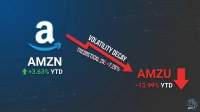
That daily reset creates one of the biggest risks of leveraged ETFs: volatility decay.
During volatile markets, alternating gains and losses can gradually reduce returns through the effects of daily compounding. As a result, HIBL can lose value over time even if the underlying index finishes roughly flat over the same period.
For that reason, HIBL is generally best suited for short-term traders with a strong bullish outlook on high-beta stocks rather than long-term investors.
Investors planning to hold the fund for weeks or months should understand that it is designed to deliver 3x daily returns, not three times the index’s long-term performance.
Key Fund Statistics
HIBL has excelled during the current bull market, returning 40.9% year-to-date and 90.1% over the past year, far outpacing the S&P 500. However, the fund’s -88.3% maximum drawdown and weaker five-year performance illustrate the long-term effects of leverage and volatility decay. The statistics below highlight why HIBL is best viewed as a tactical trading vehicle rather than a buy-and-hold investment.
| Metric | HIBL |
| Inception Date | November 7, 2019 |
| Investment Objective | 300% of the S&P 500 High Beta Index |
| Rebalance Frequency | Daily |
| Net Assets | $75.02M |
| Expense Ratio | 0.98% |
| YTD Total Return | +40.96% (Compared to +9.41% for S&P 500) |
| 1-year Total Return | +90.05% (Compared to +18.15% for S&P 500) |
| 3-year Total Return | +118.14% (Compared to +63.21% for S&P 500) |
| 5-year Total Return | +59.27% (Compared to +70.72% for S&P 500) |
| Max Historical Drawdown | -88.27% |
Final Takeaway
HIBL offers investors an aggressive way to amplify exposure to some of the S&P 500’s highest-beta stocks. During strong bull markets, that strategy can generate returns that far exceed the broader market. However, the fund’s daily leverage reset and the effects of volatility decay make it a poor choice for most long-term investors.
For traders with a high risk tolerance and a short-term bullish outlook on the index, HIBL can be an effective tactical tool. That said, for buy-and-hold investors, a traditional S&P 500 ETF is likely to provide a smoother path to long-term wealth creation with significantly less risk.
Contact [email protected] for any questions or corrections.
Ryne Mauck is an investment writer covering exchange-traded funds, retirement planning, and portfolio strategy. Through his work at 24/7 Wall St. and other investment platforms, including Seeking Alpha, he aims to provide clear, research-driven insights that help investors make more informed decisions while maintaining a long-term approach to investing.
Ryne holds a B.Sc. in Finance and an M.A. in Political Science. He is a formerly registered Municipal Advisor Representative and has passed the Series 50, Series 63, and Series 65 exams. His articles are not intended to be, nor should they be interpreted as, financial advice.