SCHD: The Biggest Mistake New Dividend Investors Make
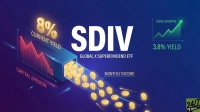
Chasing the highest dividend yield feels like the smart move until you see what it actually does to long-term wealth. Before you load up on funds paying 8% or 10%, there is a critical tradeoff most new investors never consider.

This post may contain links from our sponsors and affiliates, and Flywheel Publishing may receive compensation for actions taken through them.

New dividend investors often start with the wrong question: Which ETF pays the highest yield? That mindset can lead them toward funds yielding 8%, 10%, or even more. The problem is that the highest yield rarely translates into the highest long-term wealth.
The Schwab U.S. Dividend Equity ETF (NYSEARCA:SCHD) has built a loyal following by taking the opposite approach. Rather than chasing the biggest payouts, SCHD focuses on high-quality companies with strong balance sheets, consistent profitability, and a history of growing their dividends. Its yield typically lands around 3% to 4%, but that has been enough to produce one of the strongest long-term track records among dividend ETFs.
The biggest mistake new dividend investors make is confusing income today with wealth tomorrow. SCHD demonstrates why those two goals are not always the same.
Why Yield Alone Can Be Dangerous
A high dividend yield often looks attractive on paper. Receiving 8% or 10% annually sounds far more compelling than collecting 3.5%.
However, yields frequently rise because share prices have fallen. In many cases, the market is signaling deteriorating fundamentals, slower earnings growth, or an unsustainable dividend. Some funds also generate headline yields by selling covered calls, returning investors’ own capital, or investing in riskier sectors that experience greater volatility.
SCHD avoids many of these pitfalls through its selection methodology. The fund screens for companies with at least 10 consecutive years of dividend payments before evaluating financial metrics such as return on equity, free cash flow to debt, dividend yield, and five-year dividend growth. The result is a portfolio of financially strong businesses instead of simply the highest-yielding stocks.
For long-term investors, dividend growth generally matters more than yield alone. A dividend that increases every year can eventually produce more income than a higher yield that remains flat or eventually gets cut.
SCHD’s Long-Term Advantage
SCHD currently owns roughly 100 U.S. large-cap dividend-paying companies. Its largest holdings include established businesses such as Coca-Cola, The Home Depot, UnitedHealth Group, and Verizon. These companies generate substantial free cash flow and have long histories of paying shareholders dividends.
Equally important, SCHD charges only a 0.06% expense ratio. That means investors keep nearly all of the returns generated by the portfolio instead of giving them away through annual fees.
Over the past decade, SCHD has delivered competitive total returns while steadily increasing its distributions (10-year cumulative total return = 232.25%). Although its yield fluctuates with market prices, the fund’s dividend per share has grown substantially over time (Current TTM dividend yield = 3.11%). As a result, investors who reinvested those dividends benefited from compounding as additional shares generated even larger future distributions.
That combination of dividend growth, capital appreciation, and low costs has historically outperformed many of the highest-yielding income funds. For comparative purposes, 10-year cumulative returns are not far off from the S&P 500 index (roughly 230% compared to 250%).
Key Fund Statistics
SCHD is designed for investors seeking a balance between current income and long-term dividend growth. Instead of maximizing yield, the fund emphasizes quality, profitability, and financial strength while keeping expenses exceptionally low. The table below highlights key fund metrics that investors should consider.
| Metric | SCHD |
| Inception Date | October 20, 2011 |
| Expense Ratio | 0.06% |
| Yield | 3.11% TTM (3.28% 30-Day SEC yield) |
| Dividend Frequency | Quarterly |
| AUM | $106.40B |
| Index | Dow Jones U.S. Dividend 100 Index |
| Strategy | High-quality U.S. dividend growth stocks |
What This Means for You
SCHD’s relatively modest yield can initially disappoint investors who are focused solely on maximizing current income. However, that is precisely where many beginners go wrong. The objective should not be collecting the biggest dividend today. Instead, it should be building the largest stream of income over the next 10, 20, or 30 years.
By combining dividend growth, financially strong companies, and one of the lowest expense ratios in the industry, SCHD serves as a compelling core holding for long-term dividend investors. It may not produce the flashiest yield, but history suggests that patient investors are often rewarded for choosing quality over headline income.
Contact [email protected] for any questions or corrections.
Ryne Mauck is an investment writer covering exchange-traded funds, retirement planning, and portfolio strategy. Through his work at 24/7 Wall St. and other investment platforms, including Seeking Alpha, he aims to provide clear, research-driven insights that help investors make more informed decisions while maintaining a long-term approach to investing.
Ryne holds a B.Sc. in Finance and an M.A. in Political Science. He is a formerly registered Municipal Advisor Representative and has passed the Series 50, Series 63, and Series 65 exams. His articles are not intended to be, nor should they be interpreted as, financial advice.