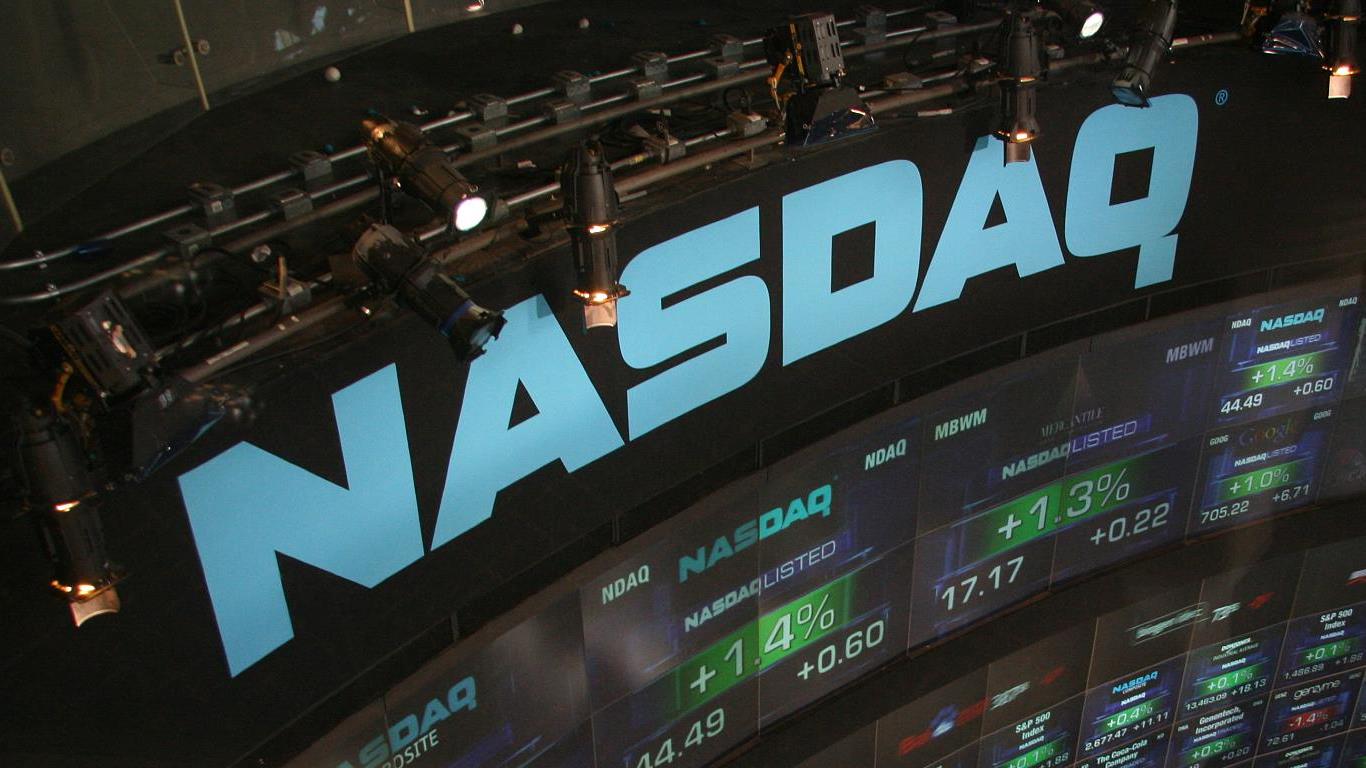
Goldman Sachs Is Buying Into High Income ETFs, but What Are Nasdaq Investors Giving Up for Those Payouts?
Goldman Sachs just snapped up the $13 billion QQQI covered-call ETF, and its 14% yield looks irresistible until you see exactly what Nasdaq investors quietly surrendered to collect those monthly checks.

This post may contain links from our sponsors and affiliates, and Flywheel Publishing may receive compensation for actions taken through them.
The NEOS Nasdaq-100 High Income ETF (NASDAQ:QQQI) just became a Goldman Sachs product. On the same day Goldman Sachs Asset Management announced its acquisition of NEOS, chief transformation officer Bryon Lake told CNBC that the derivative income category has grown 80% a year for the last five years, following Goldman’s earlier purchase of Innovator Capital. QQQI is the crown jewel of that deal: a Nasdaq-100 covered-call fund holding roughly $13.1 billion in retiree-friendly monthly income assets. The number worth staring at, though, is what QQQI holders traded for those checks.
Yield Is Real, So Is the Gap
QQQI’s annualized forward distribution of $7.82 on a roughly $54 share works out to a headline yield north of 14%. The mechanics are simple: QQQI owns the Nasdaq-100 stocks and writes index calls on top, funneling premium income into monthly distributions. The two short NDX call positions visible in the June 30 filing are the engine.
The trade-off shows up in total return. Against the Invesco QQQ Trust (NASDAQ:QQQ), QQQI returned about 18% over the past year versus about 24% for QQQ, and about 58% since January 2024 versus roughly 68% for QQQ. QQQI’s figure is dividend-adjusted; QQQ’s is price-only, so on a true total-return basis the gap is slightly wider. That is the income tax the covered call charges in a rising market, and QQQ has risen: up about 8% in the past month alone.
Macro Signal: The VXN Is the Whole Ballgame
The single macro factor that will move QQQI most over the next 12 months is Nasdaq-100 implied volatility, tracked through the CBOE Nasdaq-100 Volatility Index (VXN) published daily by Cboe. Call premiums are a direct function of implied vol. When VXN compresses, the option income powering QQQI’s distributions shrinks. When it spikes, distributions can climb but the underlying stocks are usually falling faster than the premium can cushion.
QQQI’s own payment history illustrates it. Monthly distributions ranged from $0.61 in March 2026 to $0.66 in May 2026, the kind of every-30-days cadence retirees increasingly build portfolios around (we rounded up seven of our favorite monthly payers in a free report: here). Watch VXN weekly. If it drifts under 15 and stays there, the next few distributions should compress, and QQQI’s headline yield will start converging toward SPYI territory. The Fed’s rate path matters as a second-order input: NEOS Enhanced Income 1-3 Month T-Bill ETF (NYSEARCA:CSHI) is currently paying an annualized $2.48 off T-bills, and cuts erode that competitive floor.
Fund-Specific Signal: The Call Strikes on File
QQQI’s June 30 N-PORT disclosed short NDX calls at strike 31050 and strike 31700. Those strikes cap the fund’s participation until they roll. In any month the Nasdaq-100 blows through the strike, QQQI’s NAV appreciation stops while QQQ keeps going, which is exactly what the trailing-year numbers show. Monitor the monthly N-PORT filings on the SEC EDGAR page for the fund to see whether NEOS is rolling strikes higher into strength (bullish for capture) or laddering conservatively (income-first).
Investors who want Nasdaq exposure with income but less upside cap have a sibling in-house: NEOS Nasdaq-100 Hedged Equity Income ETF (NASDAQ:QQQH), which pairs a put-based hedge with a smaller income overlay. QQQH returned about 12% over the past year, less than QQQI but with a different payoff shape in a drawdown.
What Actually Matters Next
Watch VXN for the direction of QQQI’s next few distributions and watch the September N-PORT for where NEOS resets its call strikes under Goldman ownership. If VXN stays subdued and strikes stay tight, expect QQQI to keep paying near 14% while trailing QQQ by mid-single digits annually. That is the deal, spelled out in numbers.
Contact [email protected] for any questions or corrections.
Jake has been been working in financial media for almost 15 years. He focuses on all things personal finance for 24/7 Wall St. with high hopes to educate and entertain. Most recently, Jake spent 12 years working various roles at The Motley Fool. He started copy editing fool.com content, worked on premium and marketing campaigns, and helped launch The Ascent, a personal finance brand.
His work has been featured on platforms like MSN, Yahoo Finance, USA Today, and more. He's written about credit cards, social security, ETFs, savings accounts, and just about anything else you can imagine when thinking about money. Jake love to cook, play golf, and tell people he's never had a cavity. (It's true!)