VYM’s Index Buys on Forecast Yield, So It Held Intel and Walgreens Right Into Their Dividend Cuts
VYM's rulebook for picking stocks quietly funnels money into the exact corner of the market where dividend cuts tend to originate, and two of its recent holdings proved just how expensive that design flaw can get.

This post may contain links from our sponsors and affiliates, and Flywheel Publishing may receive compensation for actions taken through them.
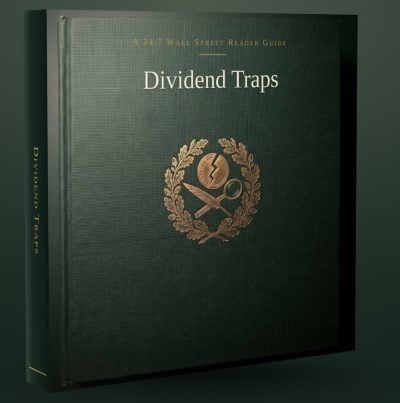
If you own the Vanguard High Dividend Yield ETF (NYSEARCA:VYM) for the income, you have already met the fund’s real cost. It is a rulebook that keeps buying stocks with the highest forecast yields, which is exactly the pool where dividend cuts hide. In the last cycle, that rulebook meant sitting inside Intel and Walgreens Boots Alliance right up to the moment each slashed its payout.
What Your Yield Screen Is Actually Buying
VYM tracks the FTSE High Dividend Yield Index, which ranks U.S. stocks by projected 12-month dividend yield and buys the top half by market cap. That single design choice is the hidden cost. When a stock’s price collapses because the market senses a payout is unsustainable, its forward yield spikes. The factsheet calls it “high yield.” In practice, it is a queue for the next dividend cut.
The receipts are in the payment history. Intel paid $0.365 per quarter through the December 1, 2022 payment, then collapsed the dividend to $0.125 starting with the February 6, 2023 ex-date, and later cut it again to an annualized forward rate of $0.50. Walgreens went from $0.48 per quarter to $0.25 beginning with the February 16, 2024 ex-date, ending a streak of quarterly increases that stretched back years. VYM’s forward-yield screen kept those names visible in the index until the cuts landed, hitting the same warning signs we catalogued in our free guide to spotting dividend traps before they snap.
Price Damage the Income Line Never Shows
A dividend cut is rarely a one-day event for the share price. Over the last five years through late August 2025, Walgreens fell 60.59%, and over ten years it was down 79.94%. That is capital destruction the “yield” column on a factsheet does not capture.
Intel’s recent rebound to $123.68 masks a rough middle chapter, but the point stands: an index that adds weight to a stock as it deteriorates hands its holders capital losses alongside a shrinking dividend payment.
Compare that to VYM’s own price record. The fund is up 12.55% year-to-date and 75.18% over five years through September 22, 2026. Respectable, but the yield-trap losses are embedded within that return figure. Every dollar the index kept in a soon-to-cut payer is a dollar that did not compound in a more financially sound holding.
Closet Concentration Hiding in a Yield Wrapper
The other cost the factsheet does not shout about is single-stock risk in a fund sold as diversified income. As of the April 30, 2026 filing, Broadcom alone was 8.03% of net assets. That represents a concentrated semiconductor bet disguised as a dividend allocation. Meanwhile, the portfolio still leans on classic income names such as AT&T at 0.75% and Altria at 0.51%, companies with their own troubled payout histories worth scrutinizing. Fund assets stand at roughly $94.6 billion, so the methodology is directing substantial capital into whatever stocks the screen surfaces each quarter.
Cheaper Mirrors That Screen for Quality, Not Just Yield
Two mainstream alternatives target the same income objective but apply different screening criteria. The Schwab US Dividend Equity ETF (NYSEARCA:SCHD) tracks the Dow Jones U.S. Dividend 100 Index, which requires at least 10 consecutive years of dividend payments and screens for cash-flow-to-debt ratio, return on equity, dividend yield, and dividend growth rate. The iShares Core Dividend Growth ETF (NYSEARCA:DGRO) requires at least five years of uninterrupted dividend growth and excludes the top-decile yielders precisely to sidestep the trap. Both funds carry expense ratios in the single-digit basis points, competitive with VYM. The trade-off is real. A growth-and-quality screen typically produces a lower starting yield than a pure forward-yield ranking. Investors sacrifice headline yield to avoid buying into tomorrow’s dividend cut.
Question to Ask Before Your Next Contribution
The key question is whether chasing the highest forecast yield in the market delivers the exposure you actually want in a portfolio built for income. If the answer is no, the fix is reading the fund’s methodology page before the next automatic purchase executes.
Contact [email protected] for any questions or corrections.
Ryne Mauck is an investment writer covering exchange-traded funds, retirement planning, and portfolio strategy. Through his work at 24/7 Wall St. and other investment platforms, including Seeking Alpha, he aims to provide clear, research-driven insights that help investors make more informed decisions while maintaining a long-term approach to investing.
Ryne holds a B.Sc. in Finance and an M.A. in Political Science. He is a formerly registered Municipal Advisor Representative and has passed the Series 50, Series 63, and Series 65 exams. His articles are not intended to be, nor should they be interpreted as, financial advice.