Original Medicare Leaves Out Hearing Aids and Most Dental Work. These 3 ETFs Build the Fund That Covers Them

This post may contain links from our sponsors and affiliates, and Flywheel Publishing may receive compensation for actions taken through them.
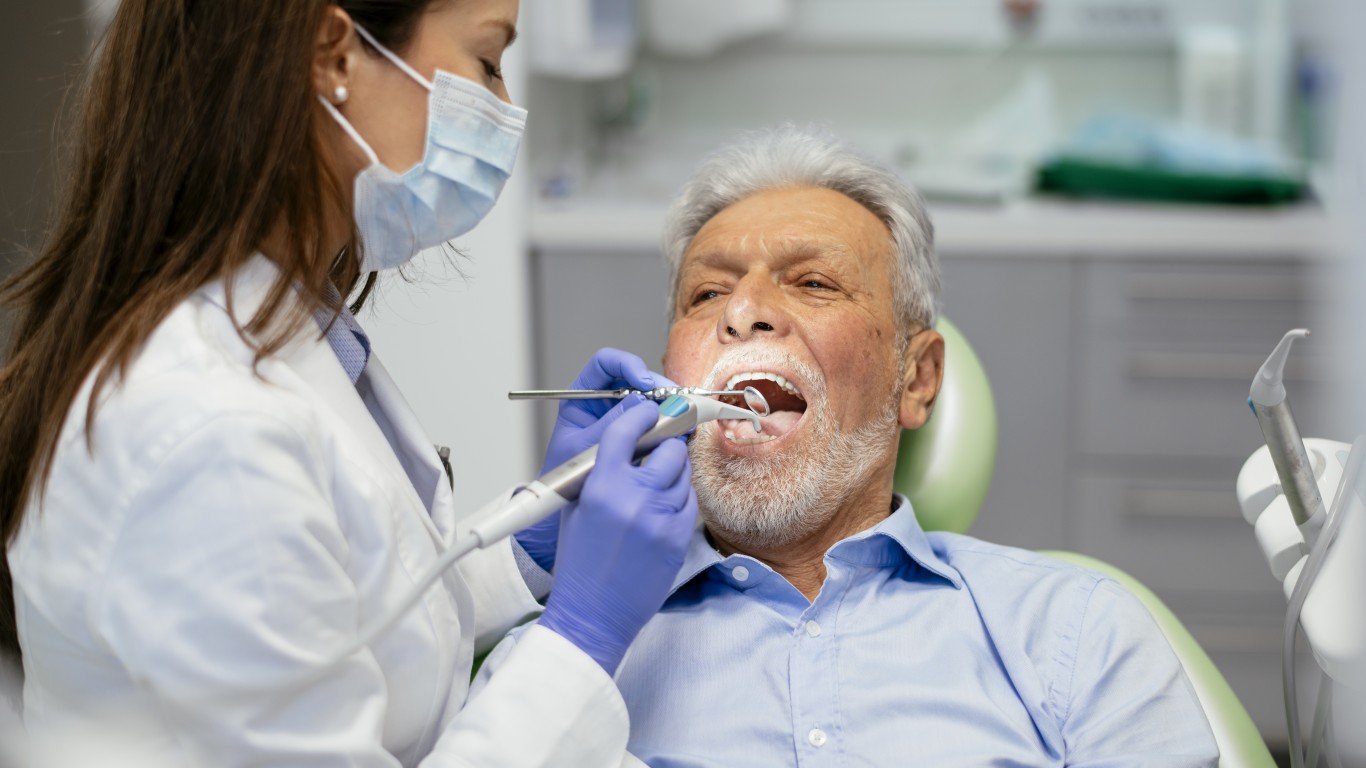
You’re 68, enrolled in Original Medicare, and a hearing test just confirmed what your family has been telling you for a year. A week later, the dentist brings up a crown. You pay both bills out of pocket. Original Medicare generally excludes hearing aids, routine dental care such as cleanings, fillings, extractions, and dentures, and routine eye exams and glasses. These costs come up again and again as you age, so you can plan for them like any other line item.
A separate fund for these bills can be built with three low-cost ETFs. The Schwab Short-Term U.S. Treasury ETF (NYSEARCA:SCHO) holds the cash you’ll spend soon. The Vanguard Short-Term Inflation-Protected Securities ETF (NASDAQ:VTIP) keeps that money growing with prices. The iShares Core High Dividend ETF (NYSEARCA:HDV) pays dividends that can refill the fund for years.
Why Hearing and Dental Bills Need Their Own Fund
Original Medicare’s coverage gaps often surface only when the first big bill comes. Meanwhile, the coverage you do have costs more each year. The standard Part B premium rises to $209.40[1] a month in 2027 from $202.90, and the deductible climbs to $292 (the premium itself is only the opening bid, which is why we laid out the surcharges and coverage gaps in a free Medicare guide).
Some Medicare Advantage plans and standalone dental or vision plans offer partial coverage, often with annual limits. Compare those options during enrollment periods. Whatever they leave uncovered still needs a funding source. Inflation adds pressure too. The 2027 Social Security COLA is 3.6%, but the government’s research inflation index for Americans 62 and older gives greater weight to housing and medical care[2], so your raise may fall short of what you actually pay.
SCHO Covers Bills Due in the Next Two Years
SCHO tracks the Bloomberg US Treasury 1-3 Year index, so it holds U.S. government debt that comes due within a few years. That profile fits money reserved for near-term purchases such as hearing aids. Its expense ratio is 0.03%, which works out to about $3 a year on $10,000. The trailing yield is roughly 3.83%, paid monthly, and the fund manages about $15.10 billion. Over the past year, its price moved between $23.79 and $24.46, a narrow range.
SCHO’s yield moves with short-term interest rates. If the Fed cuts rates, your monthly income falls.
VTIP Keeps Pace With Rising Health Care Prices
VTIP holds Treasury Inflation-Protected Securities (TIPS) that mature in less than five years. The principal of a TIPS bond adjusts with the Consumer Price Index, so this part of the fund grows as prices rise. It charges 0.03%, manages about $21.13 billion, and has been around since October 2012. Over the past year, it returned 1.79% including dividends.
VTIP’s payouts track inflation, and they can swing a lot. VTIP paid $0.0227 a share in April 2026 and $0.9333 in October. Its trailing yield of about 4.83% could shrink if inflation cools.
HDV Refills the Fund for Years
HDV holds large U.S. companies that pay high dividends and are screened for financial strength. Its 30-day SEC yield is 3.10%, which comes to roughly $310 a year on $10,000 at today’s rate. The expense ratio is 0.08%[3], or about $8 on that same $10,000. Distributions come monthly, so cash flows steadily into the fund. The share price is up 26.72% over the past year.
HDV is concentrated in a few sectors. Consumer staples make up 26.86%, energy 24.43%, health care 13.48%, and utilities 10.97%. It’s still a stock fund, and it dropped 2.85% in the past week alone.
Trade-Offs to Weigh Before You Build It
Each fund’s yield will change, and none of the three guarantees your principal. SCHO and VTIP can dip slightly when rates rise. HDV can fall sharply in a selloff, possibly right when the dentist’s bill comes. One approach is holding money for bills due within two years in a short-term Treasury fund such as SCHO and sending HDV’s dividends to the short-term bucket rather than selling shares in a down market. The mix that fits you depends on how soon and how often you expect these costs to come up.
Fund These Costs Before They Arrive
The costs Medicare leaves out are predictable, so you can save for them in advance. SCHO keeps next year’s money steady, VTIP helps it keep up with rising prices, and HDV adds income over the long run. Together, they turn hearing aids and dental work into a planned expense.
Contact [email protected] for any questions or corrections.
Ryne Mauck is an investment writer covering exchange-traded funds, retirement planning, and portfolio strategy. Through his work at 24/7 Wall St. and other investment platforms, including Seeking Alpha, he aims to provide clear, research-driven insights that help investors make more informed decisions while maintaining a long-term approach to investing.
Ryne holds a B.Sc. in Finance and an M.A. in Political Science. He is a formerly registered Municipal Advisor Representative and has passed the Series 50, Series 63, and Series 65 exams. His articles are not intended to be, nor should they be interpreted as, financial advice.