How Much You Need Invested to Collect $5,000 a Month From 62 to 70 While Social Security Grows
Retiring at 62 and waiting until 70 to claim Social Security sounds smart on paper, but almost nobody has actually priced out what it takes to cover eight years of income in between. Two Treasury funds and one specific dollar…

This post may contain links from our sponsors and affiliates, and Flywheel Publishing may receive compensation for actions taken through them.
Retire at 62, wait until 70 to claim Social Security, and still collect an income in between. Lots of people want that plan. Few have priced it out. In this case, the income is $5,000 a month, which totals $480,000 over eight years before inflation.
The money that covers that gap is called a bridge fund. It pays the bills from the day you stop working until you claim Social Security at the age when waiting stops raising your check. Below, we build one bridge out of two Treasury funds, split 50/50, and show what it costs.
What an Eight-Year Bridge Costs Today
Here are the assumptions, all based on Treasury data from late October 2026. Half the money makes about 4%, in line with the 4% yield on 13-week Treasury bills. The other half makes the 2% real yield on five-year TIPS plus inflation. We assume inflation runs 3% a year.
That’s a bit below the 3.6% rise over the past year in the government’s research inflation index for Americans 62 and older. The first withdrawal is $5,000, and withdrawals rise with inflation after that. Put together, the average return comes to about 4.5%.
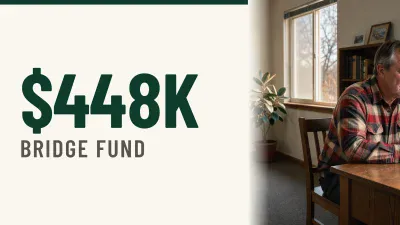
Using those numbers, a pot of about $448,000 covers the full eight years and runs down to around zero at 70. Each fund gets about $224,000. Compare that with living off interest alone. Covering $60,000 a year from interest alone takes about $1.3 million. That approach locks up principal you don’t need for an eight-year job. Social Security takes over at 70, so you can spend down the bridge.
Cash-Like Monthly Income From Short-Term Treasury Bills
iShares 0-3 Month Treasury Bond ETF (NYSEARCA:SGOV) holds Treasury bills that mature within three months. It manages about $106 billion. Bills that mature quickly barely move in price, so this half works like cash and pays out monthly.
Its yield rises and falls with short-term rates. The monthly payout fell from about $0.36 per share in mid-2025 to about $0.30 by October 2026 as rates came down. Check the current expense ratio in the prospectus, since every fee comes out of the bridge.
Treasury interest is “subject to federal income tax but is exempt from all state and local income taxes,” according to IRS Publication 550. Our recent piece on Treasuries as a state tax shelter covers what that’s worth in high-tax states.
Inflation Protection That Keeps the Bridge From Shrinking
Vanguard Short-Term Inflation-Protected Securities ETF (NASDAQ:VTIP) holds short-term TIPS. With a TIPS bond, the principal grows with consumer prices, and you make a fixed real yield on top of that growing principal. When inflation runs hot, this half keeps your spending power intact.
The catch is that the payouts are uneven, because the inflation adjustment shows up in the payments. The fund paid $0.0227 per share in April 2026 and $0.9333 in October. One practical approach is to pay the monthly bills from the Treasury bill fund, sell TIPS shares now, and then top it back up.
What Waiting Until 70 Buys You
If you were born in 1960 or later, your full retirement age is 67. Claiming at 62 cuts your check by 30%. Every year you wait past full retirement age adds 8%, and those increases stop at 70.
Say your benefit at full retirement age is $2,071, about the current average for retired workers. You’d get about $1,450 a month at 62, $2,071 at 67, and about $2,568 at 70. The break-even point is when the bigger check finally makes up for the eight years you missed. That happens around age 80. Every check also gets cost-of-living raises, like the 3.6% increase coming in 2027.
Tax Breaks and Health Costs Along the Way
Spending from a Treasury bridge keeps your taxable income low in your 60s. That opens room for Roth conversions, which we walk through in our coverage of low-income conversion years. Keep an eye on the Medicare surcharge, though. Once your income tops $109,000 as a single filer, your Part B premium goes up.
Health insurance from 62 to 65 usually comes from the ACA marketplace, and low reported income can lower what you pay there. At 65, Part B costs $202.90 a month. Budget for it on top of the $5,000 unless your target already includes it.
Your Bridge Number and the One Assumption to Check Every Year
The higher Social Security check the bridge buys lasts for life and keeps getting inflation raises. Each January, compare actual inflation with the 3% assumption. If a retired person’s prices keep rising faster, the bridge runs dry before 70 unless you add money or cut spending.
Contact [email protected] for any questions or corrections.
David Beren has been a Flywheel Publishing contributor since 2022. Writing for 24/7 Wall St. since 2023, David loves to write about topics of all shapes and sizes. As a technology expert, David focuses heavily on consumer electronics brands, automobiles, and general technology. He has previously written for LifeWire, formerly About.com. As a part-time freelance writer, David’s “day job” has been working on and leading social media for multiple Fortune 100 brands. David loves the flexibility of this field and its ability to reach customers exactly where they like to spend their time. Additionally, David previously published his own blog, TmoNews.com, which reached 3 million readers in its first year. In addition to freelance and social media work, David loves to spend time with his family and children and relive the glory days of video game consoles by playing any retro game console he can get his hands on.