California Minimum Wage Soars to $10
ThinkstockCalifornia Governor Jerry Brown signed a bill that will take the state’s minimum wage to $10 from the current $8 in two stages — $9 an hour next year and $10 in 2016. The decision will leave economists to ponder…

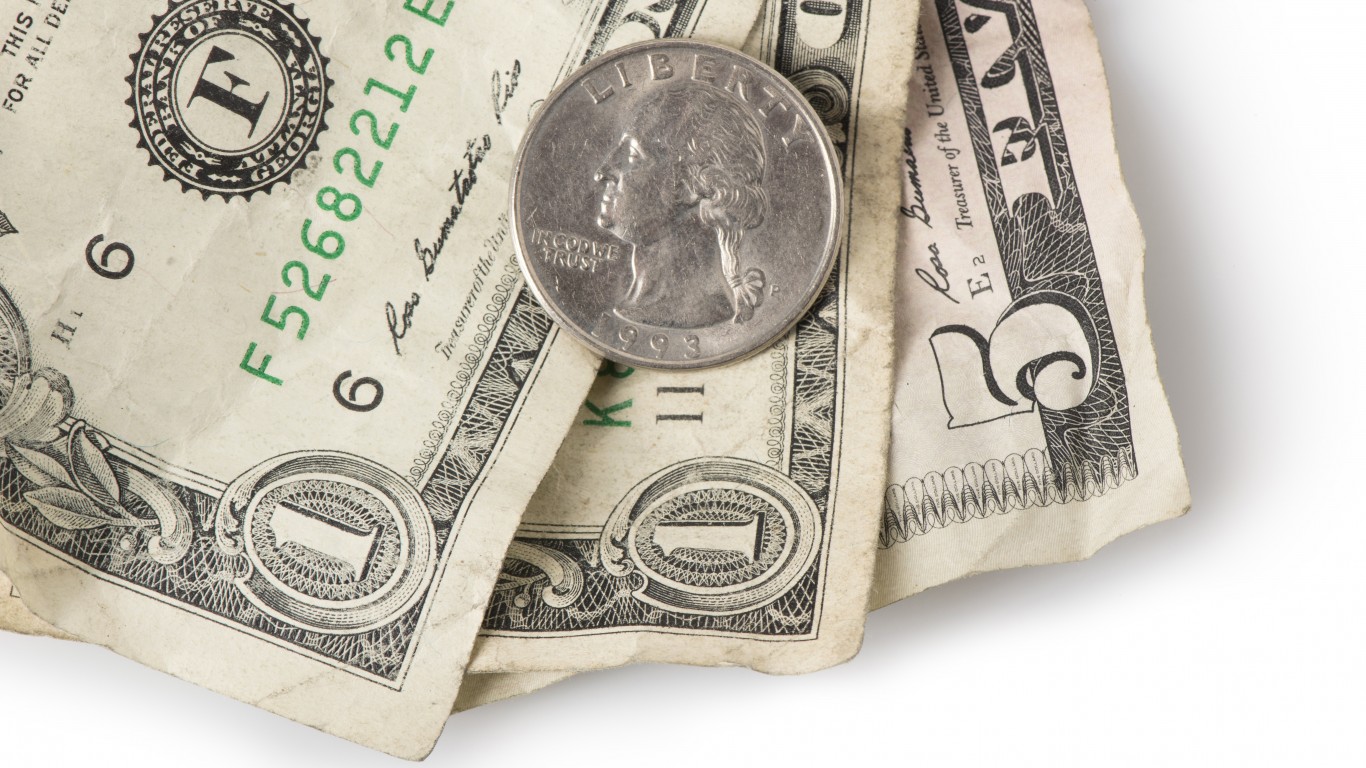
 California Governor Jerry Brown signed a bill that will take the state’s minimum wage to $10 from the current $8 in two stages — $9 an hour next year and $10 in 2016. The decision will leave economists to ponder the effects of wages on company earnings versus consumer spending. The companies may cut workers or other expenditures. Those getting the compensation lift may save the money or spend it. The math to measure what will happen eventually may be complex. However, the wisdom of the decision is not.
As he signed the bill, Brown said:
It’s a special day to stand with workers who are laboring for all of us and laboring at a very low wage. Turning that wage into a $10 an hour wage is a wonderful thing. It’s my goal and it’s my moral responsibility to do what I can to make our society more harmonious, to make our social fabric tighter and closer and to work toward a solidarity that every day appears to become more distant.
While Brown may feel there is a moral imperative, making society “harmonious” is more of a stretch. The $10 amount continues to be well below the $15 that many experts, and employees, believe is a living wage.
One of the first things companies do when their costs rise and their sales do not is look for ways to steady profits. As far as California and its struggling economy are concerned, expense reductions across tens of thousands of companies would show the extent to which the $10 minimum wage level can backfire. While it may not be possible to forecast how many people may lose jobs, some certainly will. Companies also may cut other expenses, which in turn would hurt their suppliers. People will make more money, but there may be fewer of them making it.
The other issue that could mute the effects of the decision on the economy is what happens to the additional money people make. Some of it could go to savings, and not into consumer spending. At the minimum wage level, the savings factor is not as likely as when people have higher incomes and sometimes excess income. At $10 an hour, most people will use the money to close the gap between poverty and low incomes. In that case, the increased compensation will go to basics, which include food, shelter and clothing, among other things.
California’s minimum wage increase is not a sure way to help the state financially. It will take several years to see what is, among other things, an experiment and whether its works.
Contact [email protected] for any questions or corrections.
Douglas A. McIntyre is the co-founder, chief executive officer and editor in chief of 24/7 Wall St. and 24/7 Tempo. He has held these jobs since 2006.
McIntyre has written thousands of articles for 24/7 Wall St. He is an expert on corporate finance, the automotive industry, media companies and international finance. He has edited articles on national demographics, sports, personal income and travel.
His work has been quoted or mentioned in The New York Times, The Wall Street Journal, Los Angeles Times, The Washington Post, NBC News, Time, The New Yorker, HuffPost USA Today, Business Insider, Yahoo, AOL, MarketWatch, The Atlantic, Bloomberg, New York Post, Chicago Tribune, Forbes, The Guardian and many other major publications. McIntyre has been a guest on CNBC, the BBC and television and radio stations across the country.
A magna cum laude graduate of Harvard College, McIntyre also was president of The Harvard Advocate. Founded in 1866, the Advocate is the oldest college publication in the United States.
TheStreet.com, Comps.com and Edgar Online are some of the public companies for which McIntyre served on the board of directors. He was a Vicinity Corporation board member when the company was sold to Microsoft in 2002. He served on the audit committees of some of these companies.
McIntyre has been the CEO of FutureSource, a provider of trading terminals and news to commodities and futures traders. He was president of Switchboard, the online phone directory company. He served as chairman and CEO of On2 Technologies, the video compression company that provided video compression software for Adobe’s Flash. Google bought On2 in 2009.