Carrier Capacity Unleashed: The Evolution of Carriers From Yorktown To Midway
Aircraft carriers have been central to the U.S. Navy, and over the years they have only increased in importance since their introduction in World War 2. Each new generation has pushed the limits of range, aircraft capacity, and survivability. The…


Aircraft carriers have been central to the U.S. Navy, and over the years they have only increased in importance since their introduction in World War 2. Each new generation has pushed the limits of range, aircraft capacity, and survivability. The Yorktown, Essex, and Midway classes would set the stage for the modern Navy we know today.
These carriers acted as mobile airbases that allowed the U.S. to strike deep into enemy territory. The Yorktown class proved the concept, the Essex class perfected it, and the Midway class expanded it to a new scale of endurance and firepower. Together, they bridged the gap between the era of battleships and the age of aviation dominance, establishing the carrier as the Navy’s true flagship and the cornerstone of American military strategy for decades to come. Here, 24/7 Wall St. is taking a closer look at the World War 2 aircraft carriers of the U.S. Navy.
To identify the aircraft carriers with the most capacity for aircraft used by the US in World War 2, 24/7 Wall St. reviewed various historical and military sources. We ordered these carriers alphabetically. We included supplemental information regarding the classifications, commissioning dates, and aircraft capacity of each carrier.
Here is a look at the aircraft carriers with the most carrying capacity employed by the US in World War 2:
Why Are We Covering This?
Exploring the history of World War II is important not only to understand one of the most pivotal periods in modern history but also to grasp the profound impact that this global conflict had on the world at large. Ultimately, World War II reshaped boundaries, alliances, and ideologies in ways that still influence global relations and conflicts today. The outcome of World War II effectively made the world order that we know today.
Antietam (CVS-36)
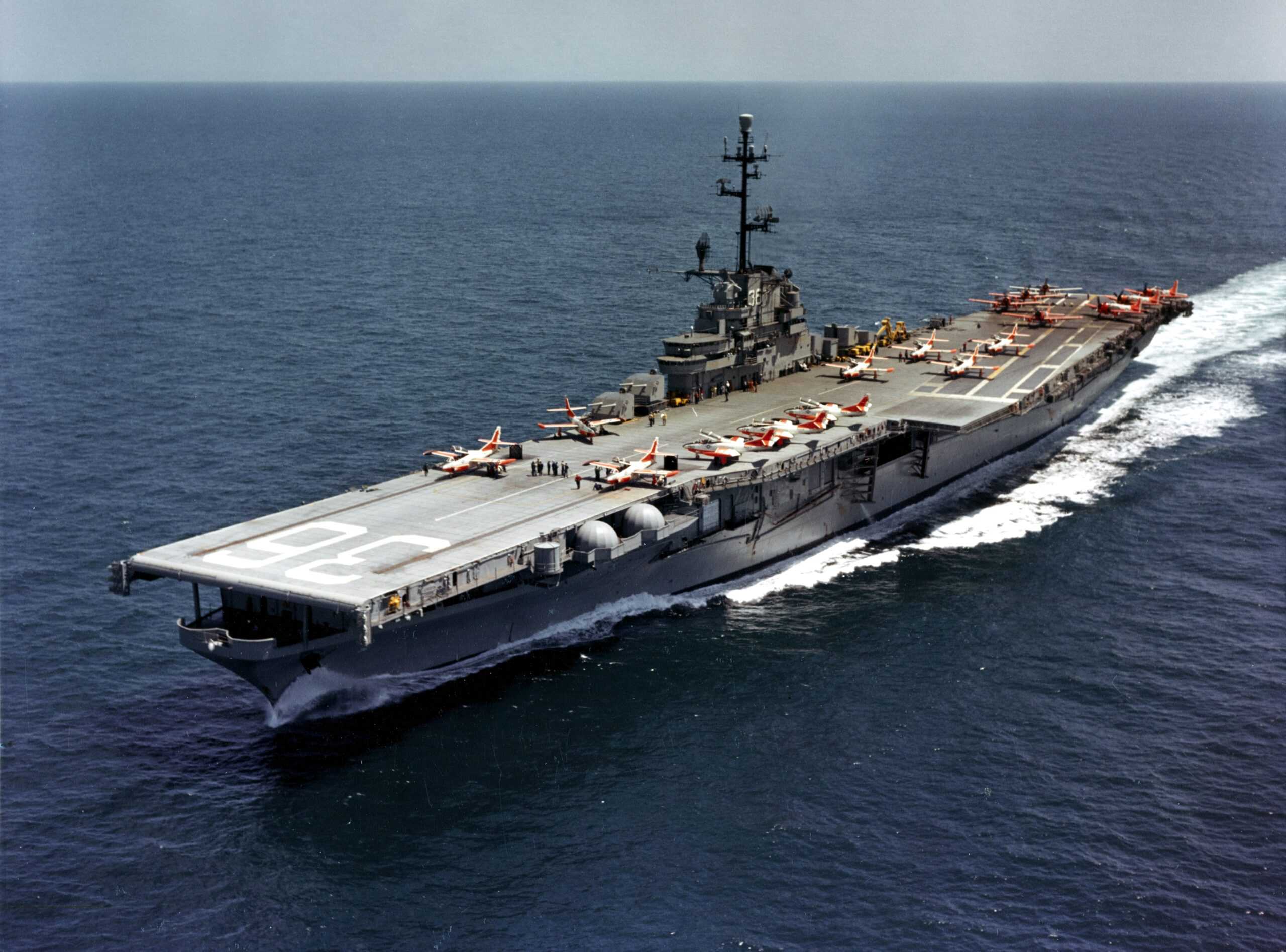
- Class: Essex
- Date of commissioning: January 28, 1945
- Displacement: 30,800 tons
- Aircraft capacity: ~90
- Fate: Disposed by Navy sale, (December 1, 1973)
The USS Antietam (CV-36) was commissioned in January 1945 as part of the Essex-class, but it was too late to see combat before Japan’s surrender. She conducted shakedown, training, and air operations in the Pacific, then supported occupation duties and Operation Magic Carpet returns. Antietam’s distinguished combat career would come later, in the Korean War era.
Bennington (CVS-20)
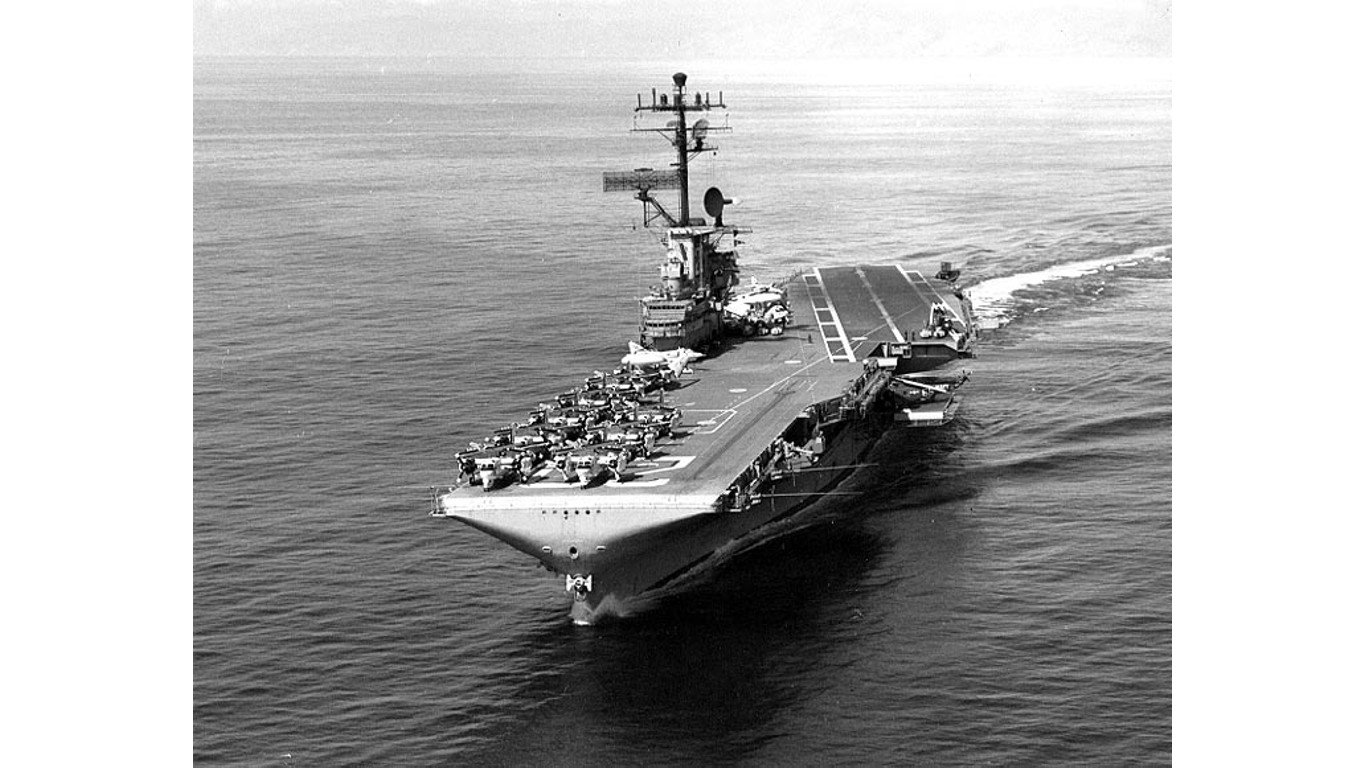
- Class: Essex
- Date of commissioning: August 6, 1944
- Displacement: 30,800 tons
- Aircraft capacity: ~90
- Fate: Disposed by Navy sale, (January 12, 1994)
USS Bennington (CV-20), commissioned in August 1944, joined the Fast Carrier Task Force in 1945. She launched strikes supporting Iwo Jima and Okinawa operations during 1945, and raided the Japanese home islands late in the war. Bennington earned battle stars before shifting to postwar Magic Carpet duties.
Bon Homme Richard (CV-31)
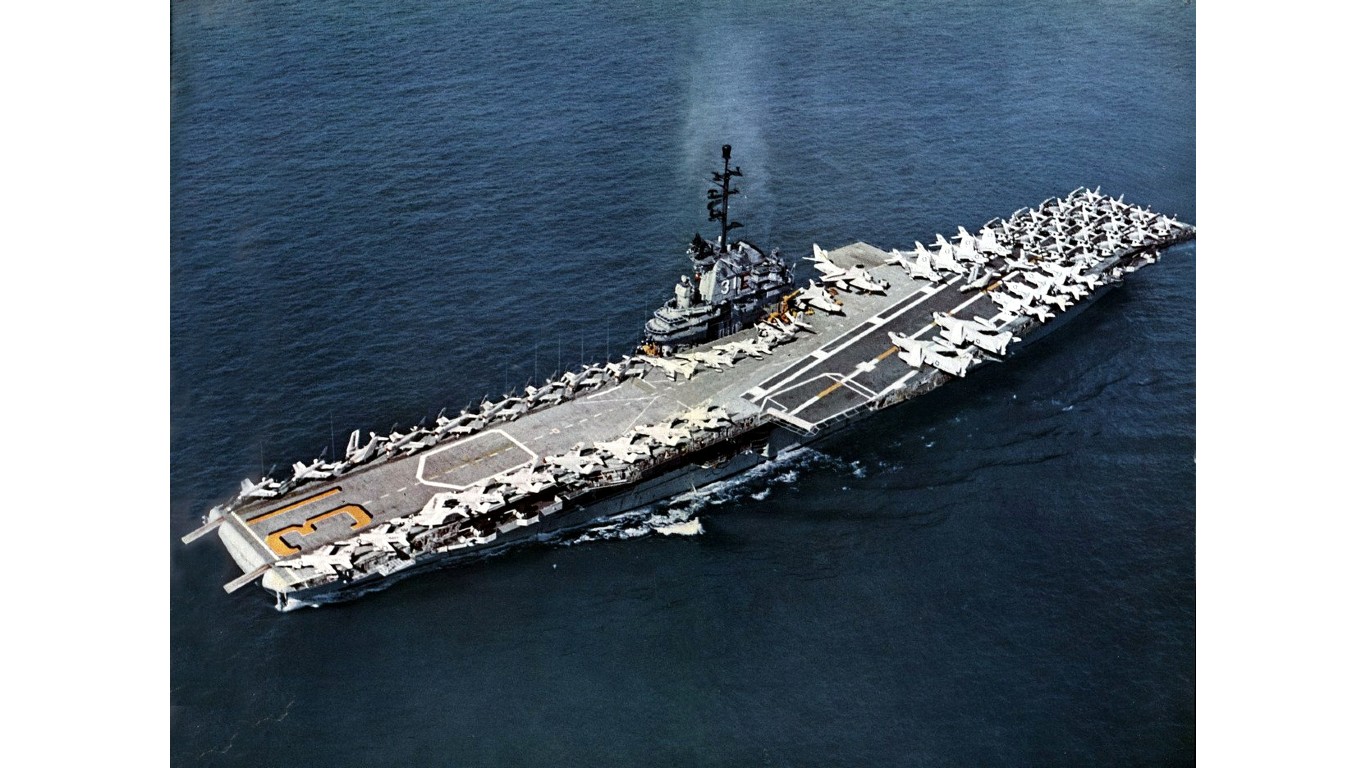
- Class: Essex
- Date of commissioning: November 26, 1944
- Displacement: 30,800 tons
- Aircraft capacity: ~90
- Fate: Disposed by dismantling (scrapping/recycling), (January 20, 2023)
USS Bon Homme Richard (CV-31) was an Essex-class aircraft carrier commissioned in November 1944. Joining the Pacific Fleet in early 1945, she supported air strikes against Okinawa, Kyushu, and the Japanese home islands. Her aircraft attacked shipping, airfields, and industrial targets until Japan’s surrender. Bon Homme Richard earned one battle star for World War 2 service.
Boxer (LPH-4)
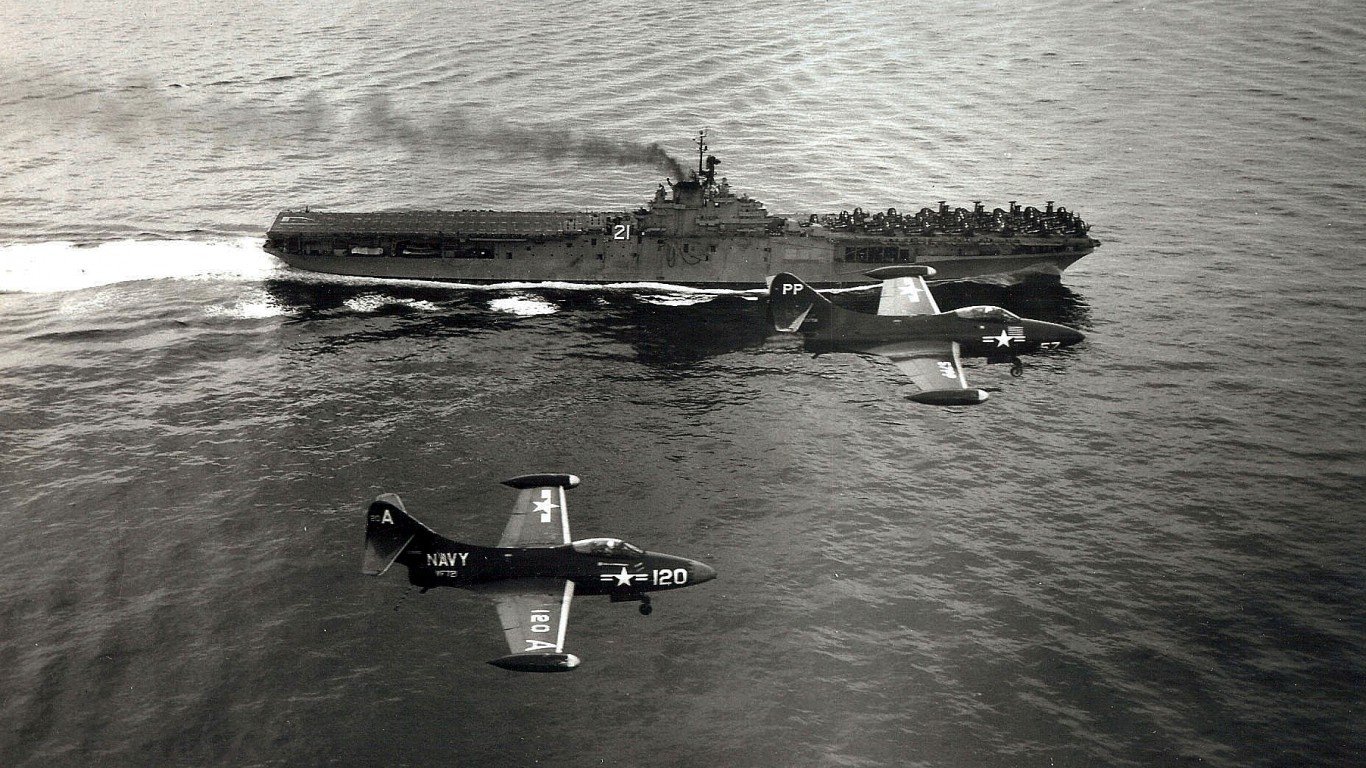
- Class: Essex
- Date of commissioning: April 16, 1945
- Displacement: 30,800 tons
- Aircraft capacity: ~90
- Fate: Disposed by Navy sale, (March 13, 1971)
Even though she is listed here as Boxer (LPH-4), the USS Boxer was originally commissioned as an Essex-class carrier (CV-21) in April 1945, too late for World War 2 combat. She saw significant service later in the Korean War and Cold War. The LPH-4 designation reflects her postwar conversion to a helicopter assault platform worldwide.
Bunker Hill (CV-17)
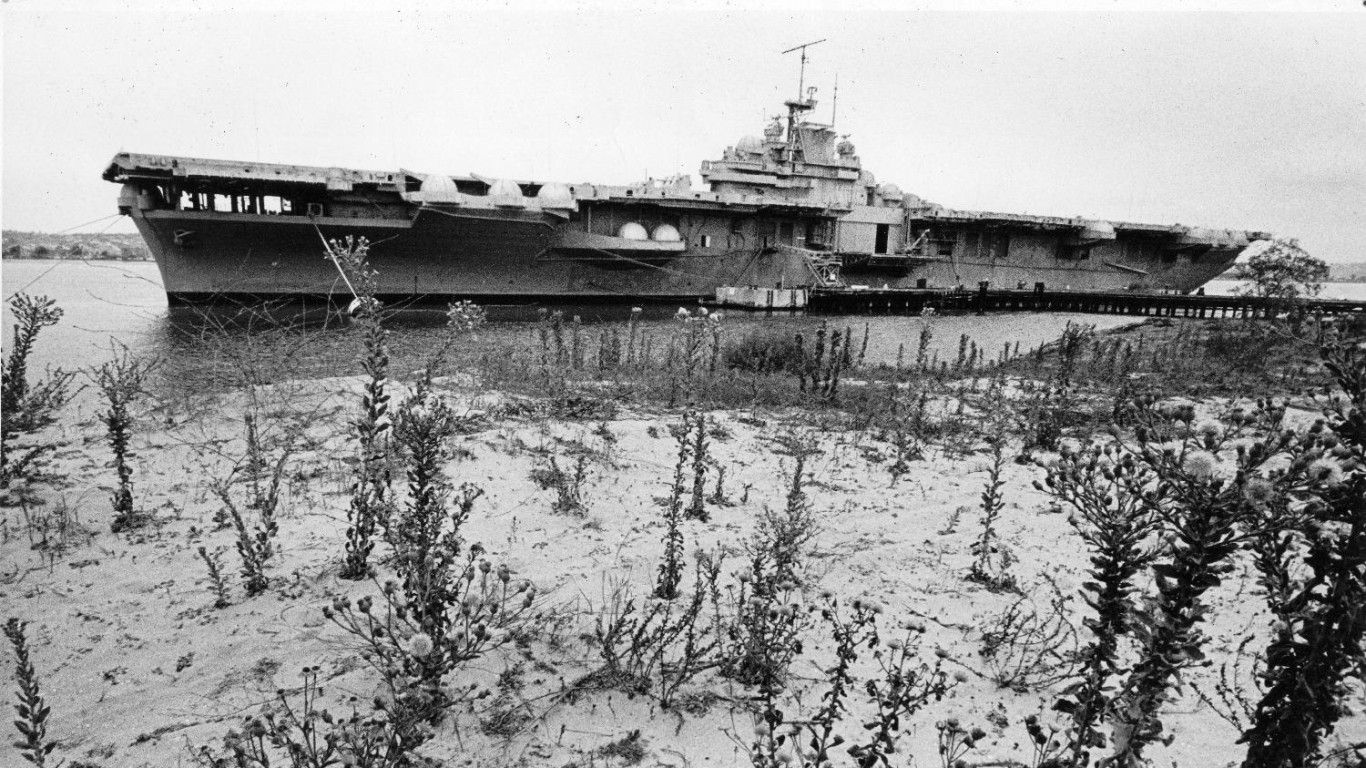
- Class: Essex
- Date of commissioning: May 25, 1943
- Displacement: 30,800 tons
- Aircraft capacity: ~90
- Fate: Disposed by Navy sale, (July 2, 1973)
The USS Bunker Hill (CV-17) fought across the Pacific from 1943 through 1945 with the Fast Carrier Task Force. On 11 May 1945, two kamikaze strikes devastated the ship near Okinawa, causing heavy casualties. Despite severe damage, she survived, retired from combat, and earned numerous Pacific battle stars.
Enterprise (CV-6)
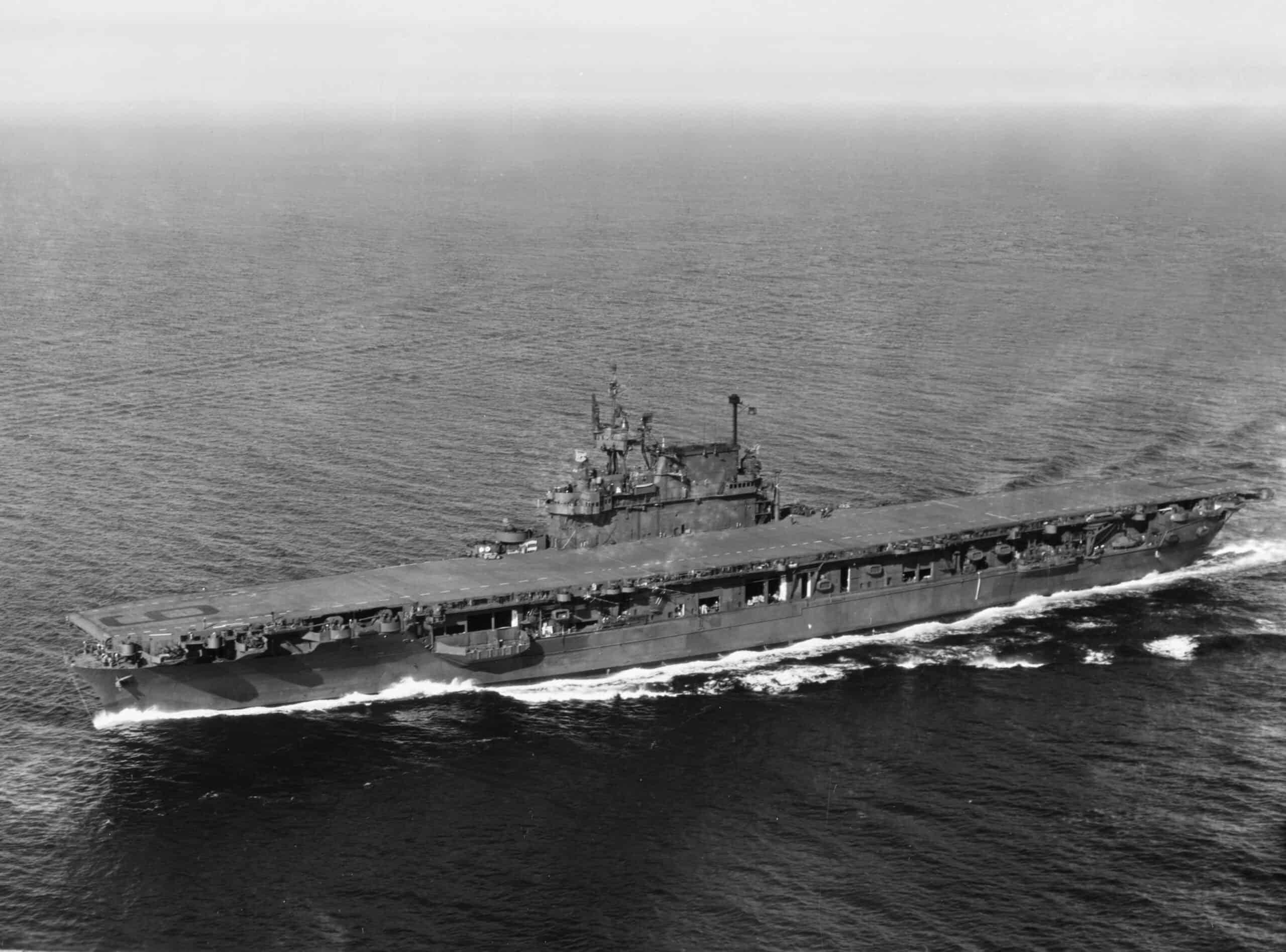
- Class: Yorktown
- Date of commissioning: May 12, 1938
- Displacement: 25,100 tons
- Aircraft capacity: ~70-90
- Fate: Disposed by dismantling (scrapping/recycling), (July 1, 1958)
The USS Enterprise (CV-6), or the “Big E,” was the most decorated U.S. warship of World War 2. The Enterprise was a Yorktown-class carrier that fought from 1941 through 1945 at Midway, Guadalcanal, Santa Cruz, Philippine Sea, Leyte Gulf, Iwo Jima, and Okinawa. Although she was repeatedly damaged, the Enterprise kept returning to battle to finish the fight.
Essex (CVS-9)
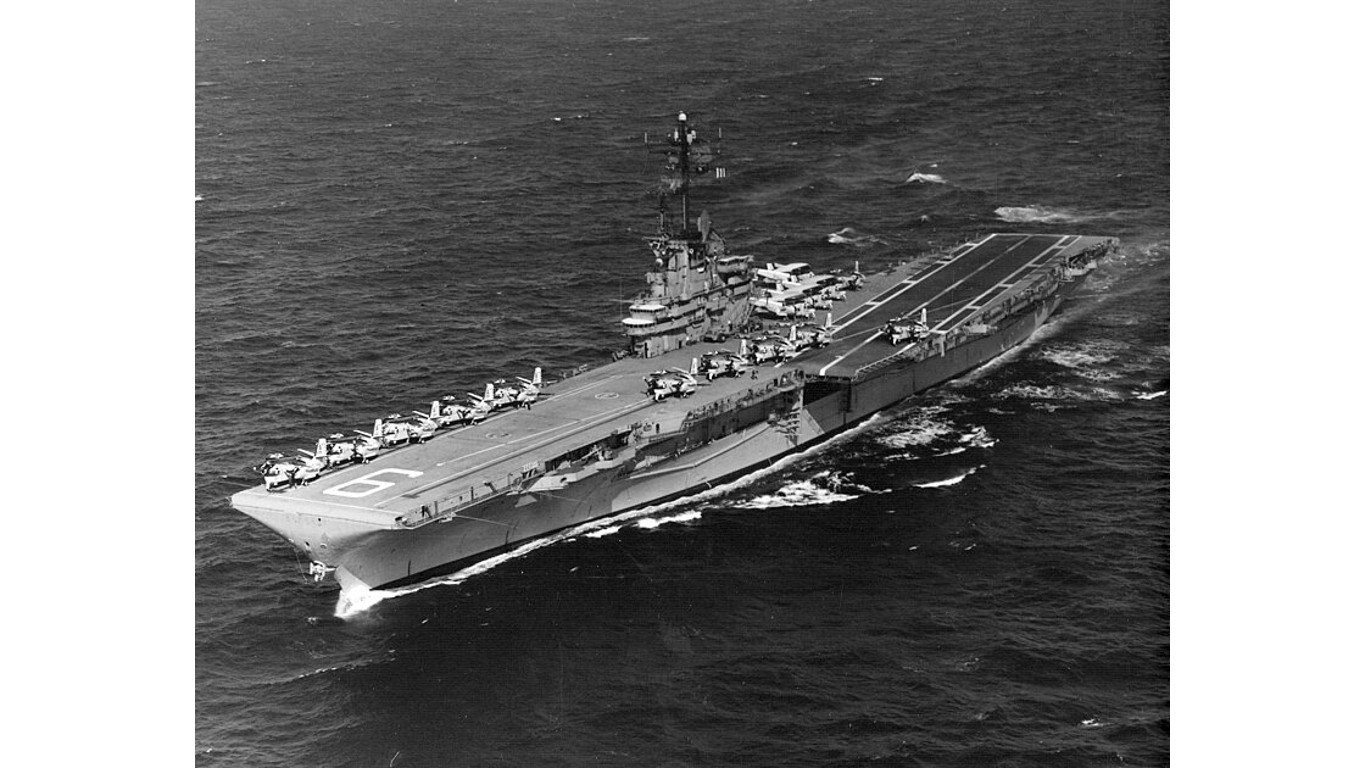
- Class: Essex
- Date of commissioning: December 31, 1942
- Displacement: 30,800 tons
- Aircraft capacity: ~90-100
- Fate: Disposed by Navy sale, (June 1, 1975)
Lead ship of her class, USS Essex (CV-9) entered service in 1942–43 and became the backbone of the Fast Carrier Task Force. She supported campaigns from the Gilberts and Marshalls through the Marianas, Philippines, Iwo Jima, and Okinawa, launching continuous strikes that crippled Japanese airpower and earned numerous battle stars.
Franklin (CV-13)
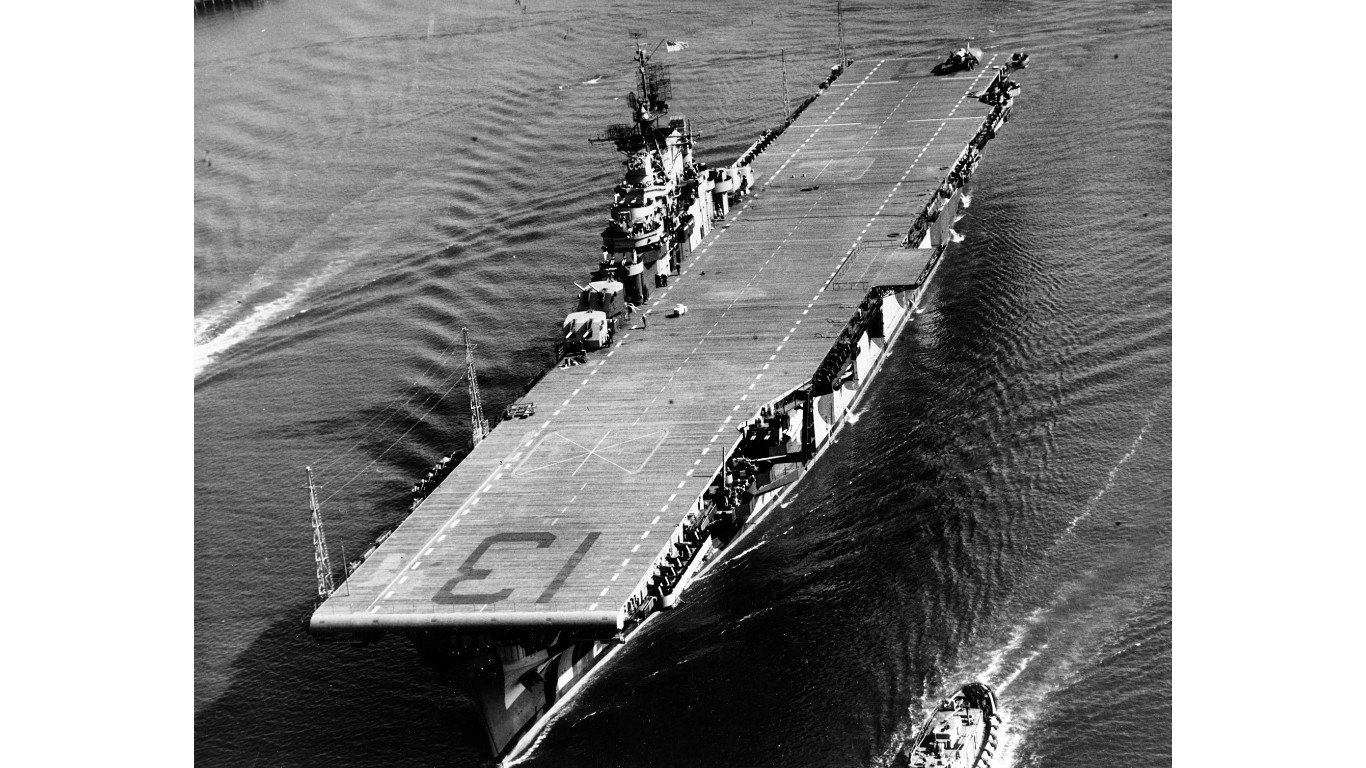
- Class: Essex
- Date of commissioning: January 31, 1944
- Displacement: 30,800 tons
- Aircraft capacity: ~90
- Fate: Disposed by dismantling (scrapping/recycling), (August 1, 1966)
The USS Franklin (CV-13) fought through 1944 before suffering catastrophic damage on March 19, 1945 from Japanese bombs off the coast of Japan. Explosions ravaged the hangar and flight deck, killing hundreds. Extraordinary damage control ultimately saved the ship, but the Franklin was forced to withdrew to the United States for repairs, closing her World War 2 combat service permanently.
Franklin D. Roosevelt (CV-42)
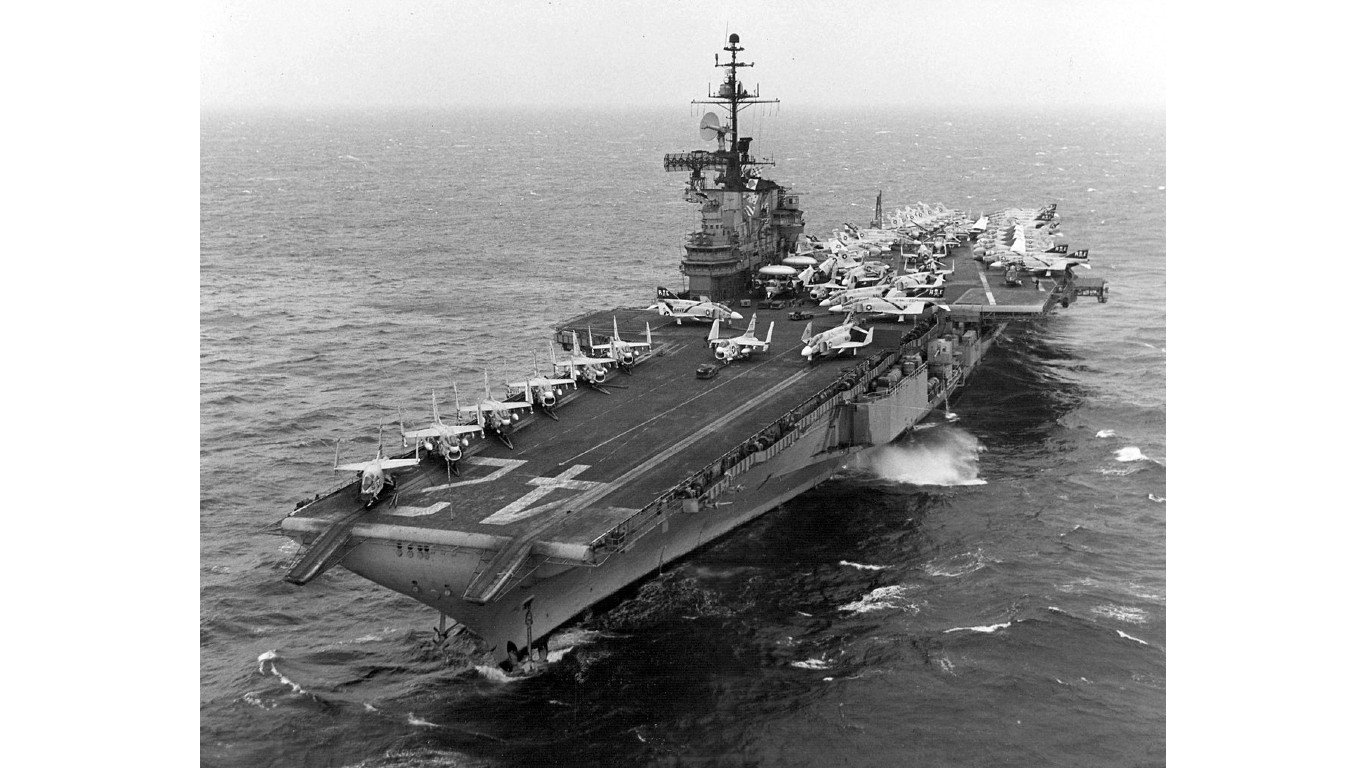
- Class: Midway
- Date of commissioning: October 27, 1945
- Displacement: 45,000 tons
- Aircraft capacity: ~137 aircraft
- Fate: Disposed by Navy sale, (April 1, 1978)
The USS Franklin D. Roosevelt (CV-42) was commissioned in October 1945 as a Midway-class carrier. However, this came after Japan’s surrender. Even though she was designed during wartime for large air groups and armored protection, she saw no World War 2 combat. Her operational career came in the early Cold War, including Mediterranean deployments and early jet aviation development.
Hancock (CV-19)
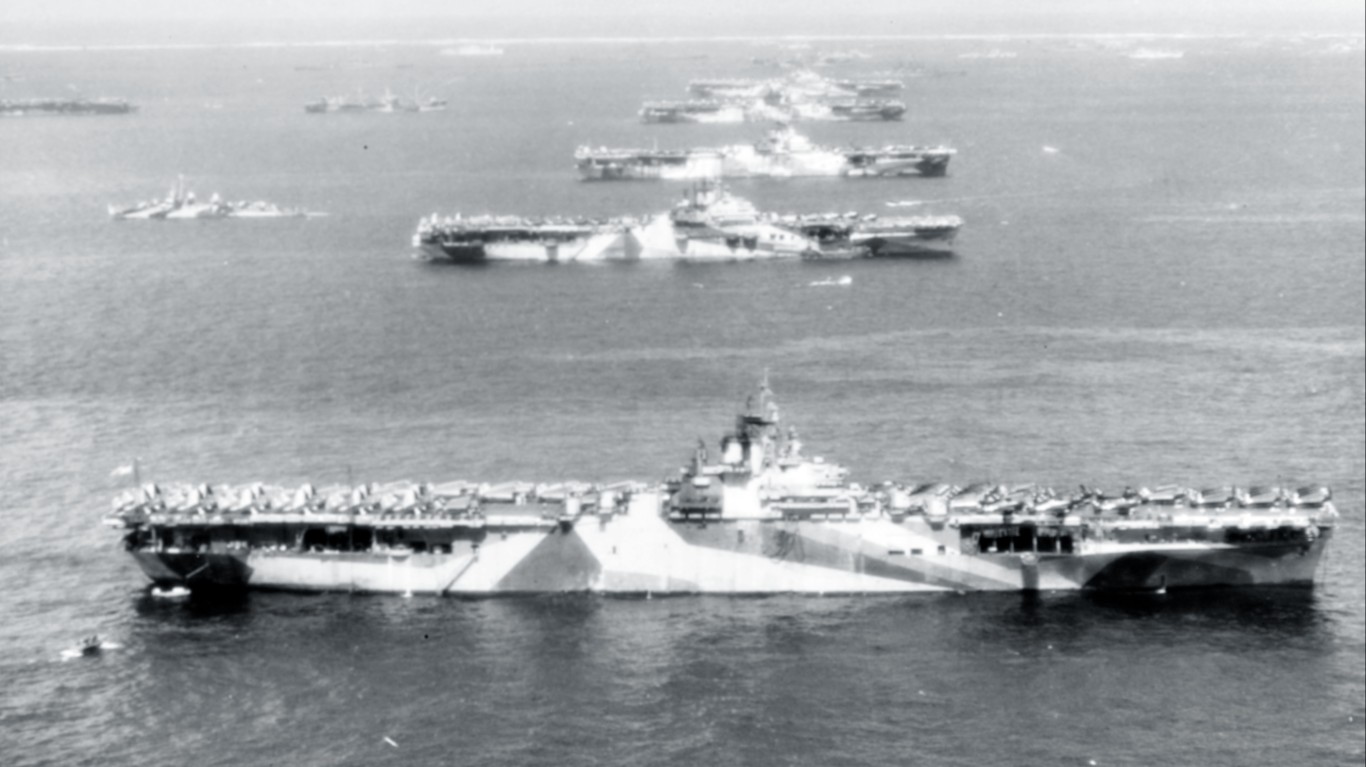
- Class: Essex
- Date of commissioning: April 15, 1944
- Displacement: 27,100 tons
- Aircraft capacity: ~90
- Fate: Disposed by Navy sale, (September 1, 1976)
The USS Hancock (CV-19) was commissioned in September 1944 and joined Task Force 38 for late-war offensives. She supported Leyte Gulf operations, strikes on Formosa (Taiwan), Luzon, Iwo Jima, and Okinawa, and raids against Japan. The Hancock survived a damaging kamikaze hit in January 1945 and earned multiple battle stars before the war’s end.
Hornet (CVS-12)
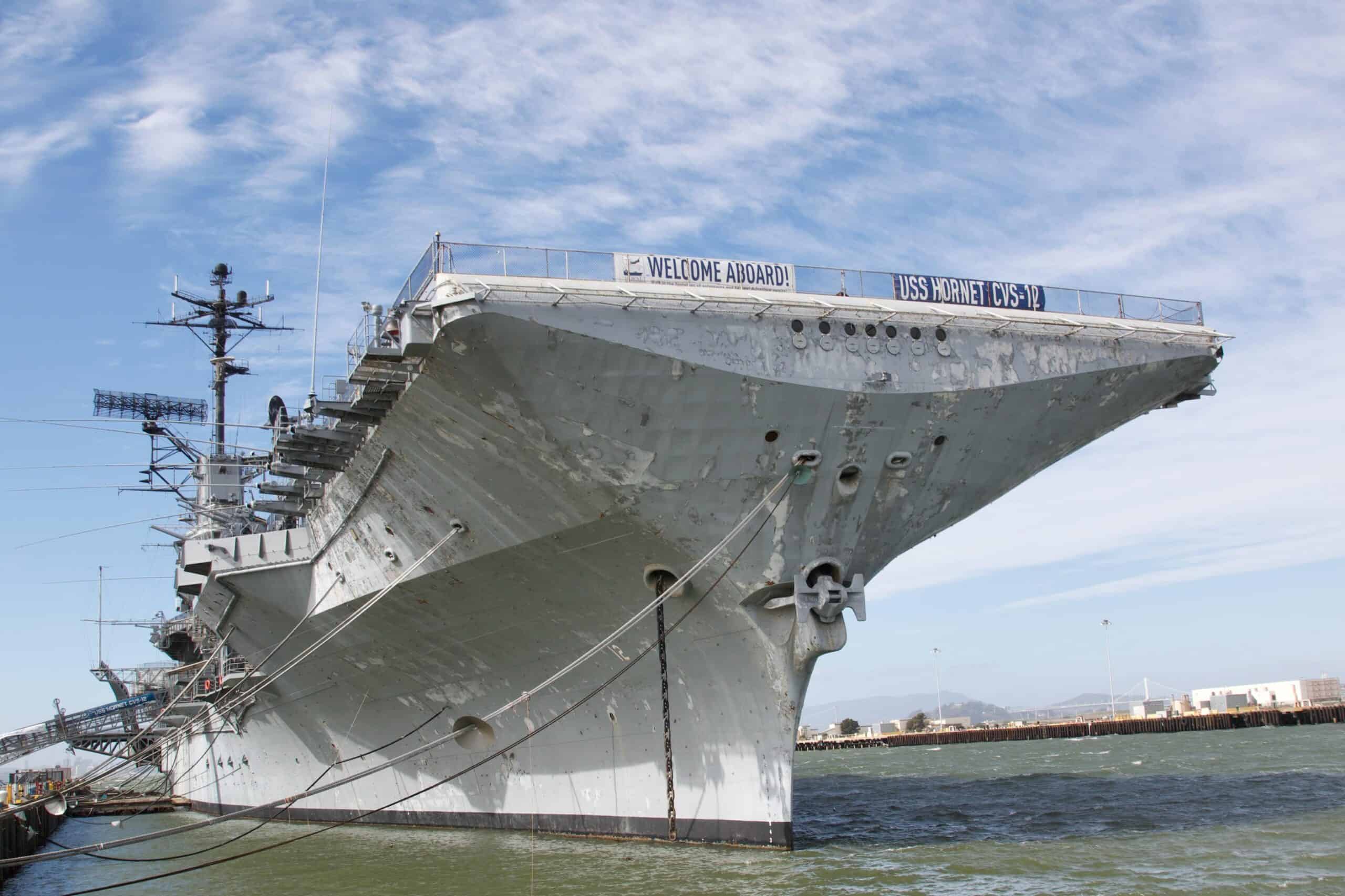
- Class: Essex
- Date of commissioning: November 29, 1943
- Displacement: 27,100 tons
- Aircraft capacity: ~90
- Fate: Donated as a museum and memorial, (May 26, 1998)
The USS Hornet (CV-12) was an Essex-class carrier commissioned in late 1943 to replace the CV-8. She joined the Pacific Fleet, striking the Marianas, Philippines, Iwo Jima, and Okinawa. Her aircraft raided the Japanese home islands and sank enemy shipping. The Hornet earned nine battle stars for her distinguished World War 2 service.
Hornet (CVS-8)
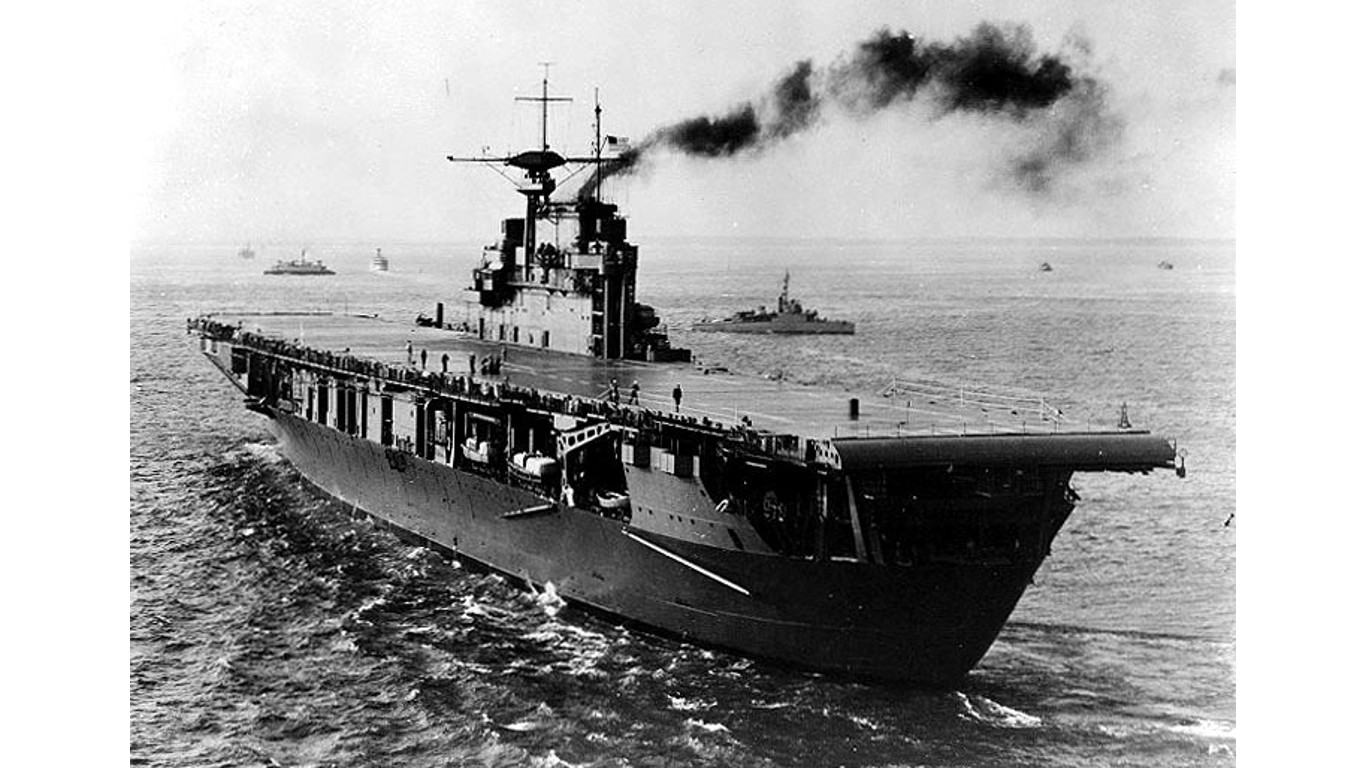
- Class: Yorktown
- Date of commissioning: October 20, 1941
- Displacement: 26,500 tons
- Aircraft capacity: ~70-90
- Fate: Sunk by Japanese destroyers, (October 27, 1942)
The (other) USS Hornet (CV-8) was a Yorktown-class carrier commissioned in October 1941. She launched the notorious Doolittle Raid on Tokyo in April 1942, then fought at Midway and the Solomon Islands. She was struck fatally by Japanese bombers and torpedo planes during the Battle of Santa Cruz in October 1942 and was ultimately scuttled.
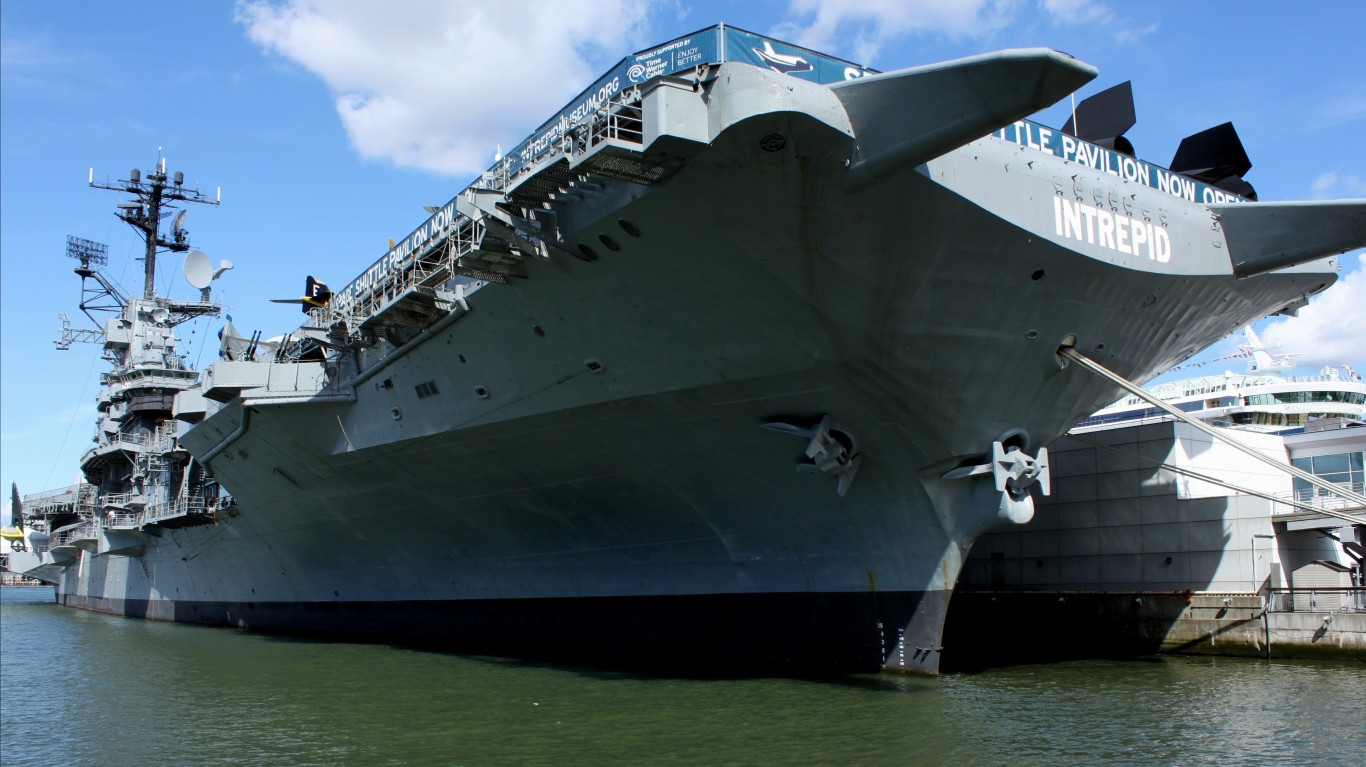
Intrepid (CVS-11)
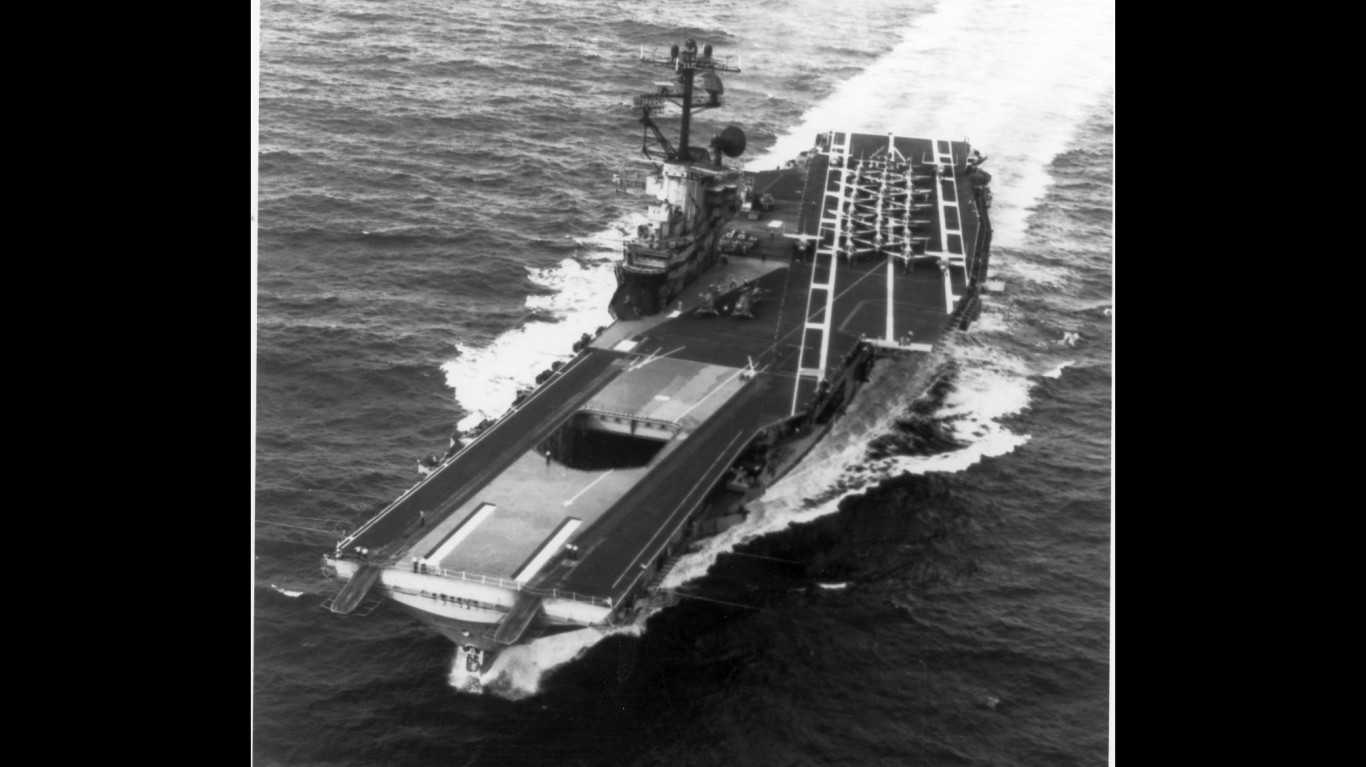
- Class: Essex
- Date of commissioning: August 16, 1943
- Displacement: 27,100 tons
- Aircraft capacity: ~90-100
- Fate: Donated as a museum and memorial, (April 27, 1981)
The USS Intrepid (CV-11) was commissioned in August 1943 and fought across the Pacific from the Marshalls to Okinawa. She endured multiple kamikaze hits but continued launching strikes through 1945. The Intrepid’s air groups supported nearly every major Pacific campaign and earned five battle stars for her combat achievements during the war.
Lake Champlain (CVS-39)
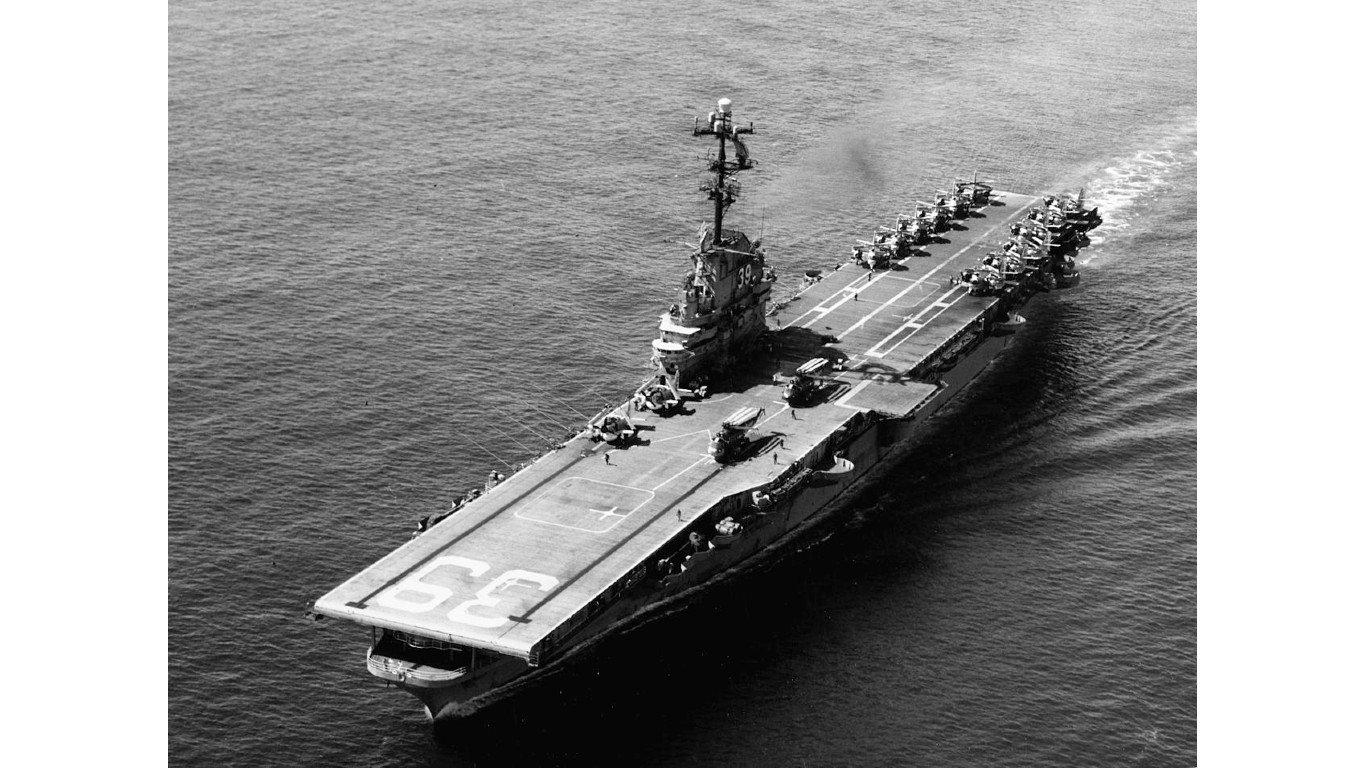
- Class: Essex
- Date of commissioning: June 3, 1945
- Displacement: 27,100 tons
- Aircraft capacity: ~90
- Fate: Disposed by Navy sale, (April 28, 1972)
The USS Lake Champlain (CV-39) was commissioned in June 1945. She was yet another carrier that was too late for World War 2 combat. The Lake Champlain joined the Atlantic Fleet and later served in postwar repatriation duties under Operation Magic Carpet. Although she missed wartime action, her design reflected the peak of Essex-class improvements developed during the Pacific campaigns.
Lexington (AVT-16)

- Class: Essex
- Date of commissioning: February 17, 1943
- Displacement: 27,100 tons
- Aircraft capacity: ~90
- Fate: Donated as a museum and memorial, (June 15, 1992)
The USS Lexington (CV-16) was commissioned in February 1943 and immediately joined the Pacific war effort. Nicknamed “The Blue Ghost” for her repeated returns to service after reported sinkings, she participated in raids across the Central Pacific, the Philippines, and Okinawa, earning 11 battle stars for World War 2 operations.
Lexington (CV-2)
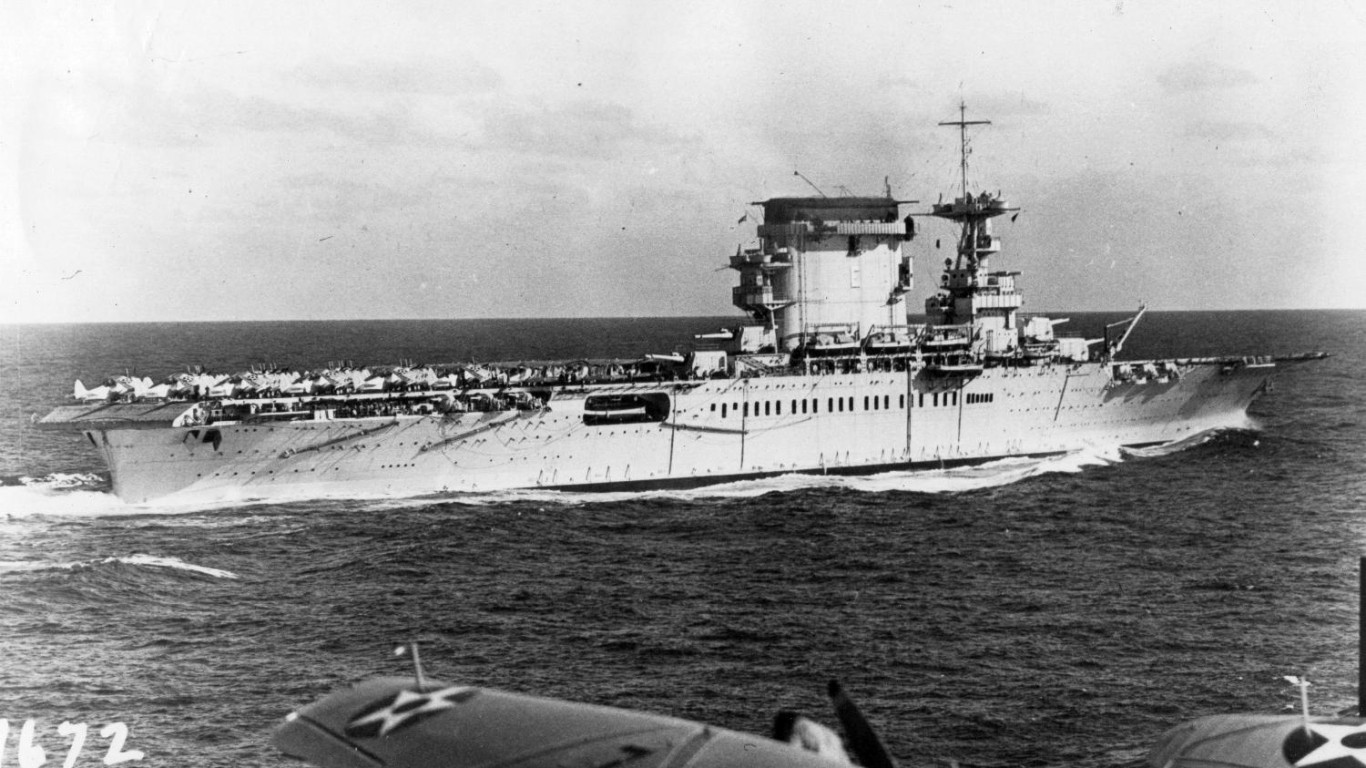
- Class: Lexington
- Date of commissioning: December 14, 1927
- Displacement: 33,000 tons
- Aircraft capacity: ~65
- Fate: Scuttled by US Navy, (May 8, 1942)
The (original) USS Lexington (CV-2) was one of America’s first fleet carriers, commissioned in 1927. At Coral Sea in May 1942, her air groups sank the Japanese light carrier Shōhō before Lexington was fatally damaged by torpedoes and internal explosions. Her loss marked one of the early, pivotal carrier battles of the Pacific War.
Midway (CV-41)
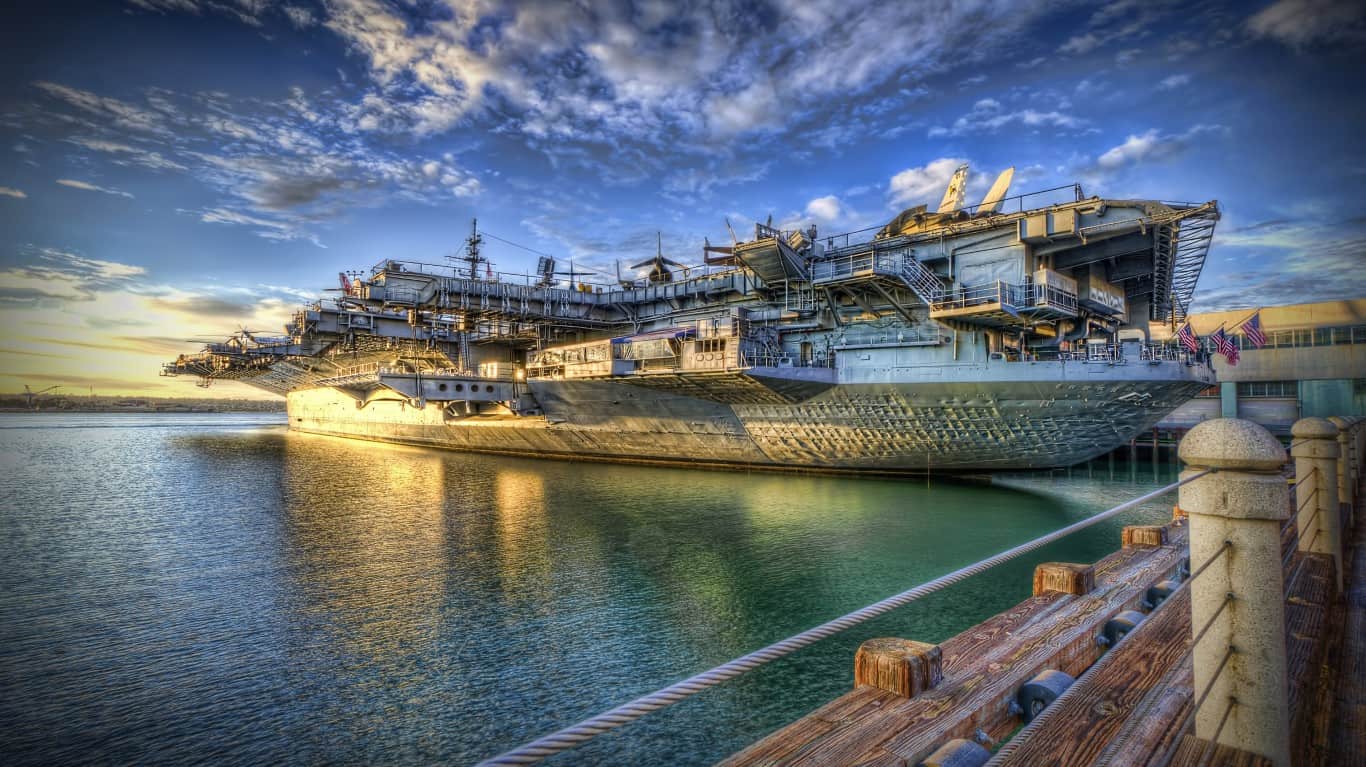
- Class: Midway
- Date of commissioning: September 10, 1945
- Displacement: 45,000 tons
- Aircraft capacity: ~137 aircraft
- Fate: Donated as a museum and memorial, (August 29, 2003)
The USS Midway (CV-41) was lead ship of her class, commissioned in September 1945, following Japan’s surrender. Even though she saw no World War 2 service, her design was rooted in wartime experience, featuring armored decks and large air capacity for jet operations. The Midway became a Cold War flagship and served for nearly five decades.
Randolph (CVS-15)
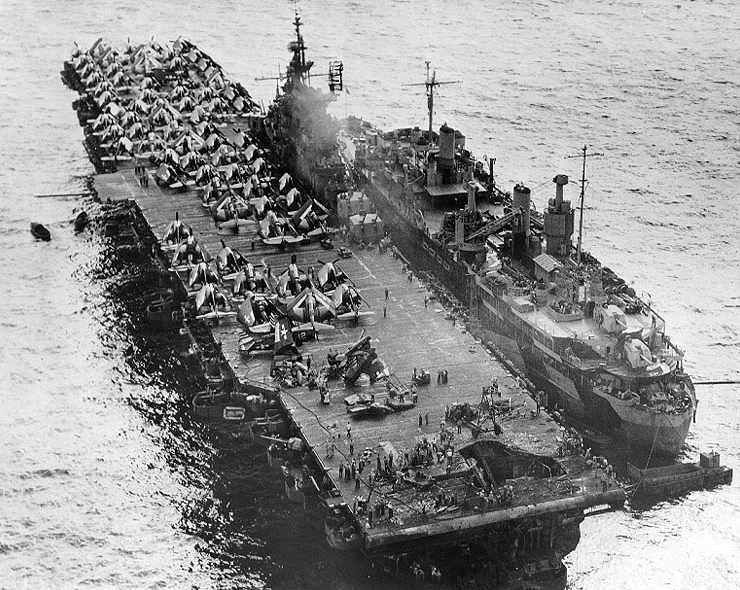
- Class: Essex
- Date of commissioning: October 9, 1944
- Displacement: 27,100 tons
- Aircraft capacity: ~90
- Fate: Disposed by Navy sale, (April 1, 1975)
The USS Randolph (CV-15) entered service in October 1944 as an Essex-class carrier. She launched air strikes on the Philippines, Iwo Jima, and Okinawa, and her planes attacked Japan’s home islands in 1945. A kamikaze hit in March 1945 resulting in heavy damage, but repairs allowed her return to action before war’s end.
Ranger (CV-4)
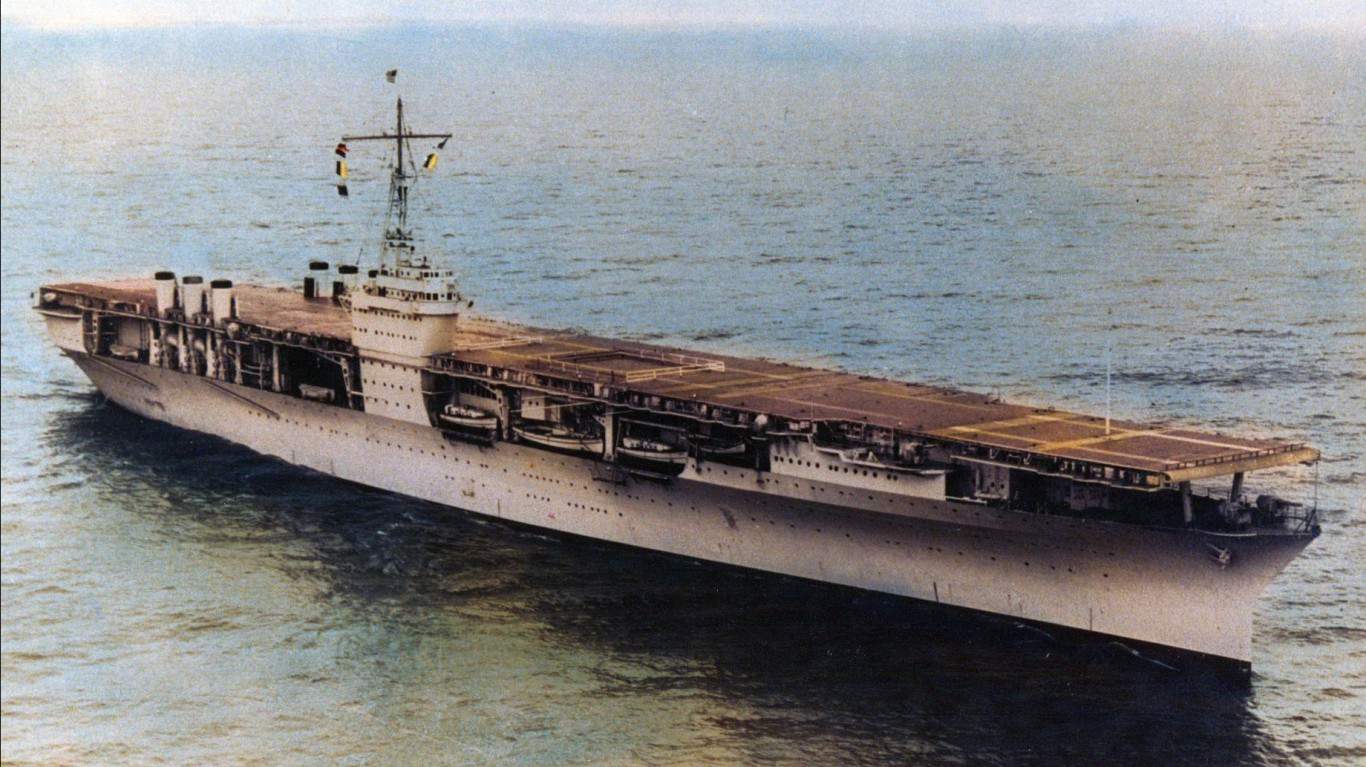
- Class: Ranger
- Date of commissioning: June 4, 1934
- Displacement: 14,500 tons
- Aircraft capacity: ~70–75
- Fate: Disposed by dismantling (scrapping/recycling), (January 28, 1947)
The USS Ranger (CV-4) was the U.S. Navy’s first carrier built specifically for that role. Commissioned in 1934, she served in the Atlantic Theatre during World War 2, supporting Operation Torch landings in North Africa in 1942 and providing convoy cover. Although smaller than Pacific fleet carriers, the Ranger’s service helped refine carrier tactics.
Saratoga (CV-3)
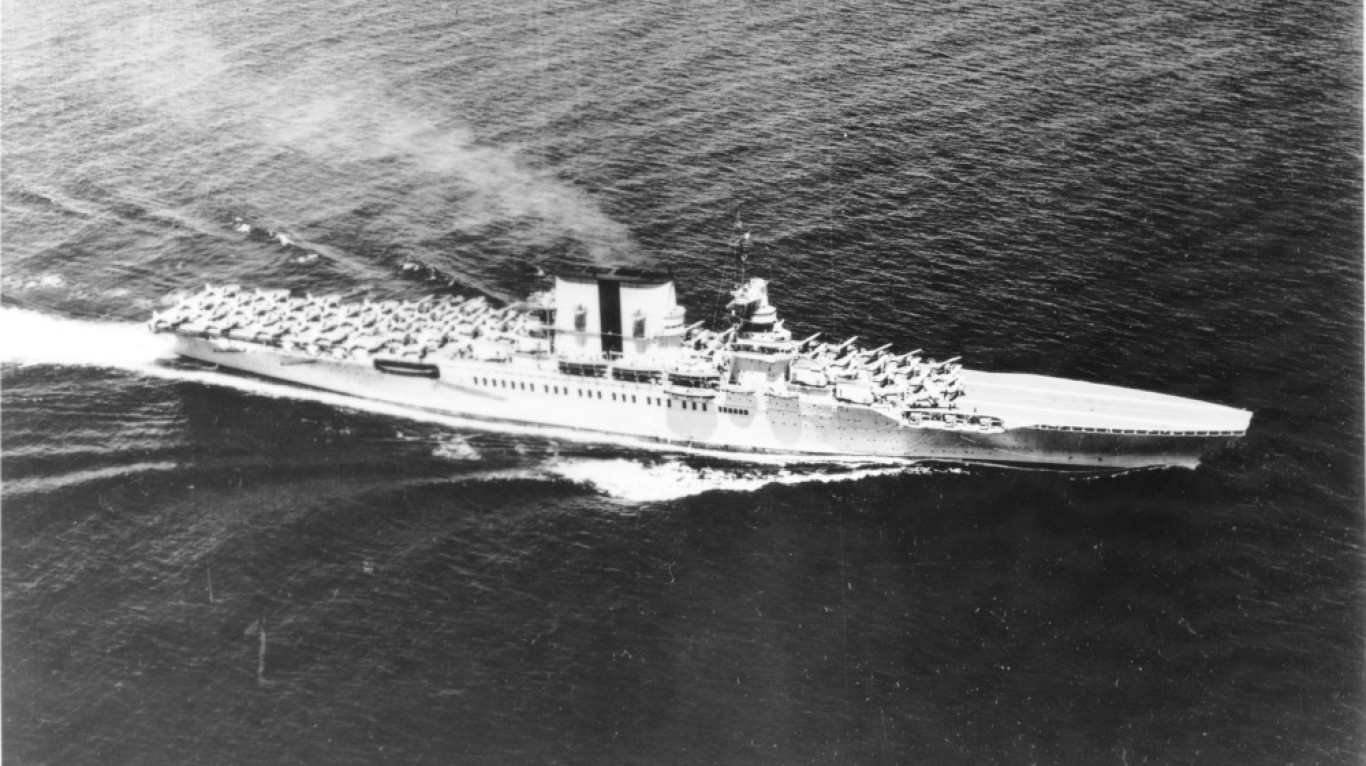
- Class: Lexington
- Date of commissioning: November 16, 1927
- Displacement: 33,000 tons
- Aircraft capacity: ~78
- Fate: Destroyed in atomic bomb test, (July 25, 1946)
The USS Saratoga (CV-3) was the sister ship to Lexington (CV-2), and was commissioned in 1927. She fought from the early Pacific campaigns through 1945. The Saratoga supported Guadalcanal, Iwo Jima, and Okinawa operations before being badly damaged by kamikazes. After the war, she was used as a target in 1946’s Operation Crossroads atomic tests at Bikini Atoll.
Shangri-La (CVS-38)
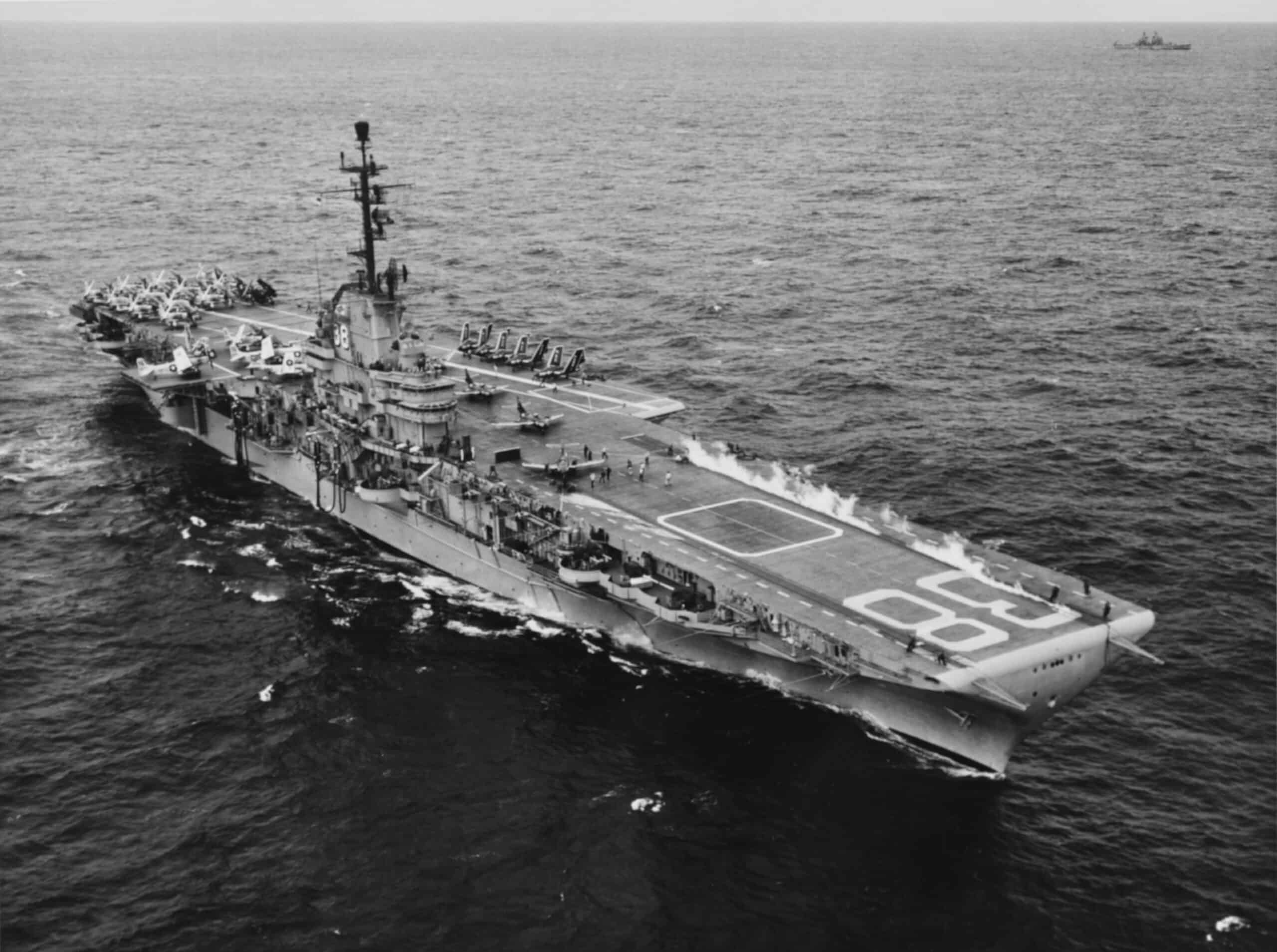
- Class: Essex
- Date of commissioning: September 15, 1944
- Displacement: 30,800 tons
- Aircraft capacity: ~90
- Fate: Disposed by MARAD exchange, (August 9, 1988)
The USS Shangri-La (CV-38) was commissioned in September 1944 and joined the Pacific Fleet in early 1945. Her air groups conducted strikes on Okinawa, Formosa (Taiwan), and the Japanese home islands during the final stages of the war. She earned two battle stars for her World War 2 service.
Ticonderoga (CVS-14)
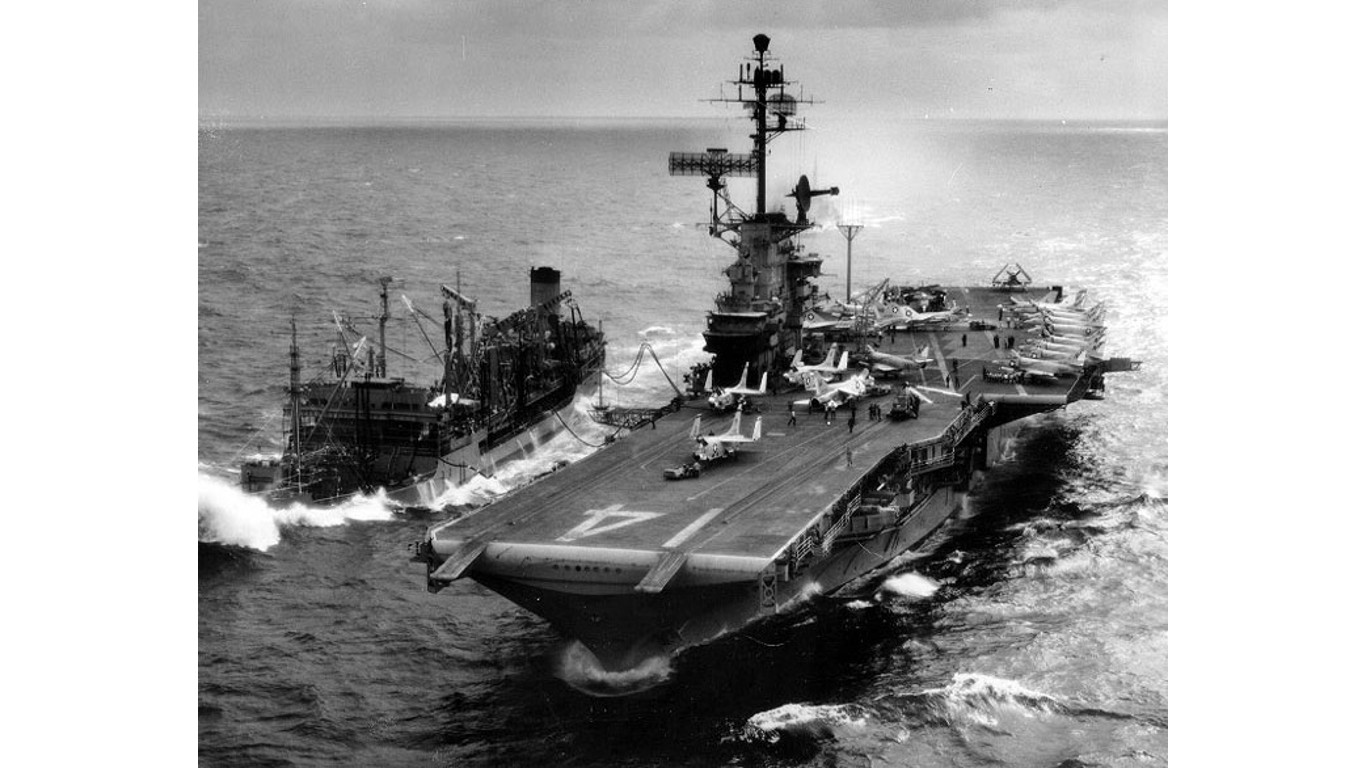
- Class: Essex
- Date of commissioning: May 8, 1944
- Displacement: 30,800 tons
- Aircraft capacity: ~90
- Fate: Disposed by Navy sale, (September 1, 1975)
The USS Ticonderoga (CV-14) entered service in May 1944 as an Essex-class carrier. She launched air strikes across the Pacific, including raids on Formosa (Taiwan), the Philippines, and Japan. The Ticonderoga was damaged by two kamikaze attacks in 1945 and survived extensive combat. She earned five battle stars for her significant contributions to the Allied victory.
Wasp (CV-18)
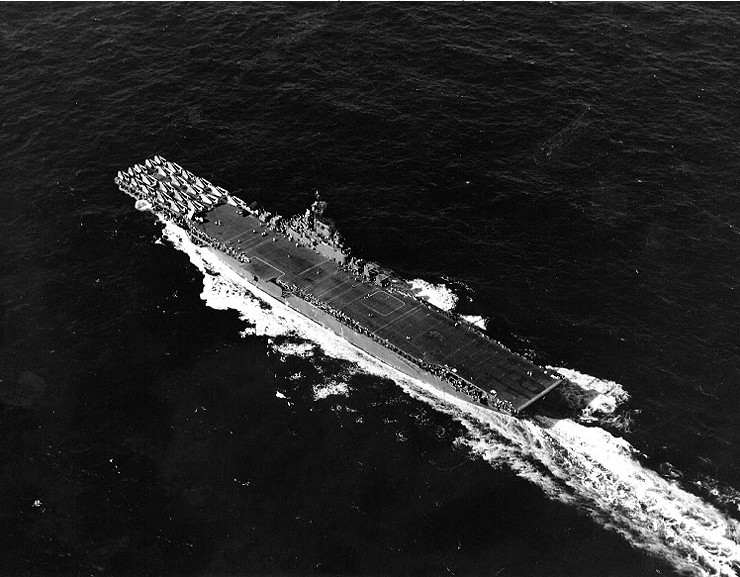
- Class: Essex
- Date of commissioning: November 24, 1943
- Displacement: 30,800 tons
- Aircraft capacity: ~90
- Fate: Disposed by Navy sale, (May 21, 1973)
The USS Wasp (CV-18) was commissioned in November 1943 and quickly joined Pacific operations. She supported attacks on the Marianas, Leyte, Luzon, Iwo Jima, and Okinawa, enduring a severe kamikaze strike in March 1945 but returning to action. The Wasp (CV-18) earned eight battle stars for her World War 2 service.
Wasp (CV-7)
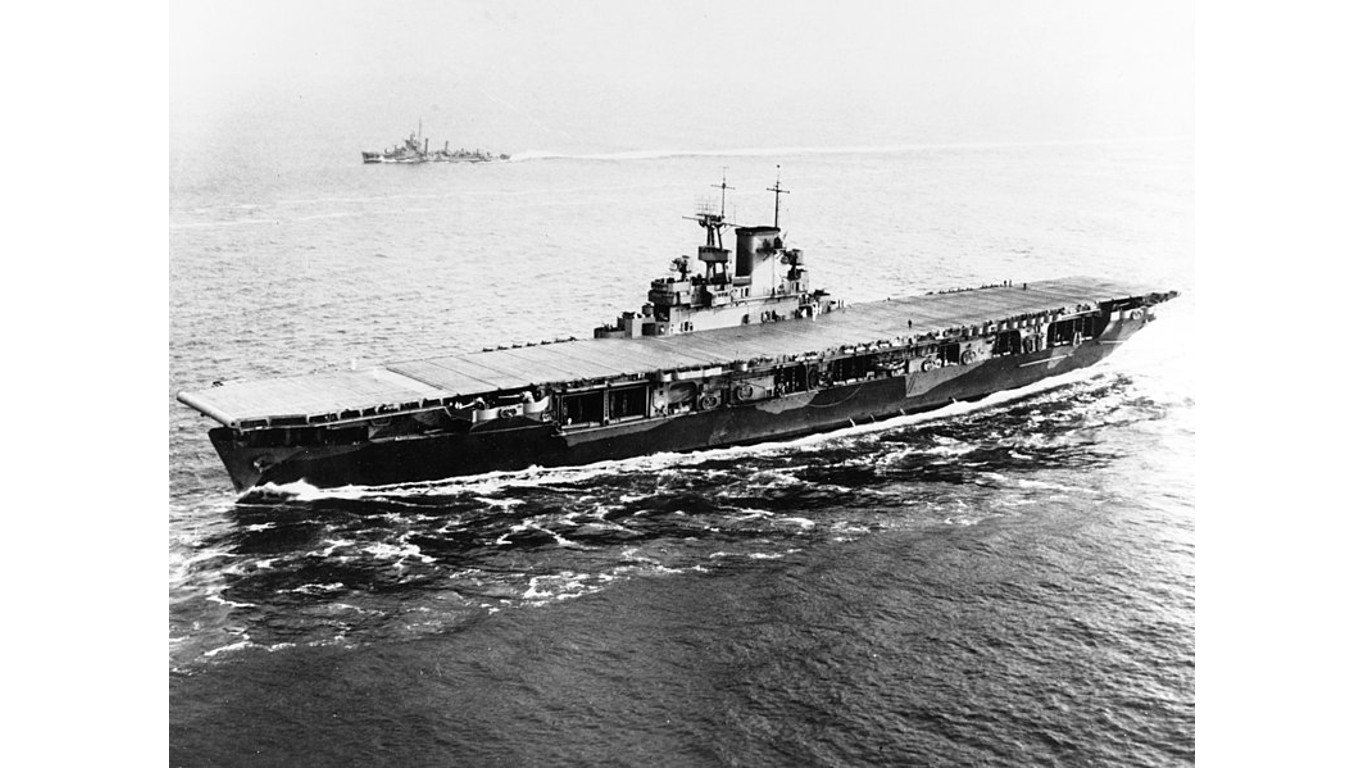
- Class: Wasp
- Date of commissioning: April 25, 1940
- Displacement: 14,700 tons
- Aircraft capacity: ~75
- Fate: Sunk by Japanese submarines, (September 15, 1942)
The USS Wasp (CV-7) was a smaller prewar carrier commissioned in April 1940. She operated in the Atlantic early in the war before transferring to the Pacific in 1942. While ferrying aircraft to Guadalcanal, she was torpedoed and sunk by the Japanese submarine I-19 on September 15, 1942, with heavy loss of life.
Yorktown (CVS-10)

- Class: Essex
- Date of commissioning: April 15, 1943
- Displacement: 36,380 tons
- Aircraft capacity: ~90
- Fate: Donated as a museum and memorial, (August 15, 1974)
The USS Yorktown (CV-10) was commissioned in April 1943 as an Essex-class carrier and replaced the lost CV-5. She joined the Pacific Fleet and launched major strikes across the Marianas, Philippines, Iwo Jima, and Okinawa. Earning 11 battle stars and a Presidential Unit Citation, she became one of the most decorated U.S. carriers of World War 2.
Yorktown (CV-5)
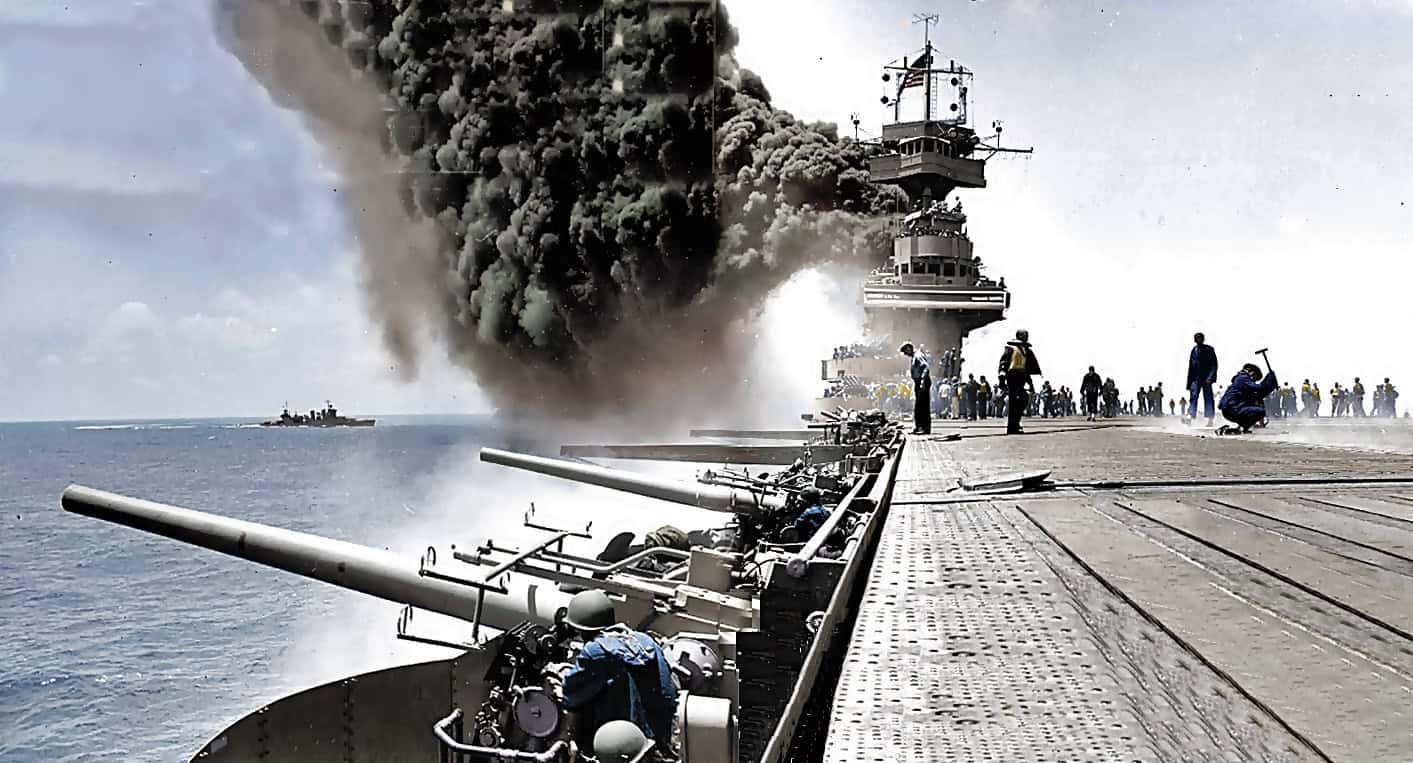
- Class: Yorktown
- Date of commissioning: September 30, 1937
- Displacement: 25,100 tons
- Aircraft capacity: ~70-90
- Fate: Sunk by Japanese submarines, (June 7, 1942)
The USS Yorktown (CV-5), a Yorktown-class carrier, was commissioned in 1937 and fought from Coral Sea to Midway. Her air groups helped sink several Japanese carriers before she was fatally damaged at Midway on June 4, 1942. Yorktown’s sacrifice was instrumental in halting Japan’s early Pacific momentum and changing the war’s direction.
Contact [email protected] for any questions or corrections.
Chris Lange is a financial and geopolitical writer with more than a decade of experience covering a myriad of topics. He has published thousands of articles for 24/7 Wall St., with past coverage focused heavily on stocks, IPOs, healthcare, defense, global affairs, and technology.
His work has been quoted, or referenced by a number of outlets including Business Insider, USA Today, Yahoo Finance, MSN, The Motley Fool, and many other publications. A graduate of Southwestern University, he studied business with a focus on investments and has previous experience in banking and startups.
When not reading or writing the news, he is following his passion for Lacrosse, playing chess, or building solar projects with his dad.