I’m 62 and worth millions: how can I give more to my kids without getting slammed on taxes?
Benjamin Franklin is famous for many things, including the following quote: Our new Constitution is now established, and has an appearance that promises permanency; but in this world nothing can be said to be certain, except death and taxes. Death…

This post may contain links from our sponsors and affiliates, and Flywheel Publishing may receive compensation for actions taken through them.

Benjamin Franklin is famous for many things, including this observation: Our new Constitution is now established, and has an appearance that promises permanency; but in this world nothing can be said to be certain, except death and taxes.
Death and taxes are two dreaded topics that seldom travel far apart. Their confiscatory logic is a persistent source of frustration and creative planning, as families search for legal ways to transfer wealth without surrendering more than necessary to the government. Congress and the IRS created gift taxes specifically to discourage asset transfers made before death as a way to sidestep estate taxes. Those estate levies, sometimes called death taxes, apply to the total value of an estate the moment the owner passes.
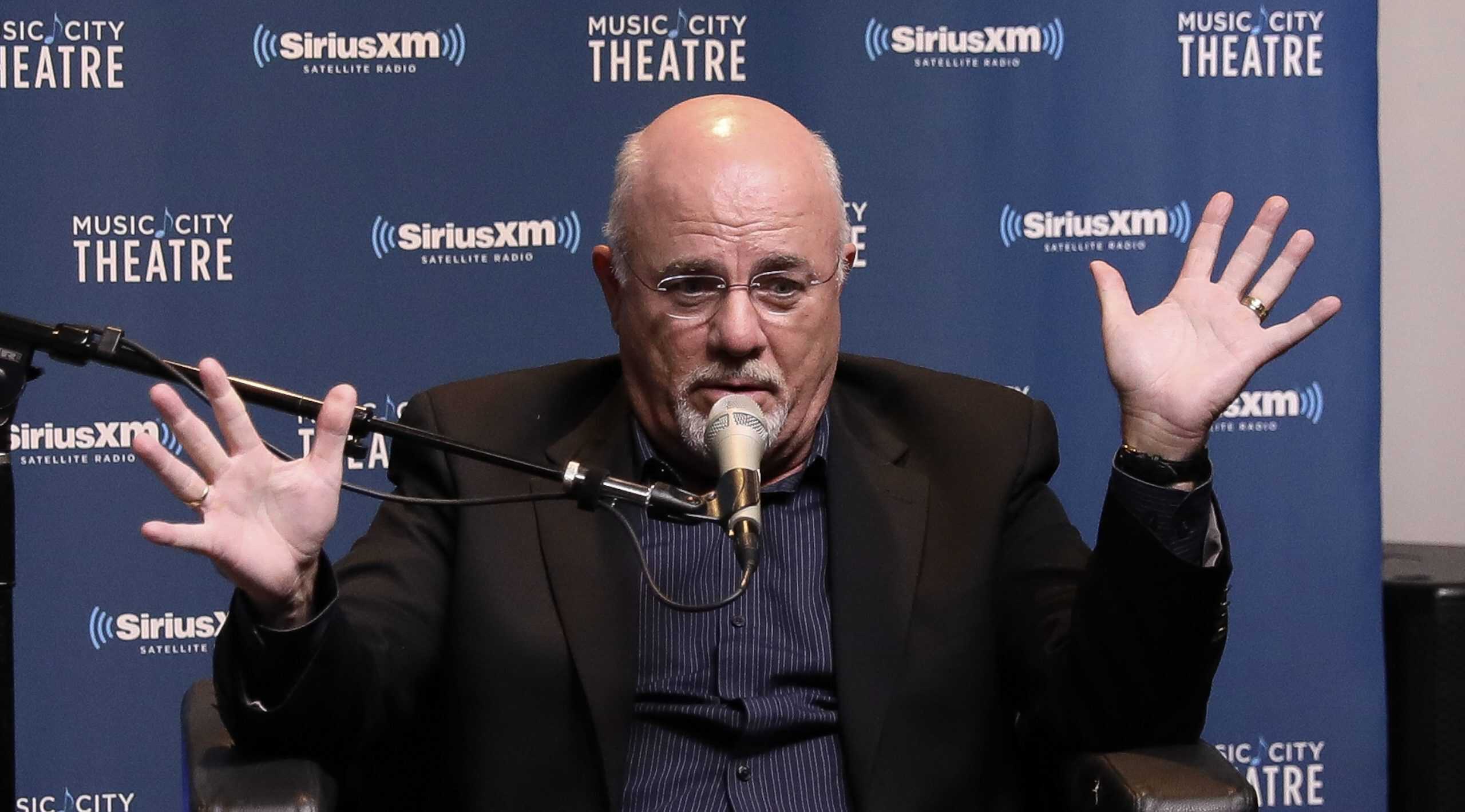
Dave Ramsey co-hosts The Ramsey Show, a nationally syndicated program devoted to personal financial advice. He recently tackled the topic of gifting when a caller wanted to pass a large sum to his son-in-law to expand a business without triggering gift taxes.
The Caller’s Dilemma
The caller, a 62-year-old with a net worth of $10 million to $12 million, wanted to fund the expansion of his son-in-law’s musical instrument repair business. His proposed structure was straightforward: treat the initial $300,000 as a mortgage or property loan note, giving the son-in-law capital to purchase or rent a larger workshop space. Annual cash gifts below the $19,000 annual exclusion threshold (or $38,000 for married couples using gift-splitting) would then gradually pay down the loan balance, keeping each transfer well within IRS limits year by year.

Ramsey’s Advice
Ramsey endorsed the caller’s approach and offered a complementary alternative worth examining. His suggestion: apply the $300,000 directly against the federal lifetime estate and gift tax exemption, treating it as a declared gift rather than a loan. That path became considerably more attractive after the One Big Beautiful Bill Act (OBBBA), signed into law on July 4, 2025, permanently raised the unified exemption to $15 million per individual (or $30 million for married couples) beginning January 1, 2026, up from $13.99 million in 2025. Before the OBBBA, the Tax Cuts and Jobs Act (TCJA) set its elevated exemption to sunset after 2025, reverting to the pre-2017 base of $5 million per person indexed for inflation, which by 2026 would have amounted to roughly $7 million per person. Wealthy families had been scrambling to transfer assets ahead of that cliff. The new law removes it entirely. The exemption is indexed for inflation annually from 2027 onward, and the top marginal rate on amounts above the threshold remains 40%. The generation-skipping transfer (GST) tax exemption was also raised to $15 million per person under the same legislation.
Several practical points flow from this framework. Using the unified estate tax credit during one’s lifetime reduces the amount shielded at death, but the expanded $30 million combined baseline for married couples substantially widens the margin of safety for most high-net-worth families. At 62, the caller’s estate will likely keep growing, yet the permanently enlarged threshold reduces the risk of outgrowing the exemption by tapping it early. The IRS confirmed that the annual exclusion of $19,000 per recipient, unchanged between 2025 and 2026, will rise with inflation over time, so the installment paydown strategy compounds in the caller’s favor. Ramsey further noted that loan forgiveness can be built into the caller’s will, and that a simple one-page loan record, initialed each year, satisfies the IRS documentation standard.
State-Level Tax Traps to Consider
Federal relief is meaningful, but state-level rules add a layer of risk that many families underestimate. Twelve states and the District of Columbia levy their own estate taxes, and five states (Kentucky, Maryland, Nebraska, New Jersey, and Pennsylvania) impose separate inheritance taxes. Iowa completed its phaseout of the inheritance tax for deaths on or after January 1, 2025, trimming that list from six states to five. State decoupling thresholds can be startlingly low: Oregon sets its exemption at just $1 million, while Rhode Island’s threshold sits at $1,802,431 for 2025. An estate worth $10 million to $12 million could owe no federal tax whatsoever while still facing a six-figure state bill, depending entirely on where the owner lives.
Key Takeaways

Both the caller’s plan and Ramsey’s alternative rest on established tax mechanics and are structurally sound. One additional avenue worth exploring: if the son-in-law’s business eventually attracts outside investors or a buyout from a larger competitor, structuring the funding along venture capital lines could make sense. The typical vehicles are a Simple Agreement for Future Equity (SAFE) or a Convertible Promissory Note. The trade-off is that payments under those instruments would generate a 1099 tax event for the caller.
Equity instruments and SAFEs also carry a balance-sheet benefit. Keeping the original capital outside the workshop’s senior debt load improves the business’s prospects for commercial bank financing or institutional backing later. If the funding converts to corporate equity, any distributions that follow are treated as qualified dividends, taxed at long-term capital gains rates rather than the ordinary income rates that apply to imputed interest on a straight loan.
Advanced Wealth Transfer Alternatives
For high-net-worth positions that exceed standard planning limits, other structures offer lasting utility. A Family Limited Partnership (FLP) lets parents consolidate business assets while retaining control as general partners and distributing non-voting limited partner interests to descendants. Because non-voting equity lacks marketability, valuation discounts typically reduce the taxable value of each transfer. Intentionally Defective Grantor Trusts (IDGTs) serve a complementary goal: they freeze asset values for estate purposes while allowing the grantor to cover the trust’s income tax liability out of pocket, effectively delivering an additional tax-free benefit to beneficiaries over time. Both tools remain fully available and are unaffected by the OBBBA, making them relevant even for estates that now fall comfortably below the $15 million federal threshold but still face exposure at the state level.
This article is intended to be strictly informative and opinion-based only, and not construed to be tax or financial advice. It is advised that professional tax and financial counseling be sought before undertaking any steps in that field.
Editor’s note: This pass updates the Rhode Island estate-tax exemption to the Tax Foundation’s precise 2025 figure of $1,802,431, replacing the previous “roughly $1.8 million” approximation. It also clarifies that the TCJA’s pre-OBBBA sunset would have reverted the exemption to a $5 million base indexed for inflation (roughly $7 million by 2026), and adds that the OBBBA simultaneously raised the generation-skipping transfer tax exemption to $15 million per person alongside the estate and gift tax exemption.
Contact [email protected] for any questions or corrections.
After 15 years on Wall Street with 7 of them as Director of Corporate and Municipal Bond Trading for a NYSE member firm, I started my own project and corporate finance consultancy. Much of the work involves writing business plans, presentations, white papers and marketing materials for companies seeking budgetary allocations for spinoffs and new initiatives or for raising capital for expansion or startup companies and entrepreneurs. On financial topics, I have been published under my own byline at The Motley Fool, 247wallst.com, DealFlow Events’ Healthcare Services Investment Newsletter and The Microcap Newsletter, among others. Additionally, I have done freelance ghostwriting writing and editing for several financial websites, such as Seeking Alpha and Shmoop Financial. I have also written and been published on a variety of other topics from music, audiophile sound and film to musical instrument history, martial arts, and current events. Publications include Copper Magazine, Fidelity (Germany), Blasting News, Inside Kung-Fu, and other periodicals.