I retired early 5 years ago and this is the #1 biggest downside of my decision
Sometimes, our retirements fail to live up to the sky-high expectations we've set throughout a lengthy career. The golden years are supposed to be a time dedicated to traveling the world, sharing memorable experiences with friends and family, and ticking…

This post may contain links from our sponsors and affiliates, and Flywheel Publishing may receive compensation for actions taken through them.
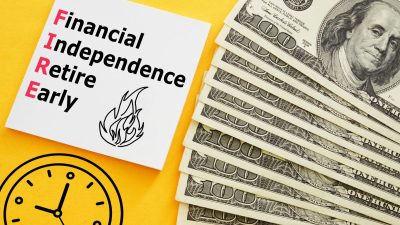
Sometimes retirement fails to live up to the sky-high expectations built across a long career. The golden years are supposed to be a time for travel, memorable experiences with friends and family, and ticking items off the bucket list. Reality, though, can look quite different.
For many people who leave a fast-paced, demanding career, the stillness of retirement is harder to adjust to than they ever anticipated. Second thoughts are common, and so is the impulse to return to the labor market, whether for the extra income or simply to escape the boredom. Recent AARP research confirms the pattern: its winter 2025 survey found that roughly 28% of retirees felt they had retired too early, and 7% of retirees had returned to the workforce in the prior six months, up from 6% in the summer 2025 wave of the same survey. The top reason those returnees cited for going back: they needed the money, with 48% pointing to financial pressure as the primary driver.
In this piece, we check in on a Reddit poster from the r/Fire subreddit who shares an update after five years of early retirement. They tried working a lower-stress, lower-paying barista job as part of the Barista FIRE strategy, only to find it was not for them after dealing with mistreatment by customers.
The loss of “social status” that comes with retiring early
The loss of social status seems to have hit this early retiree particularly hard. Returning to a career paying north of $200,000 per year is a high bar, but for those who are no longer happy in retirement, making that attempt to pick up where they left off is worth serious consideration. The FIRE (financial independence, retire early) community is full of accounts from people who stepped away from their careers only to return a few years later. Those weighing re-entry should know that older workers face real headwinds: the same AARP winter 2025 survey found that two-thirds of workers aged 50 and older believed it would be difficult to find a new job, with age discrimination cited as the top barrier by 35% of that group.
Taking a multi-year break and then re-entering the labor force is not a failure. What is worth noting from the Reddit thread, though, is that telling people “I’m retired” invites constant boundary violations from friends and neighbors. To preserve a sense of professional identity without returning to full-time work, many early retirees adopt a vague “Consulting” or “Portfolio Management” label in casual conversation.
Understand the ups and downs of early retirement, and have a backup plan
Retiring early is one of the most consequential financial decisions a person can make. Anyone considering it should first understand the technical guardrails required to survive decades of market volatility. The classic 4% safe withdrawal rate, which financial planner William Bengen first articulated in a paper published in the Journal of Financial Planning in October 1994, was built around a 30-year retirement horizon. Bengen has since revised that figure upward to 4.7%, a number he describes as the worst-case floor across roughly 400 historical retirement scenarios, not a typical recommendation. That revision, reaffirmed in his August 2025 book, rests on a more broadly diversified portfolio than a standard 60/40 stock-bond split. Morningstar’s 2025 research, by contrast, sets a more cautious figure of 3.7% for new retirees given today’s market valuations. Many planners favor a dynamic guardrails approach, adjusting portfolio distributions upward or downward based on real-time market conditions rather than pulling a fixed, inflation-adjusted sum every year.
Retiring in your 40s or 50s also introduces structural hurdles that traditional retirement models ignore. Securing affordable health insurance before Medicare eligibility at 65 requires careful management of Modified Adjusted Gross Income (MAGI) to qualify for ACA Marketplace subsidies. That challenge grew sharply harder in 2026: the enhanced ACA premium tax credits that had kept premiums manageable for millions of Americans expired at the end of 2025, and Congress did not pass an extension. According to KFF, average net marketplace premiums rose 58% in 2026, climbing from $113 per month to $178 per month. That actual increase came in below KFF’s original 114% projection, because many enrollees shifted to lower-premium bronze plans with higher deductibles, and those facing the steepest increases often dropped coverage entirely. ACA Marketplace enrollment is projected to fall from roughly 22.3 million sign-ups in 2025 to around 17.5 million effectuated enrollees by year-end 2026. For a 62-year-old without subsidies, benchmark Silver plan premiums can reach $1,000 to $1,800 or more per month depending on location, a reality that forces many early retirees to keep excess cash on hand or draw from specific tax buckets to stay subsidy-eligible.
On top of healthcare costs, retiring decades before traditional retirement age creates lasting gaps in the Social Security Administration’s benefit calculation. The SSA bases your benefit on your 35 highest-earning years, adjusted for wage inflation. Any year without earnings is counted as a zero, directly pulling down your average indexed monthly earnings and reducing your monthly benefit for life. The more high-earning years a person leaves on the table by retiring early, the smaller their eventual primary insurance amount becomes. This concern has taken on added urgency in recent years: from January through July 2025, more than 2.3 million people filed for Social Security retirement benefits, a 16% increase over the same period in 2024, according to the Urban Institute. An AARP survey fielded in June 2025 found that 49% of those who claimed benefits earlier than planned were motivated by fears that Social Security is “running out of money.” That surge reversed a decades-long trend of Americans claiming benefits later in life, and locking in lower lifetime benefits sooner than planned is a cost that compounds quietly over a long retirement.
Alternative early retirement frameworks
To navigate these challenges, many people gravitate toward variations of the FIRE concept that balance financial freedom against real-world constraints. The table below compares the three most common approaches.
| Strategy | Core Concept | Main Benefit | The Hidden Downside |
|---|---|---|---|
| Traditional FIRE | Cut expenses heavily, save 50% to 75% of income, stop working completely. | Total freedom from corporate schedules. | Significant risk of identity loss and boredom over time. |
| Barista FIRE | Retire from a primary career; cover remaining expenses with low-stress part-time work. | Part-time employer coverage can offset healthcare costs; lowers the required nest egg. | As the Reddit post illustrates, tolerating difficult customers for modest pay is harder than it sounds. |
| Coast FIRE | Front-load retirement accounts early in life, then work only to cover current living costs. | Eliminates savings pressure in mid-career once the target balance is reached. | Requires exceptional financial discipline in your 20s and early 30s. |
The bottom line
Early retirement is ultimately about achieving the financial freedom to live on your own terms. A large enough nest egg at a young age does open doors, but a sabbatical or a deliberate career shift deserves serious consideration before making retirement permanent. The psychological and structural costs of leaving the workforce decades early are real: identity loss, healthcare exposure, and a permanently reduced Social Security benefit are not abstract risks. Going in with clear eyes about those costs is what separates a genuinely liberating decision from one that quietly erodes wellbeing over time.
Editor’s note: This article was updated to add context on William Bengen’s August 2025 book reaffirming his 4.7% withdrawal rate revision and Morningstar’s competing 3.7% figure; to include the AARP June 2025 survey finding that 49% of early Social Security claimants were motivated by fears of the program “running out of money”; and to note that 48% of “unretirees” in the AARP winter 2025 survey cited financial pressure as the primary reason for returning to work.
Contact [email protected] for any questions or corrections.
Joey is a 24/7 Wall St. contributor and seasoned investment writer whose work can also be found in publications such as The Motley Fool and TipRanks. Holding a B.A.Sc in Computer Engineering from the University of British Columbia (UBC), Joey has leveraged his technical background to provide insightful stock analyses to readers.
Joey's investment philosophy is heavily influenced by Warren Buffett's value investing principles. As a dedicated Buffett disciple, Joey is committed to unearthing value in the tech sector and beyond.