Is SCHD’s Recent Drawdown a Buying Opportunity Like PEP? Here’s What I Discovered
The correction in the Schwab U.S. Dividend Equity ETF (NYSEARCA:SCHD) that rattled passive income investors throughout much of 2025 has given way to one of the more compelling turnaround stories of 2026, with the fund delivering roughly 20% year-to-date total…

This post may contain links from our sponsors and affiliates, and Flywheel Publishing may receive compensation for actions taken through them.
The correction in the Schwab U.S. Dividend Equity ETF (NYSEARCA:SCHD) that rattled passive income investors throughout much of 2025 has given way to one of the more compelling turnaround stories of 2026. When this article was first written in mid-2025, SCHD was still limping along roughly 10% below its prior highs while the S&P 500 marched toward new records. The gap in trajectories led many investors to question whether the dividend-focused fund had lost its edge.
That question has since been answered. SCHD has delivered a roughly 20% year-to-date total return through mid-2026, more than double the S&P 500’s approximate 10% gain over the same stretch. The fund has also crossed a major milestone, surpassing $100 billion in assets under management. For those who saw the mid-2025 dip as an opportunity in a cheaper, dividend-focused vehicle, the thesis played out. SCHD currently trades at roughly 18x trailing earnings and carries a yield near 3.3%, somewhat lower than the 4% yield available during the trough but still comfortably ahead of most broad market alternatives.
Pepsi stock gets popped, now down more than 30% from its all-time high
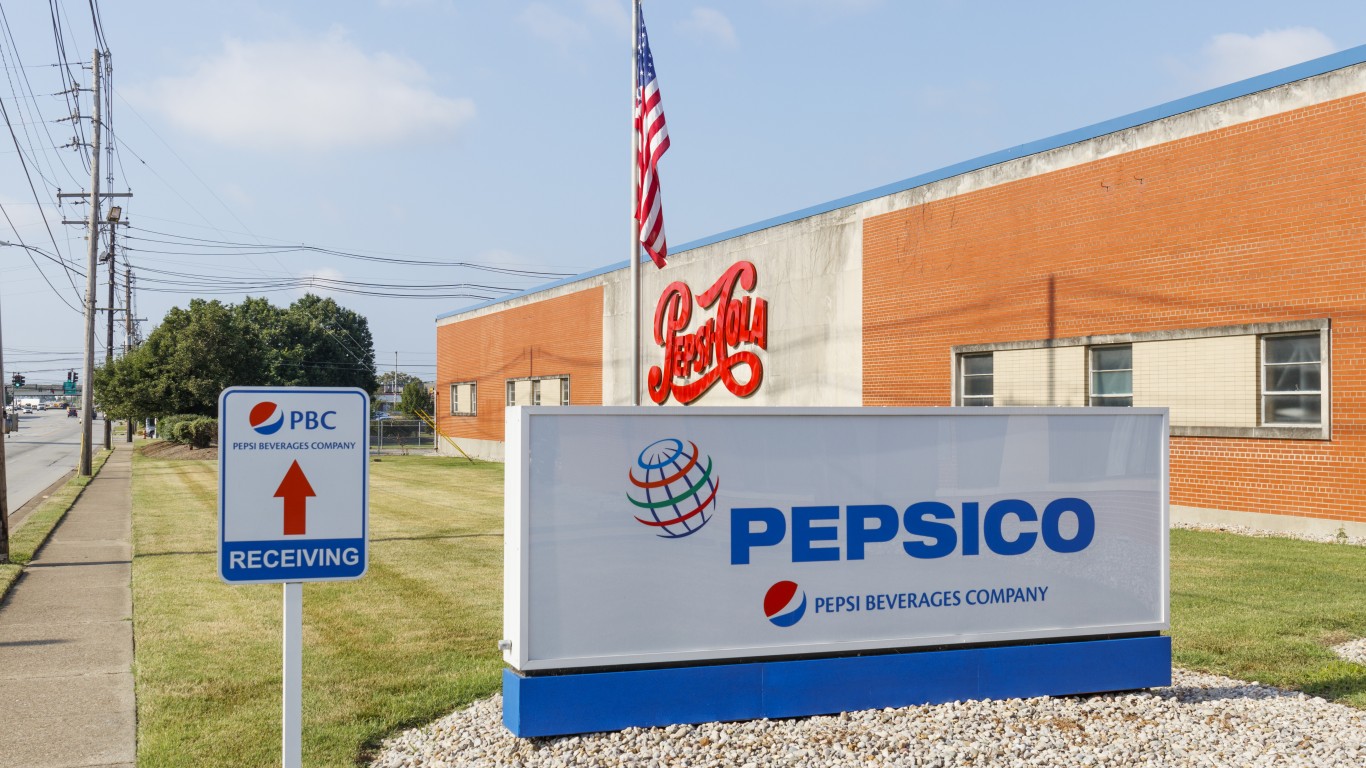
PepsiCo (NYSE:PEP | PEP Price Prediction | PEP Price Prediction) reached its all-time high of $196.88 in May 2023. At around $135 to $137 today, the stock sits roughly 30% below that peak, a sustained punishment for what was once considered one of the safest names in the consumer staples space. Even the seemingly low-beta defensive dividend payers can absorb a serious blow, and PEP has been a case study in exactly that over the past two years.
PepsiCo reported mixed second-quarter 2026 results in July: revenue of $24.18 billion beat Wall Street estimates, but core EPS of $2.20 came in short of the consensus. North America volume growth stalled, with CEO Ramon Laguarta flagging unexpected weakness in impulse channels tied to softer gas-station foot traffic. Multiple analysts responded by cutting price targets, with Citigroup downgrading PEP from Buy to Neutral and lowering its target to $145. The ongoing pressure reinforces that this is not simply a valuation overshoot being corrected. The headwinds are operational. For investors watching SCHD, Pepsi’s stumble is a reminder that not all defensive dividend payers are created equally, and that a diversified ETF structure carries a different risk profile than a single-stock bet.
The SCHD holds a diversified basket of high-quality names that benefits when investors rotate from growth toward value and yield. PEP would likely catch a tailwind in that scenario as well, but investors should remain clear-eyed about the company-specific challenges that go beyond the broader macro environment. Just because Pepsi is leading the defensive dividend complex lower does not mean it signals doom for the entire trade.
Here is what investors should weigh as SCHD continues its recovery and some of its constituents, like Pepsi, still face headwinds of their own.
As goes Pepsi, so goes the rest of the defensive dividend plays?
Pepsi has served as a bellwether for the defensive dividend trade for years, so its prolonged slide draws natural attention. The headwinds are real: the continued rise of GLP-1 weight-loss drugs weighing on snack demand, persistent macro pressure on the North American consumer, and tariff-related cost exposure across the supply chain. PepsiCo’s EPS estimates for both 2025 and 2026 have been revised downward following a soft outlook, and the company now projects only low-single-digit organic revenue growth for the year.
The contrast with Coca-Cola (NYSE:KO) is striking. KO shares are up approximately 19% year to date in 2026, and the company just beat second-quarter earnings estimates while raising its full-year forecast, now projecting comparable EPS growth of 9% to 10%. Coca-Cola’s success shows that the broader consumer staples sector is not uniformly challenged. Some companies are navigating these headwinds far more effectively than others, and Pepsi’s struggles are at least partly self-inflicted through pricing strategy and channel mix decisions.
For anyone considering a dip-buy in an ETF like SCHD, looking carefully at the composition is worth the effort. Following SCHD’s major 2026 annual reconstitution, which involved roughly 42% portfolio turnover, the sector weights shifted considerably from those cited in earlier analyses. Consumer staples now represent approximately 15.5% of the fund, energy has come down to roughly 12.5%, and healthcare has grown to about 11.7%. Technology exposure has also expanded meaningfully, reaching around 11.2% after names like Texas Instruments, Qualcomm, and Accenture joined the portfolio. That is still well below the S&P 500’s tech weighting, but the gap has narrowed. Healthcare names now dominate the top holdings, with UnitedHealth, Merck, Abbott, and Amgen occupying the four largest positions as of July 2026.
Is the SCHD a better bet than Pepsi stock?
PEP faces a difficult near-term road. Higher prices have alienated value-seeking consumers at a time when, according to Deloitte’s 2026 Consumer Products Industry Outlook, roughly 47% of shoppers now classify as active deal-hunters, including 35% of high-income households. RBC Capital’s Nik Modi flagged the “shrinkflation” backlash as far back as 2025, and the volume data in Q2 2026 confirmed that the problem has not resolved. Meanwhile PepsiCo’s annualized dividend has risen to $5.92 per share, good for a yield of about 4.3% at current prices, marking the company’s 54th consecutive annual dividend increase. That income profile is attractive on its own, but a rising yield driven by a falling stock price deserves scrutiny rather than celebration.
SCHD, by contrast, has shown that its diversified structure can absorb weakness in individual sectors or names without the fund itself going into a prolonged slide. The 2025 drawdown was real, and the 2026 reconstitution brought meaningful changes to the portfolio. But the result of that reconstitution has been a fund that entered 2026 leaning more defensive and more diversified across quality dividend payers than at any point in recent years, and the performance has reflected that positioning. The question heading into the second half of 2026 is whether rising Treasury yields could pressure the fund the way they did in 2022, a risk worth monitoring carefully given the macro backdrop.
Editor’s note: This article has been updated to reflect SCHD’s 2026 performance, which reversed the drawdown described at time of publication and delivered roughly 20% year-to-date total returns. Sector weightings have been refreshed following SCHD’s major 2026 annual reconstitution, PEP’s decline from its all-time high has been recalculated using its confirmed $196.88 peak, and Coca-Cola’s year-to-date gain has been updated to approximately 19% following its July 28, 2026 earnings beat and guidance raise.
Contact [email protected] for any questions or corrections.
Joey is a 24/7 Wall St. contributor and seasoned investment writer whose work can also be found in publications such as The Motley Fool and TipRanks. Holding a B.A.Sc in Computer Engineering from the University of British Columbia (UBC), Joey has leveraged his technical background to provide insightful stock analyses to readers.
Joey's investment philosophy is heavily influenced by Warren Buffett's value investing principles. As a dedicated Buffett disciple, Joey is committed to unearthing value in the tech sector and beyond.