I Don’t Agree with Dave Ramsey on Everything, But He Nails These 4 Key Points
There is a lot that I disagree with Dave Ramsey about. For one thing, I think he is dead wrong about credit cards. While he discourages their use, I think cards are a great way to build credit and earn…

This post may contain links from our sponsors and affiliates, and Flywheel Publishing may receive compensation for actions taken through them.
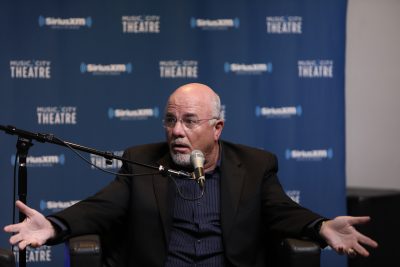
Dave Ramsey and I disagree on plenty. Credit cards, for instance: he discourages their use entirely, while I see them as valuable tools for building credit and earning rewards when used responsibly.
I also part ways with Ramsey on paying off your house early. With mortgage rates still hovering in the 6% to 7% range in 2026, his advice carries more weight for recent buyers than it did a few years ago. But if you locked in a low rate years ago, rushing to eliminate that debt makes little financial sense. And his suggestion that you opt not to care about your credit score strikes me as misguided for most people.
That said, Ramsey gets several things absolutely right. Here are four pieces of advice where I am in complete agreement with the finance guru.

1. An emergency fund should be a top financial priority
Few financial habits matter more than a reliable cash cushion, and Ramsey has hammered home this message for decades. His seven Baby Steps to financial peace begin with a $1,000 starter emergency fund, followed by a fully funded reserve covering three to six months of expenses once all non-mortgage debt is cleared. Critics argue that $1,000 is dangerously low given years of cumulative inflation, with some financial advisors now suggesting a floor closer to $2,000 as a more realistic starting target. Ramsey’s team largely acknowledges this tension, framing the starter amount as a motivational milestone rather than a comprehensive safety net.
The survey data shows exactly why this message resonates. Bankrate’s 2026 Annual Emergency Savings Report found that only 47% of Americans have sufficient liquidity to cover a $1,000 emergency expense, and 29% carry more credit card debt than they have in emergency savings. Separately, 54% of Americans say inflation is causing them to save less for emergencies. Consumer prices are roughly 26% higher than they were in December 2019, according to Bureau of Labor Statistics CPI data, which helps explain why so many households remain financially exposed.
A cash cushion protects you from sliding deeper into debt when the car breaks down or a medical bill arrives unexpectedly. Without one, a single surprise expense can ignite a spiral of credit card charges that takes months to unwind. A starter fund also prevents backsliding mid-payoff: climbing out of debt only to fall back in after one emergency is exactly the kind of discouraging setback Ramsey’s system is designed to prevent.
Building an emergency fund is the single most reliable first step toward long-term financial stability. Start there before tackling anything else.
2. Avoiding debt is important
Ramsey’s stance on debt is mostly sound. His second Baby Step calls for paying off all non-mortgage debt using the debt snowball method, which targets the smallest balances first for psychological momentum. Once debt-free, he advocates staying that way, and the numbers make a compelling case for that discipline.
Americans ended 2025 with a record $1.277 trillion in credit card debt, according to the Federal Reserve Bank of New York, the highest balance since the Fed began tracking the data in 1999. By Q2 2026, balances had climbed back to $1.263 trillion after a brief seasonal dip, nearing the all-time high once again. The broader trajectory is striking: credit card balances have risen $493 billion, or 64%, since the pandemic-era trough of $770 billion in Q1 2021. On the delinquency front, the share of credit card balances 90 or more days past due stood at 12.8% as of Q2 2026, up from 7.6% at mid-2022 and prompting comparisons to Great Recession-era stress. The New York Fed has noted, however, that this elevated figure largely reflects old charged-off balances that remain on credit reports rather than an entirely fresh surge of consumer defaults. With the average APR for cards actively accruing interest rising to 22.36% in Q3 2026 per Federal Reserve data, carrying revolving balances is still one of the most expensive financial mistakes a household can make.
Here is where Ramsey and I part ways on specifics. Paying off your mortgage early does not make sense if you locked in a low interest rate. Mortgage debt is typically inexpensive, often tax-deductible if you itemize, and thanks to inflation you are effectively repaying it with dollars worth less each year. The same logic applies to low-interest student loans.
For high-interest consumer debt, Ramsey is right on target. Eliminate it, then avoid carrying credit card balances or taking on unnecessary loans. Paying cards in full each month lets you enjoy the rewards without the interest burden, and borrowing strategically for a home or education can make sense, but most other consumer debt is financial poison.
3. You don’t ever want to lease a car
Ramsey rightly warns against car leases, and I am fully on board. Consumer Reports has noted that leasing typically costs more than an equivalent loan because you are paying for the vehicle during its steepest depreciation window. Monthly lease payments may look attractive on paper, but you own nothing at the end of the term.
Getting out of a lease early is both difficult and expensive. Despite all those payments, you never build equity in the vehicle unless you buy it out at an often-inflated residual price. Leases also embed financing costs that are far less transparent than a standard loan rate. Exceed the mileage cap (typically 10,000 to 15,000 miles per year) and you face overage fees of $0.20 to $0.30 per extra mile. Those charges can easily reach thousands of dollars at turn-in, wiping out any apparent monthly savings.
The better move is to buy an affordable used car with the shortest loan term you can manage. Once the loan is paid off, redirect those same monthly payments into a dedicated savings account until you have accumulated enough to pay cash for your next vehicle. Keep driving the paid-off car as long as it remains reliable, and only upgrade when repair costs become prohibitively expensive relative to what a replacement would cost.
4. Live on a budget

Ramsey insists on living by a budget, specifically his zero-based approach where every dollar gets a job. With zero-based budgeting, you allocate income across spending, saving, and giving until income minus expenses equals zero. The discipline is intentional: it forces you to decide where your money goes before it quietly disappears into things you never consciously chose to prioritize.
Zero-based budgeting is not the only workable method, but Ramsey is correct that conscious spending direction is essential. Too many people lack any clear picture of where their money goes, which means they fail to align spending with their actual values and priorities. The consequences show up in the data: the personal savings rate stood at just 4.1% in August 2026, per the U.S. Bureau of Economic Analysis, well below the long-run average of roughly 8% even as incomes were rising. Americans are spending more and saving less, a pattern that only a deliberate plan can reverse.
Budgeting also ensures you are spending on the right things rather than simply cutting back indiscriminately. If a particular hobby or recurring expense genuinely matters to you, a budget lets you protect it while trimming what does not. Your money should deliver maximum satisfaction, and that requires intentionality rather than habit.
Find a budgeting method that fits your situation. Maybe that is Ramsey’s zero-based approach. Perhaps it is the 50/30/20 framework, which allocates 50% of income to needs, 30% to wants, and 20% to savings. Whatever system you choose, follow Ramsey’s core principle: make a budget and commit to it.
These are the four areas where Ramsey’s guidance is worth following without reservation. He makes a compelling case for emergency funds, debt elimination, avoiding car leases, and disciplined budgeting. Anyone serious about building lasting financial security would do well to put all four into practice.
Editor’s note: The personal savings rate was updated to 4.1% in August 2026 (the most recent BEA release, dated September 30, 2026), replacing the prior July 2026 figure of 3.0%. The average credit card APR for accounts accruing interest was updated to 22.36% for Q3 2026, per Federal Reserve G.19 data, up from the Q2 2026 figure of 22.15%. The Q2 2026 credit card balance was also corrected to the precise New York Fed figure of $1.263 trillion.
Contact [email protected] for any questions or corrections.
Christy Bieber has been a personal finance and legal writer since 2008. She has a JD from UCLA School of Law and a BA in English, Media and Communications with a certification in business from the University of Rochester.
Christy has been published by a wide variety of sites, including WSJ Buy Side, Forbes, Kiplinger, Fox Business, Credit Karma, Insurify, and Annuity.org. In addition to writing for the web, she has also ghostwritten textbooks on business and law and served as a subject matter expert for course design.