10 Tony Robbins Quotes That Will Change How You Think About Retirement
Planning for retirement is a goal shared by millions of Americans, yet the path to achieving financial security often feels uncertain and overwhelming. Smart strategies matter, but so does mindset. That is where motivational figures like Tony Robbins come in,…

This post may contain links from our sponsors and affiliates, and Flywheel Publishing may receive compensation for actions taken through them.
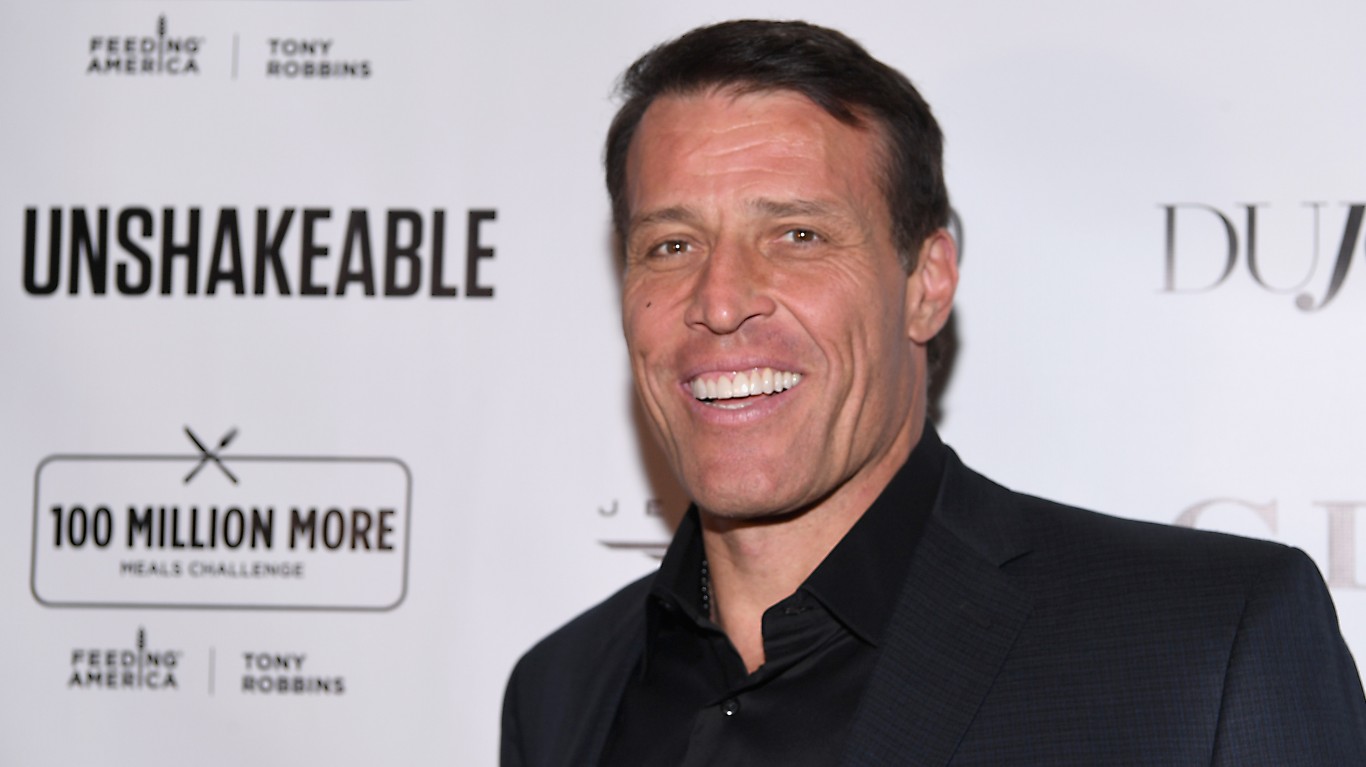
Planning for retirement is a goal shared by millions of Americans, yet the path to achieving financial security often feels uncertain and overwhelming. Smart strategies matter, but so does mindset. That is where motivational figures like Tony Robbins come in, offering practical wisdom and big-picture perspective. Robbins’ insights encourage individuals to take control of their financial futures and make intentional decisions about saving, investing, and planning ahead.
This collection features 10 Tony Robbins quotes that resonate with anyone hoping to retire one day, focusing on themes such as discipline, long-term thinking, and personal responsibility. While each quote is rooted in broader life advice, together they carry a consistent message: financial freedom rarely happens by accident. It is built through consistent good habits, informed choices, and the willingness to start the planning process early, no matter where you are in your financial journey. That message is more timely than ever. According to EBRI’s 2026 Retirement Confidence Survey, worker confidence in having enough money for retirement has dropped to 61%, its lowest level since 2017, with inflation, rising healthcare costs, and uncertainty about Social Security all weighing on Americans’ outlook.
This post was updated on February 22, 2026.
Personal Excellence

A core component of Tony Robbins’ personal coaching practice is dismantling the ingrained fears, inhibitions, and irrational worries that hold people back. These stumbling blocks hamper progress on two levels: they prevent people from identifying problems clearly, and they stop people from acting to solve them. In the context of retirement planning, those same psychological barriers often appear as an overly conservative investment posture that will not hit growth targets, or as a complete paralysis around investing after a past financial trauma.
“Your past does not equal your future.”
People who undergo a painful financial experience early in life often carry an irrational aversion to markets for years afterward. Getting caught in the dot-com collapse or the 2008 subprime mortgage crisis and watching savings evaporate can harden into extreme risk aversion that quietly stunts portfolio growth for decades. Robbins’ point is direct: a bad chapter does not write the whole book. The past is data, not destiny, and recognizing that distinction is often the first move toward a healthier retirement strategy.
“Live life fully while you’re here. Experience everything. Take care of yourself and your friends. Have fun, be crazy, be weird. Go out and screw up! You’re going to (screw up) anyway, so you might as well enjoy the process.”
This quote targets the deeper, often unarticulated fears that keep people locked in a passive financial posture. By reducing a common fear to a humorous and relatable rationalization, Robbins gives people permission to act despite imperfect knowledge. The framing works because it lowers the psychological cost of making a mistake, which is frequently the real barrier to getting started.
“Every problem is a gift. Without problems we would not grow.”
Those who feel intimidated by financial markets often freeze when an unfamiliar problem arises. Robbins reframes the experience entirely: working through a problem, identifying its root cause, and crafting a solution is how knowledge expands and emotional resilience builds. For retirement savers, that growth compounds just as surely as interest does. Each challenge navigated successfully makes the next one less daunting and reduces the likelihood of panic-driven decisions during market downturns.
“If you do what you’ve always done, you’ll get what you’ve always gotten.”
Retirement accounts that underperform often do so because they are on autopilot. Many savers are unaware that a portfolio set up years ago may come up short once withdrawals begin. The fear of change, whether it means shifting from bonds to a diversified index fund or simply rebalancing, can feel paralyzing. But inaction carries its own cost, one that tends to show up at exactly the wrong time.
“Successful people ask better questions, and as a result, they get better answers.”
For anyone whose mind goes blank at the mention of asset allocation or contribution limits, this quote reframes the challenge. The goal is not to become an expert overnight but to learn enough to ask the right questions. Robbins uses this idea as both an encouragement and a caution: people who take the time to understand their own finances are far less vulnerable to advisors whose interests may not align with their own.
Financial Freedom

With the mindset obstacles clearing, the following quotes focus directly on action: setting concrete financial targets and pursuing them with discipline. Robbins is vocal on this front. He has long advocated for building what he calls a “money machine,” a system of automated, tax-efficient savings powered by the compounding of returns over time. His 2014 book MONEY: Master the Game laid out that framework in detail, and he has continued to refine and repeat those principles in interviews and seminars through 2025 and 2026.
“Setting goals is the first step in turning the invisible into the visible.”
This may be Robbins’ most practically applicable quote for retirement planning. The process of setting a specific goal forces a vague desire, “I want to be comfortable in retirement,” into a measurable target, such as generating $65,000 in annual income from savings and investments. That specificity is what makes a strategy possible. Robbins recommends multiplying your expected annual expenses by 20 as a starting-point estimate of the nest egg you will need, then building backward from there to determine how much to save each month.
“The path to success is to take massive, determined action.”
Once goals are set, action must follow. For retirement savers, that often means authorizing a new contribution rate, opening a Roth IRA, or rebalancing a portfolio that has drifted from its target allocation. The act of making a decision and following through establishes a new discipline. Robbins is a strong proponent of automating that discipline wherever possible, so that contributions happen consistently rather than depending on monthly willpower. For 2025, workers can contribute up to $23,500 to a 401(k) and up to $7,000 to an IRA, with additional catch-up amounts available after age 50.
“When you lack confidence about money, it affects other areas too. But when you take charge of your finances, it empowers you.”
This quote functions as a morale anchor for those wading into unfamiliar financial territory. The research supports the underlying point: EBRI’s 2025 Retirement Confidence Survey found that workers who participate in a retirement plan report significantly higher confidence than those who do not, regardless of income level. Taking one concrete step, even a small one, tends to generate momentum toward the next.
“You can control what you do, and you can control what you pay.”
Robbins’ coaching centers on personal empowerment, starting with the recognition that internal barriers to success are often more crippling than external ones. Applied to retirement planning, this quote has a very practical edge: fees matter enormously over time, and shopping for better fund expense ratios or advisor terms is entirely within a saver’s control. Accepting a high-fee product at face value is a choice, and so is doing the homework to find a better one.
“I believe life is constantly testing us for our level of commitment, and life’s greatest rewards are reserved for those who demonstrate a never-ending commitment to act until they achieve. This level of resolve can move mountains, but it must be constant and consistent.”
Robbins closes the loop on perseverance. Staying the course through market volatility, through the temptation to cash out, and through the years when progress feels invisible is what separates those who reach their retirement targets from those who fall short. The EBRI survey data underscores the stakes: Robbins has pointed out that the average Social Security benefit amounts to only about $23,000 per year, a figure that covers basic living costs for few Americans. The rest must come from personal savings built over a lifetime of consistent commitment.
As those entering or approaching retirement assess where they stand relative to their long-term goals, Tony Robbins’ advice offers a practical two-part framework. The first step is identifying the psychological barriers that may be delaying action, whether rooted in past financial losses, fear of the unfamiliar, or simple inertia, and addressing them directly. The second step is converting vague hopes into specific, measurable targets and then building the automated systems and disciplined habits needed to reach them. Neither step requires a perfect financial situation to begin.
Editor’s note: This version adds current retirement confidence data from EBRI’s 2025 and 2026 Retirement Confidence Surveys, including the finding that worker confidence fell to 61% in 2026, and incorporates Robbins’ 401(k) and IRA contribution guidance alongside updated context about his “money machine” compounding framework and his oft-cited $23,000 average Social Security benefit figure.
Contact [email protected] for any questions or corrections.
After 15 years on Wall Street with 7 of them as Director of Corporate and Municipal Bond Trading for a NYSE member firm, I started my own project and corporate finance consultancy. Much of the work involves writing business plans, presentations, white papers and marketing materials for companies seeking budgetary allocations for spinoffs and new initiatives or for raising capital for expansion or startup companies and entrepreneurs. On financial topics, I have been published under my own byline at The Motley Fool, 247wallst.com, DealFlow Events’ Healthcare Services Investment Newsletter and The Microcap Newsletter, among others. Additionally, I have done freelance ghostwriting writing and editing for several financial websites, such as Seeking Alpha and Shmoop Financial. I have also written and been published on a variety of other topics from music, audiophile sound and film to musical instrument history, martial arts, and current events. Publications include Copper Magazine, Fidelity (Germany), Blasting News, Inside Kung-Fu, and other periodicals.