“The Stupidest Thing I Ever Heard”: Suze Orman on Why Waiting Until RMDs Are Required Wrecks Retirement
Suze Orman delivers financial advice with a blowtorch. On her October 10, 2024 podcast, a 65-year-old retired caller named Deb said her financial advisor had instructed her to leave her $125,000 TSP alone and wait until required minimum distributions forced…

This post may contain links from our sponsors and affiliates, and Flywheel Publishing may receive compensation for actions taken through them.
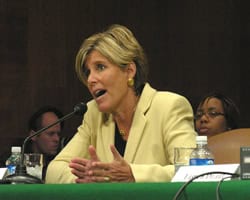
Suze Orman delivers financial advice with a blowtorch. On her October 10, 2024 podcast, a 65-year-old retired caller named Deb said her financial advisor had instructed her to leave her $125,000 TSP alone and wait until required minimum distributions forced her to touch it. Suze’s response: “the stupidest thing I ever heard.”
If you are between 60 and 72 with money sitting in a traditional 401(k), 403(b), TSP, or IRA, that single piece of advice can cost you tens of thousands in lifetime taxes. Suze is right, and the math is not subtle.
Why waiting is the wrong default
For most pre-retirees, the years between leaving work and the RMD start date are the lowest-tax window of your life. The paycheck stopped. Social Security may not have started yet. You are sitting in the 12% or 22% federal bracket instead of the 24% or 32% bracket you lived in during peak earning years. That gap is the whole opportunity.
Current rules set the RMD age at 73 for anyone born between 1951 and 1959, and 75 for those born in 1960 or later. A 65-year-old like Deb has roughly eight to ten years of low-tax runway to convert traditional dollars to a Roth or withdraw strategically. Waiting throws that runway away.
The math on Deb’s $125,000
I’ve been studying retirement tax mechanics for over a decade, and the pattern repeats: people who do nothing in their 60s get ambushed in their 70s. Picture Deb’s TSP growing at 7% annually for eight years until RMDs begin at 73. That $125,000 becomes roughly $215,000. The IRS then forces withdrawals based on her life expectancy, stacking on top of Social Security and any pension. Every dollar is taxed as ordinary income. Worse, the extra income can drag more of her Social Security into taxable territory and trigger the IRMAA Medicare surcharge.
Run the alternative. Deb converts $15,000 a year from her TSP to a Roth IRA for eight years. At a 12% federal bracket, each conversion costs her about $1,800 in tax. Total tax bill across the window: roughly $14,400. The converted money grows tax-free, comes out tax-free, and never carries an RMD attached.
Compare that to leaving the account untouched. By her late 70s, with Social Security flowing and RMDs running, the same $15,000 withdrawal could be taxed at 22% or 24%. The waiting strategy can double her effective tax rate on the identical dollars.
Inflation quietly makes delay worse
The CPI climbed from 320.62 in May 2025 to 332.4 in April 2026, and core PCE sits in the 90th percentile of its 12-month range. Every year a traditional IRA grows untouched, the eventual tax bill grows with it in nominal dollars while purchasing power erodes. The IRS’s share of the account compounds right alongside yours.
The variable that flips the answer
One factor determines whether Suze’s advice fits you: your current marginal tax bracket versus your projected bracket once Social Security and RMDs are both running. A single retiree in the 12% bracket today who expects Social Security plus RMDs to push them into 22% should be converting now. A high earner in the 32% bracket today who genuinely expects lower income in retirement might do better waiting.
The current federal funds rate of 3.75% and 10-year Treasury yield near 4.67% mean even cash inside a Roth earns a real after-tax return, which strengthens the case for moving money there sooner rather than later.
What to do this week
- Pull your 2025 tax return and find your taxable income. Compare it to the top of the 12% and 22% brackets. The gap between your taxable income and the top of your current bracket is roughly how much you can convert this year without bumping into the next bracket.
- Project your income at RMD age. Add expected Social Security, any pension, and an RMD estimate (your traditional balance divided by 26 at age 73). If that total lands in a higher bracket than today, conversions now save real money.
- Spread conversions across multiple years. A single $125,000 conversion in one year would be a tax disaster. Multi-year planning keeps each year’s hit in a low bracket.
- Pay the conversion tax from non-retirement money. Pulling extra from the IRA to cover the tax bill meaningfully degrades the math.
Deb’s advisor told her to do nothing for eight years. Suze’s reaction was the correct one. The years before RMDs are when you have the most control over your retirement tax bill, and surrendering that window because the IRS hasn’t forced your hand yet is the financial equivalent of refusing to wear a seatbelt until a cop pulls you over.
Contact [email protected] for any questions or corrections.
I've been writing about stocks and personal finance for 20+ years. I believe all great companies are tech companies in the long run, and I invest accordingly.