Waiting Just 10 Years to Invest Costs You $1.1 Million
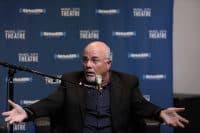
On a recent episode of The Money Guy Show titled “Even Smart People Make These Massive Money Mistakes,” co-host Bo Hanson framed the cost of procrastination in terms most savers have never seen laid out plainly: “They have the exact…

This post may contain links from our sponsors and affiliates, and Flywheel Publishing may receive compensation for actions taken through them.

On a recent episode of The Money Guy Show titled “Even Smart People Make These Massive Money Mistakes,” co-host Bo Hanson framed the cost of procrastination in terms most savers have never seen laid out plainly: “They have the exact same amount of money in this, $225,000 each. They even have the same period that they were on the planet. The difference is, is the 10 years.”
The stakes are blunt. Two people save identical dollars over identical 30-year stretches. One ends with under a million. The other ends with over two million. The gap is roughly $1.1 million, and the only variable is when they started.
The verdict: this advice is right, and the math is brutal
Hanson’s claim holds up under scrutiny, and the mechanic underneath it is compound growth, not market timing. Here is the case study the show runs. Average Alan waits until age 35, contributes $625 a month for 30 years until age 65, puts in $225,000 of his own money, and finishes with roughly $931,000. Manny the Mutant starts at age 25, contributes the same $625 a month for 30 years, stops entirely at age 55, never adds another dollar, and by age 65 sits on more than $2 million. Both earn 8% annualized.
Manny stops contributing a full decade before Alan does. He still ends with more than double the balance. The reason is that Manny’s earliest dollars compound for 40 years before he taps them. Alan’s earliest dollars only compound for 30. Those extra ten years of growth, applied to a portfolio that has already been building, are where the $1.1 million lives.
The 8% return assumption is reasonable rather than aspirational. The S&P 500, tracked through the SPDR S&P 500 ETF (NYSEARCA:SPY), has returned roughly 259% over the past ten years, which works out to roughly the low-teens annualized before inflation. An 8% long-run assumption sits below that and aligns with what diversified index investors have historically earned across full market cycles.
The $95 versus $1,052 problem
Run the same math from a different angle and the cost of waiting gets even sharper. A 20-year-old who wants to retire a millionaire needs to save just $95 a month. A 40-year-old chasing the same target needs $1,052 a month, which the show calls roughly “10 times harder.”
That ratio is the entire argument. Every decade you delay multiplies the monthly contribution required to hit the same finish line, because you are buying back lost compounding with raw cash.
The variable: do you have any margin at all?
The factor that decides whether this advice helps or hurts a given reader is whether there is room in the budget to start at any level. That margin is tighter than it used to be. The U.S. personal savings rate has fallen from 6% in early 2024 to 4% in the first quarter of 2026. University of Michigan Consumer Sentiment sat at 49.8 in April 2026, near recessionary territory.
If you have $50 of monthly margin, start there. Hanson’s instruction is direct: “I don’t care if it’s $50 a month, just give us something because it will change your life.” If you have zero margin, free up margin first by attacking high-rate debt or trimming a fixed expense, then redirect that freed cash into automatic monthly contributions.
Inflation makes the case more urgent. CPI rose from 320.62 in May 2025 to 332.4 in April 2026. Cash on the sidelines loses purchasing power every month it sits.
What to do this week
- Open or fund a Roth IRA or your workplace 401(k) and set an automatic monthly contribution, even at $50. The dollar amount matters less than the start date.
- If your employer offers a 401(k) match, contribute at least enough to capture the full match before doing anything else. That is an immediate return no market can offer.
- Simplify the investment selection. Brian Preston’s guidance is to use “low-cost tax-efficient index funds” or a Target Retirement Index Fund where “you only have to answer two questions. How much can I save? And when do I think I’ll need the money?”
- Increase your contribution rate by one percentage point a year. The Money Guy team notes even a 1% bump can produce “close to 10% more in retirement.”
The decade you give compounding back is the decade you cannot buy later at any price.
Contact [email protected] for any questions or corrections.
Joel South covers large-cap stocks, dividend investing, and major market trends, with a focus on earnings analysis, valuation, and turning complex data into actionable insights for investors.
He brings more than 15 years of experience as an investor and financial journalist, including 12 years at The Motley Fool, where he served as an investment analyst, Bureau Chief, and later led the Fool.com investing news desk. He has also co-hosted an investing podcast and appeared across TV and radio discussing market trends.