A 29-Year-Old With $550K Saved Asked If He Could Retire at 50. Ramsey’s Answer: “You’ll Likely Have About $5 Million”
On the April 13, 2026 episode of The Ramsey Show, titled When Money Feels Confusing, Clarity Matters Most, a 29-year-old caller with roughly $550,000 already saved asked whether he could stop working at 50. The host ran the numbers and…

This post may contain links from our sponsors and affiliates, and Flywheel Publishing may receive compensation for actions taken through them.
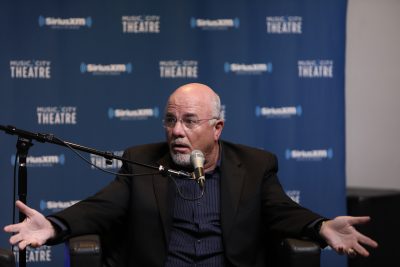
On the April 13, 2026 episode of The Ramsey Show, titled When Money Feels Confusing, Clarity Matters Most, a 29-year-old caller with roughly $550,000 already saved asked whether he could stop working at 50. The host ran the numbers and delivered a clear verdict: “At 50, you’ll likely have about $5 million,” adding that the caller would be “work optional” and would probably “go do something that really matters to you.” A co-host noted that with George Kamel-style budgeting, he’d “be living like a king.”
Anyone tempted to apply this math to their own situation should note one thing first: that $5 million is a nominal figure. The host was explicit that the projection does not account for inflation or buying power. That single caveat can strip hundreds of thousands of dollars of real purchasing power from the final answer.
The math is directionally right, but the label matters
Ramsey’s projection is a reasonable long-horizon estimate, and it illustrates a principle worth internalizing. At 29, the balance already saved does far more work than money contributed later. This caller’s ongoing savings is limited to maxing his IRA at roughly $625 a month, the monthly pace implied by the 2026 annual contribution limit of $7,500. His existing $550,000 compounding across 21 years is the engine driving the $5 million figure. Monthly deposits are, by comparison, a rounding error.
Where did the base come from? A Uniform Transfer to Minors Act (UTMA) account, seeded over the years by his father, grandparents, and great-grandparents. Ramsey has explained UTMAs on the show many times: “Minors are not allowed to have contracts in the United States. So they can’t open a bank account, they can’t open a mutual fund. Parents can open one with the kid’s name on it,” with an adult serving as custodian until the child reaches legal age. Growth inside a UTMA is taxed at the child’s rate, which is often zero for years thanks to the standard deduction.
How $50,000 becomes $490,000
The UTMA started around $50,000 and grew to roughly $490,000 sitting inside Vanguard mutual funds. Alongside it, the caller holds a $75,000 IRA, about $38,000 in a 401(k), and roughly $12,000 in a 403(b). At 29, that total is exceptional by any reasonable measure. For context, the national personal saving rate came in at 3.0% in July 2026, according to the Bureau of Economic Analysis, meaning most households are running on thin margins with very little left over each month.
The core lesson here is compounding time. A dollar invested at 29 has 21 years to grow before age 50. A dollar contributed at 45 has only five. A family gift dropped into a UTMA and left untouched can ultimately dwarf decades of later paycheck contributions.
Model your own version of this before reading on:
Adjust the return assumption and the years, and watch the ending balance swing by six figures. That sensitivity is the whole story.
The variable that reshapes the answer: inflation
$5 million in 2047 dollars is not $5 million in 2026 dollars. The Consumer Price Index for All Urban Consumers rose 3.4% over the 12 months ending in August 2026, with the index level at 334.980, according to the Bureau of Labor Statistics. The Fed’s preferred inflation gauge tells a similar story: the PCE price index climbed 3.7% year-over-year in July 2026, and the core reading (excluding food and energy) rose 3.3%, both well above the Fed’s 2% target. Compounded across 21 years, even a 2% annual headwind meaningfully erodes buying power. A sustained rate above that cuts deeper, and the most recent data suggests inflation is proving stickier than policymakers had hoped.
The return-assumption question adds another layer of uncertainty. The 10-year Treasury yield surged to 5.24% by late September 2026, its highest level since 2007, as persistent inflation and heavy bond issuance pushed long-dated rates sharply higher. Long-term equity returns are expected to exceed that benchmark, but any retirement projection built on 8% or higher assumes a risk premium that may not fully materialize. If real returns fall short of the assumption by even a couple of percentage points per year, the $5 million headline shrinks considerably.
What to actually do with this
- Separate nominal from real. Whenever a projection lands in the millions, ask what inflation rate it assumes and rerun it in today’s dollars. That is the number your future groceries and rent will be measured against.
- Front-load the base, not just the contributions. This caller is ahead of schedule because of a UTMA seeded early by family, not because of heroic monthly savings. Gifting to children or grandchildren through a UTMA holding low-cost mutual funds gives decades of compounding before they ever file a return.
- Stress-test the return assumption. Rerun your plan at 6%, 7%, and 8%. If retiring at 50 only works at 8% or higher, the plan depends entirely on markets cooperating fully.
- Keep contributing, but recognize what it actually drives. The $625-a-month IRA contribution matters for tax treatment and the discipline of the habit. The lump sum already compounding is what determines the outcome.
Ramsey’s answer was fair as a headline. The $5 million figure is what happens when a large early balance is left undisturbed for two decades. The number actually worth planning around is the inflation-adjusted version, stress-tested against a return assumption that still holds even when markets disappoint.
Editor’s note: This article updates the personal saving rate to 3.0% (July 2026, per the Bureau of Economic Analysis), refreshes the CPI figures to the August 2026 BLS release showing a 3.4% annual gain and an index level of 334.980, updates the PCE inflation reference to July 2026 (3.7% headline, 3.3% core, per BEA), and updates the 10-year Treasury yield to approximately 5.24% as of late September 2026, its highest level since 2007.
Contact [email protected] for any questions or corrections.
I am a long time investor and student of business, and believe finding good companies that can become great investments is the best game on earth. After 20 years of writing and researching the public markets it is clear that individuals have never had more tools and information to take control of their financial lives. From ETFs and $0 commissions to cryptos and prediction markets there has never been a greater democratization of access to investing.
I write to help people understand the investments available to them so they can make the best choice for their portfolio, whether they're starting out or looking for income in retirement.