A 64-Year-Old Single Restaurant Owner Selling for $1.2 Million Cash Discovers a 1031 Won’t Help Him But This Strategy Will
A 64-year-old restaurant owner has spent 25 years building an independent business and recently accepted a $1.2 million cash offer covering both the restaurant operation and the building itself. The buyer wants a clean transaction, with closing only weeks away.…

This post may contain links from our sponsors and affiliates, and Flywheel Publishing may receive compensation for actions taken through them.
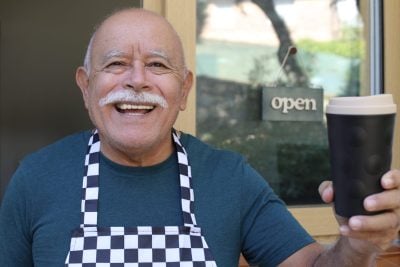
A 64-year-old restaurant owner has spent 25 years building an independent business and recently accepted a $1.2 million cash offer covering both the restaurant operation and the building itself. The buyer wants a clean transaction, with closing only weeks away. His initial plan was to use a 1031 exchange to defer the tax hit. A closer review of IRS Section 1031 revealed a major limitation: only the real estate portion of the deal qualifies for like-kind exchange treatment. The equipment, goodwill, liquor license, trade name, and other operating-business assets no longer qualify after the 2017 tax law changes restricted Section 1031 treatment to real property only. This pattern shows up constantly: an owner near retirement, one illiquid asset representing most of their net worth, and a tax structure they discover too late to optimize.
The Restaurant Sale and the Tax Problem Behind It
- Profile: 64, single, no dependents, 25 years in the business
- Sale price: $1.2M cash, operating business plus real estate
- Cost basis: ~$180K business, ~$280K real estate
- Core tension: The 1031 covers only the building; the business-asset gain is fully exposed
- At stake: $120K to $150K in combined federal and state tax without planning
Why The Tax Bill Concentrates On The Business Side
The $1.2 million sale price is really a combination of two separate transactions. A reasonable allocation might place approximately $700,000 on the building itself and $500,000 on the operating business assets, including equipment, goodwill, the liquor license, and the trade name. The real estate portion generates an estimated $420,000 gain that can qualify for 1031 exchange treatment. The business assets create roughly a $320,000 gain, but that portion is taxed less favorably because depreciation recapture on restaurant equipment is generally treated as ordinary income rather than long-term capital gains income.
Federal long-term capital gains rates currently top out at 20%, with an additional 3.8% net investment income tax potentially applying at higher income levels. Ordinary federal income tax rates for tax year 2026 climb as high as 37% for single filers above $640,600 in taxable income. State income taxes stack on top of both categories, which is how the combined tax exposure reaches the range estimated by the seller’s CPA.
The current interest-rate environment also changes the calculation. With the 10-year Treasury yielding around 4.5% and 52-week Treasury bills near 3.8%, retirees can now generate meaningful low-risk income without chasing complicated tax-deferral structures. Parking $1 million in short-duration Treasuries can produce roughly $38,000 a year before taxes with essentially no credit risk. Any exchange or deferral strategy has to outperform that baseline after accounting for fees, liquidity constraints, and reinvestment risk.
Three Paths, Ranked By What They Actually Save
- Pay the tax and invest the net. Net roughly $1.05M to $1.08M after federal and state, then deploy across T-bills, a taxable brokerage account, and a delayed Social Security claim at 70. Zero lockup, zero structure risk. The cost is writing the $120K to $150K check.
- 1031 on the real estate only. Defers tax on the $420K real estate gain by rolling into a replacement property: a triple-net lease, a Delaware Statutory Trust, or a small commercial building. Leaves the $320K business gain fully taxable. This works only if the seller wants to be a landlord, directly or through a DST.
- 1031 on the real estate plus a Qualified Opportunity Zone Fund for the business gain. Roll the $420K real estate gain into a like-kind replacement, then invest the $320K business gain into a QOZ Fund under IRS Section 1400Z within 180 days. Federal tax on the QOZ-invested gain defers until a triggering event, and any appreciation inside the fund is permanently tax-free if held 10 years. Combined deferral across both structures: north of $400K of gain.
For a 64-year-old who does not want to manage tenants, the QOZ-plus-1031 stack is the highest-value option, provided the work happens before closing.
What To Do Before Signing The Purchase Agreement
- Hire a QOZ attorney before the purchase agreement is final. The 180-day clock starts at closing, and the buyer’s allocation drives how much gain lands in each tax bucket. A fee-only attorney with QOZ experience runs $5K to $15K and routinely saves six figures on a sale this size.
- Split the closing into two transactions. Real estate transfers separately from the business assets. This preserves clean 1031 treatment on the building and creates an unambiguous basis for the QOZ contribution on the business side.
- Negotiate the allocation with the buyer’s accountant. Push value toward goodwill and the trade name, which receive long-term capital gains treatment, and away from used equipment, which triggers ordinary income recapture. Buyers usually push the opposite way for their own depreciation schedule. This negotiation can shift $20K to $40K of tax.
The costly mistake is treating the sale as a single transaction and addressing the tax strategy only after the proceeds arrive. By that point, the 1031 exchange timeline may already be lost, the Qualified Opportunity Zone window is open but unplanned, and the purchase-price allocation is often whatever the buyer’s CPA decided to place on the closing schedule.
Contact [email protected] for any questions or corrections.
Drew Wood has edited or ghostwritten nine books and published more than 1,500 articles on investing, business, politics, travel, world cultures, wildlife, and earth science. He holds a doctorate and four master's degrees and has nearly 30 years of college teaching experience. His travels have taken him to 25 countries, including three years living in Ukraine.