T-Bill Returns Without the Annual Tax Bill: The $12 Billion Fund Using an Options Trick
A $13 billion ETF has quietly been delivering T-bill-level returns to high-bracket investors without the monthly tax hit, and the options structure behind it sits in a regulatory gray zone that could unravel at any time.


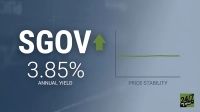
Most investors who want cash-like returns in a taxable brokerage account default to the iShares 0-3 Month Treasury Bond ETF (NYSEARCA:SGOV) or a similar short-Treasury fund. SGOV holds actual bills, pays a distribution every month, and tracks the front end of the yield curve tightly. Owning SGOV is straightforward, and with the 3-month T-bill yielding 3.83% and the 1-year at 4.07%, the payout is real cash. The issue is what happens to that yield after taxes. A quieter competitor, the Alpha Architect 1-3 Month Box ETF (NYSEARCA:BOXX), has pulled in $13.03 billion in assets by targeting the same T-bill-like return through a structure that has, so far, delivered it as price appreciation rather than monthly taxable interest.
Where SGOV Leaves Money on the Table
How the Box Spread Works
The Math for a High Earner
Over the trailing 12 months, BOXX returned 4.06%, essentially matching the 1-year T-bill. On a $250,000 position, that is roughly $10,175 of gross return either way. In SGOV, the top-bracket effective rate on ordinary income runs to 40.8% federal all-in; on Section 1256 gains, the blended federal rate lands near 23.8%. The after-tax gap between the two treatments preserves meaningful yield for top-bracket holders on a stake of that size. Deferral compounds the gap further, because taxes not paid this year keep working.
The Tradeoffs Are Real
Who Should Consider the Swap
The swap is aimed narrowly at taxable accounts held by investors in the higher federal brackets who plan to hold long enough for gains to qualify as long-term. Inside an IRA, 401(k), or any tax-deferred wrapper, BOXX solves nothing: SGOV’s ordinary income treatment is irrelevant there, and the higher expense ratio just becomes friction. In taxable accounts below the 24% bracket, the after-tax gap narrows enough that SGOV’s simpler structure and Treasury backing usually wins.
Making the Move Without Overcommitting
A partial rotation is often more defensible than a full swap. Keeping an SGOV core preserves the Treasury guarantee and the certainty of monthly cash, while routing new taxable cash to BOXX tests the deferral mechanic. BOXX has been operating since December 28, 2022, a track record that is meaningful but short. If the IRS moves against box-spread ETFs, or if BOXX starts paying recurring distributions, the entire thesis weakens. Until then, the fund offers a documented way for high-bracket investors to keep more of a yield that is otherwise heavily taxed. Whether that edge is worth the counterparty and regulatory risk is a judgment that depends on the reader’s bracket, holding period, and tolerance for a rulebook that could still change.
Contact [email protected] for any questions or corrections.
David Beren has been a Flywheel Publishing contributor since 2022. Writing for 24/7 Wall St. since 2023, David loves to write about topics of all shapes and sizes. As a technology expert, David focuses heavily on consumer electronics brands, automobiles, and general technology. He has previously written for LifeWire, formerly About.com. As a part-time freelance writer, David’s “day job” has been working on and leading social media for multiple Fortune 100 brands. David loves the flexibility of this field and its ability to reach customers exactly where they like to spend their time. Additionally, David previously published his own blog, TmoNews.com, which reached 3 million readers in its first year. In addition to freelance and social media work, David loves to spend time with his family and children and relive the glory days of video game consoles by playing any retro game console he can get his hands on.