Retiring at 68 With $980,000 Means Navigating a $14,200 Annual Property Insurance Spike Florida Retirees Did Not See Coming
A single 68-year-old retiree owns a $620,000 home on Florida’s coast, purchased in 2018, with $980,000 spread across retirement accounts. The mortgage is paid off, and the retirement plan seemed straightforward: follow the 4% rule, drawing roughly $40,000 a year from…

This post may contain links from our sponsors and affiliates, and Flywheel Publishing may receive compensation for actions taken through them.

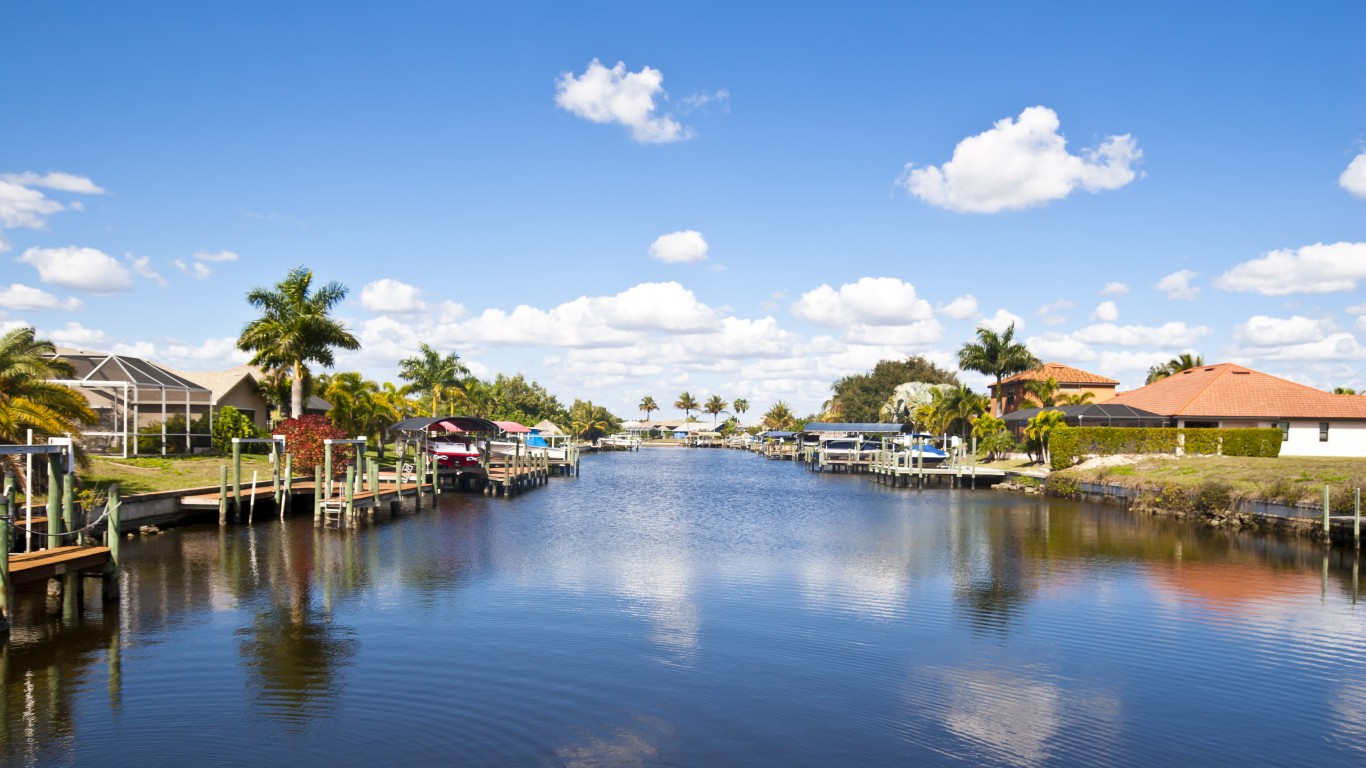
A single 68-year-old retiree owns a $620,000 home on Florida’s coast, purchased in 2018, with $980,000 spread across retirement accounts. The mortgage is paid off, and the retirement plan seemed straightforward: follow the 4% rule, drawing roughly $40,000 a year from the portfolio to supplement other income. Then the homeowners insurance renewal arrived. The premium had climbed to $14,200, up from $4,200 in 2020. One expense now consumes more than a third of the annual portfolio withdrawal.
This is no longer an isolated story. During a 2017 episode of The Clark Howard Podcast, a Florida homeowner named Mike reported that his premium had doubled to nearly $6,000 annually on a home worth about $350,000. Clark’s response was blunt: “6,000 probably doesn’t even cover their risk in the state of Florida.” Nearly a decade later, rising storm losses, litigation costs, and insurer retrenchment have turned what was once a warning sign into a significant retirement-planning challenge for many coastal homeowners.
The Scenario at a Glance
- Age and household: 68, single, no mortgage
- Investable assets: $980,000 in mixed retirement accounts
- Home: $620,000 coastal Florida property bought in 2018
- The shock: Property insurance tripled from $4,200 to $14,200 since 2020
- What is at stake: A $10,000 incremental annual hit on a $40,000 working budget
Why This Hits Harder Than General Inflation
The headline inflation story is calm. The Consumer Price Index sat at 332.4 in April 2026, up just 0.6% on the month, and Florida’s overall cost-of-living index of 103.4 runs only modestly above the national average. Property insurance in coastal counties is doing something different. A 4x to 5x premium increase driven by climate-risk reinsurance pricing has no relationship to the broader CPI trend, which is exactly why retirees did not budget for it.
The math is the tension. A 4% withdrawal on $980,000 produces a roughly $40,000 budget. A $14,200 insurance line is about 35% of that budget. The standard fix, raising the withdrawal rate to cover the gap, pushes the draw toward 5% or higher and shortens portfolio life, especially with consumer sentiment at 49.8, deep in pessimistic territory and equity sequence risk elevated.
One offsetting reality: bond yields are cooperative. The 10-year Treasury yields 4.5%, near the upper end of its 12-month range. A $300,000 high-grade bond sleeve at that yield throws off roughly $13,500 a year, which nearly funds the entire insurance bill without selling a single equity share.
Three Paths That Actually Move the Number
The weakest response is simply absorbing the premium increase and quietly raising the withdrawal rate. That converts a potentially manageable expense into a permanent increase in portfolio pressure and longevity risk. More practical options include:
- Restructure the policy before shopping it. Raising the wind or hurricane deductible to 5% or 10% of insured value is often one of the most powerful premium-reduction tools available in Florida. Pairing a higher deductible with a dedicated emergency reserve allows retirees to self-insure smaller losses while reducing annual costs. Then obtain quotes through independent agents, including options from Citizens Property Insurance and surplus-lines carriers. As Clark Howard noted years ago, shopping aggressively remains important because pricing differences between carriers can be substantial.
- Relocate farther inland. Moving away from the coast can significantly reduce insurance costs while lowering flood exposure. For homeowners with substantial equity, downsizing or relocating within Florida may also free up capital that can be added to the retirement portfolio.
- Leave Florida altogether. For some retirees, the insurance savings may outweigh Florida’s tax advantages. States with lower insurance costs and lower overall living expenses can provide greater purchasing power, particularly for retirees whose income already falls into relatively modest tax brackets.
For most coastal retirees in this position, option one is the immediate move and option two is the structural one. Option three only wins if family or lifestyle ties to Florida are already weak.
What to Do First
Three concrete steps, in order:
- Pull three competing quotes within 30 days of renewal, including a Citizens Property Insurance quote and at least one surplus-lines carrier, all priced at a 5% and 10% hurricane deductible. The premium difference between deductible tiers is usually the largest single saving available.
- Carve out a dedicated insurance-and-deductible reserve of roughly $25,000 in a high-yield account. That reserve, not the portfolio, absorbs storm-related out-of-pocket costs and prevents a forced equity sale in a down market.
- Run the relocation math honestly. A move 50 miles inland that cuts the premium by two-thirds is worth roughly $9,000 a year for life, which on a 25-year horizon dwarfs almost any tax-optimization tactic. In this scenario, the house is the primary flex variable, not just the portfolio.
Contact [email protected] for any questions or corrections.
Drew Wood has edited or ghostwritten nine books and published more than 1,500 articles on investing, business, politics, travel, world cultures, wildlife, and earth science. He holds a doctorate and four master's degrees and has nearly 30 years of college teaching experience. His travels have taken him to 25 countries, including three years living in Ukraine.