‘You Do Not Get to Own a $17,000 Truck When You’re Taking Welfare to Pay for Your Kids’: Dave Ramsey’s Blunt Advice to a Mom Drowning in $34,000 of Debt
On the May 29, 2026 episode of The Ramsey Show titled "Fix The Money Mess That's Stressing You Out," a stay-at-home mom named Brianna called in with a sentence that stopped Dave Ramsey cold: "We're going under every time we…

This post may contain links from our sponsors and affiliates, and Flywheel Publishing may receive compensation for actions taken through them.
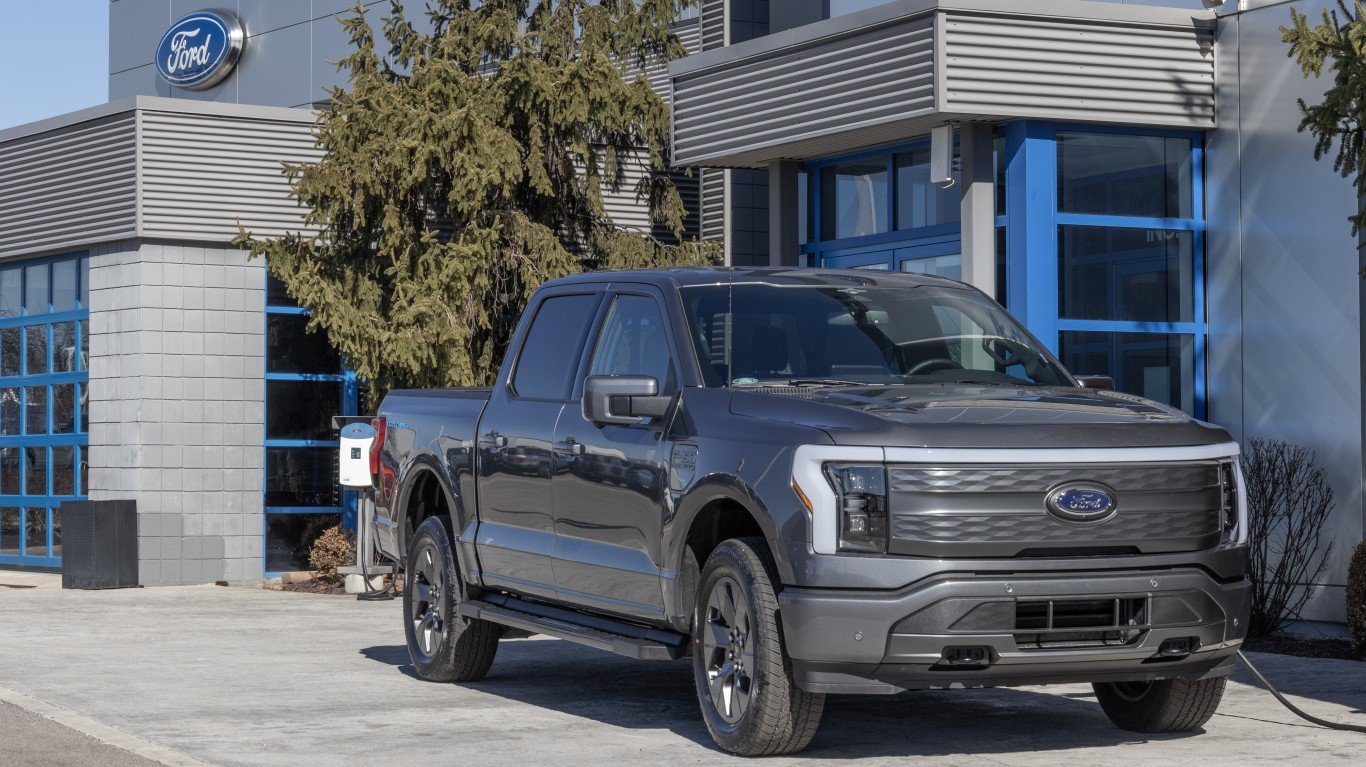
On the May 29, 2026 episode of The Ramsey Show titled “Fix The Money Mess That’s Stressing You Out,” a stay-at-home mom named Brianna called in with a line that stopped Dave Ramsey cold: “We’re going under every time we get paid. This truck has eaten us alive since we got it.” His reply was the kind that gets clipped and shared across social media: “You do not get to own a $17,000 truck when you’re taking welfare to pay for your kids. That is not okay.”
The stakes are concrete. Brianna and her husband, a union bricklayer who clears roughly $43,000 after taxes, are raising three children under age two, including a 3-month-old. Winter work dries up badly enough that some months bring in as little as $800, which is why the family relies on SNAP, WIC, and Medicaid. Sitting on top of that income gap is $34,000 in consumer debt: a $17,000 truck loan, $12,000 in student loans from medical assistant training, roughly $15,000 in medical debt, a $4,000 personal loan taken out to survive a previous winter, and $1,000 owed to family.
Their situation is far from unusual. Total U.S. household debt reached $18.8 trillion in the first quarter of 2026, a record high according to the Federal Reserve Bank of New York, with auto loan serious delinquency climbing to 5.5% in Q2 2026, the highest level since 2010. The personal savings rate fell to just 3% in May 2026, per Bureau of Economic Analysis data. For families running variable incomes against fixed debt payments, a month of thin work is all it takes to tip a tight budget into a genuine crisis.
The verdict: Ramsey is right, and the math is brutal
Ramsey’s instruction to sell the truck immediately is the correct call. A financed vehicle is a depreciating asset wrapped in a fixed monthly obligation. When household income swings from a normal paycheck to $800 in January, the truck payment does not swing with it. The lender does not care that the bricklayer is iced out of work. Fixed debt payments convert a seasonal income problem into a solvency problem.
Consider what that obligation actually costs. Experian’s State of the Automotive Finance Market report for Q2 2026 puts the average used car loan rate at 11.19%. A $17,000 loan at that rate over 60 months runs roughly $370 a month before accounting for full-coverage insurance, fuel, and maintenance. In a $3,500 paycheck month, that is uncomfortable. In an $800 month, it consumes the entire grocery budget for a family of five. For context, the average used car loan nationally sits at $27,070 with a $531 monthly payment, meaning Brianna’s debt is below market size but equally unaffordable given the income. Ramsey’s push to sell privately rather than trade in, captured in his line “A good working truck will bring a lot of money in Sioux Falls, South Dakota,” is about closing the gap between the loan balance and the resale value. A private sale recovers thousands more than a dealer trade-in.
Even if Brianna ends up owing money after the sale, Ramsey framed the tradeoff plainly: “I’d a lot rather you be $4,000 or $5,000 in debt than $17,000.” A $4,000 unsecured balance can be attacked with a side hustle and a tax refund. A $17,000 secured loan attached to a depreciating asset offers no such flexibility. This call fits a pattern: Ramsey has long argued that “you cannot build wealth while you own too many things that have motors and wheels,” defining “too many” as anything exceeding half a household’s annual income in total vehicle value.
The variable that decides everything: winter income
The factor that flips this family’s outcome is whether the husband works twelve months a year or eight. Ramsey put it plainly: “He needs to be working in the winter. That’s my point. No, you got by on SNAP because he wasn’t working in the winter.” The debt pile is serious, but the income gap is the actual cause. Close the income gap and the debt becomes a math problem. Leave the income gap open and every improvement is temporary.
If the bricklayer picks up indoor winter work in warehousing, delivery, or snow removal at even $3,000 a month for four slow months, the family gains meaningful income it currently lacks. Applied smallest-first, the $1,000 family loan and the $4,000 personal loan could be gone before spring. Without that winter income, the family is one transmission failure away from another payday loan. Ramsey’s long-horizon warning captured the urgency: “What are we going to be doing when we’re 44? Because this plan’s not real good. It’s leaving your family very vulnerable.”
Co-host Rachel Cruze, Ramsey’s daughter and a personal finance author, pressed the lifestyle reset directly: “What you did 3 years ago, meaning your truck, your choices on restaurants, all of it, it all changes because your life has changed.” Her empathy for Brianna was genuine. She told her, “I don’t even know how you’re coherent making a sentence with a 3-month-old and 2 babies.” Even so, the core message aligned with Ramsey’s: winter income is the lever, not a work-from-home side hustle. Ramsey put the reality bluntly: “I don’t know how you’re going to work at home with 3 kids under 2 and get any work done.”
What to do if you recognize yourself in this call
- Price your vehicle realistically. Pull the private-party value on Kelley Blue Book and the payoff balance from your lender on the same day. If the gap is under a few thousand dollars, a credit union signature loan can bridge it so you can hand over a clean title.
- Map your seasonal income. Write out twelve months of realistic take-home pay. Any month where fixed obligations exceed income is a month you are funding with debt or assistance. Close that gap with off-season work, not a side hustle layered on top of a newborn.
- Order debts smallest to largest. Attack the $1,000 family loan first, then the $4,000 personal loan. Quick wins build the behavior change Ramsey describes as the 80% of personal finance.
- Negotiate the medical debt. Hospitals routinely settle for a fraction of the billed amount when patients qualify for financial assistance. Ask for the charity care application before paying a dollar.
The truck is the symbol of a household running fixed costs on a variable income. Fix that mismatch and the rest becomes solvable.
Editor’s note: This pass updated the Experian average used car loan rate to 11.19% from Q2 2026 data (previously cited as 11.43% from Q1 2026), added Q2 2026 context showing auto loan serious delinquency reached 5.5%, a series record per the Federal Reserve Bank of New York, and incorporated Experian data showing the average used car loan nationally sits at $27,070 with a $531 monthly payment.
Contact [email protected] for any questions or corrections.
I am a long time investor and student of business, and believe finding good companies that can become great investments is the best game on earth. After 20 years of writing and researching the public markets it is clear that individuals have never had more tools and information to take control of their financial lives. From ETFs and $0 commissions to cryptos and prediction markets there has never been a greater democratization of access to investing.
I write to help people understand the investments available to them so they can make the best choice for their portfolio, whether they're starting out or looking for income in retirement.