Forced to Take an RMD in a Down Market? Here’s the Tax Move That Avoids Selling Low
She is 75, retired, and looking at a brokerage statement she would rather not open. The market sold off hard this spring, with the VIX, also known as the stock market’s “fear index,” soaring and staying elevated. Meanwhile, several of…

This post may contain links from our sponsors and affiliates, and Flywheel Publishing may receive compensation for actions taken through them.

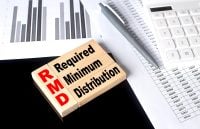
She is 75, retired, and looking at a brokerage statement she would rather not open. The market sold off hard this spring, with the VIX, also known as the stock market’s “fear index,” soaring and staying elevated. Meanwhile, several of her long-held equity positions are still well off their highs. Her investment custodian has flagged the obvious problem: her annual required minimum distribution (RMD) is due, and the default way to satisfy it is to sell shares. The problem is she does not want to sell low.
This is a familiar bind for retirees in their seventies. RMDs, the yearly withdrawals the IRS forces from traditional IRAs, do not pause for bear markets. Online retirement forums fill up with the same lament every time stocks wobble: a reader needs to pull money she does not actually need, and the calendar does not care what the S&P 500 did last week. Social Security checks keep arriving, including the 2.8% cost-of-living adjustment (COLA) for 2026, but RMDs must be satisfied separately, in full, by year end.
The move most retirees do not know exists
Here is the detail that changes her situation: an RMD does not have to be taken in cash. The IRS allows an in-kind distribution, where the custodian transfers the actual shares out of the IRA and into a regular taxable brokerage account. The dollar value of those shares on the transfer date counts toward the RMD, exactly as if she had sold them and moved cash.
The practical effect is that she never has to hit the sell button at a depressed price. The same shares she owned inside the IRA on Monday morning are sitting in her taxable account that afternoon, free to recover on their own schedule. If a stock she has held for 15 years is down 22% from its peak, she keeps every share and every future dollar of upside. She has satisfied the IRS without locking in the loss.
To make it happen, she calls the custodian and specifies which shares and how many to distribute in kind. The valuation is whatever they are worth on the day the transfer settles.
The part that is not a loophole
An in-kind RMD is still fully taxable as ordinary income, exactly like a cash RMD. The IRS treats the fair market value of the transferred shares as a distribution, and it lands on her tax return the same way a check would. The in-kind move avoids the forced sale. It does not avoid the tax.
Two consequences follow. First, she needs cash on hand from somewhere else to pay the income tax bill, because the share transfer itself does not generate any. Withholding generally cannot be pulled out of the shares. Second, the shares arrive in the taxable account with a fresh cost basis equal to their value on the transfer date. Any future appreciation from that point forward is taxed at long-term capital gains rates when she eventually sells, which are usually lower than ordinary income rates.
How it fits with the rest of her income
Her Social Security benefit, adjusted by that 2.8% raise, is steady and partially taxable. The RMD stacks on top of it as ordinary income and can push more of her Social Security into the taxable zone, nudge her into a higher bracket, and raise her Medicare premiums two years out. Taking the RMD in kind leaves all of that intact, since the taxable amount is identical. The real shift is whether she is harvesting a loss to fund a withdrawal she did not want to make in the first place.
Two alternatives are worth keeping in mind. A cash and short-term bond bucket inside the IRA, refilled in good years, gives her something to distribute that is not sensitive to equity drawdowns. And if she is charitably inclined, a qualified charitable distribution sent directly from the IRA to a nonprofit satisfies the RMD with no income tax at all, up to the annual limit.
What to think through before making a move
The RMD age is 73 for those born between 1951 and 1959, and 75 for those born in 1960 or later, so the first year this question matters is worth planning for in advance rather than in December. Before the transfer, settle which specific shares to move and where the cash for the tax bill is coming from. The hardest mistake to undo is selling a quality holding at a bad price simply because a deadline forced her hand. Keeping the shares and paying the tax from a savings account is often the calmer trade. A quick conversation with a tax preparer before year end usually pays for itself.
Contact [email protected] for any questions or corrections.
Gerelyn Terzo is the author of dividend investing handbook "Dividend Investing Strategies: How to Have Your Cake & Eat It Too." A veteran financial journalist, she covers agri-finance for outlets like Global AgInvesting and the broader stock market and personal finance for 24/7 Wall Street. She began at CNBC and later helped launch Fox Business in New York. Gerelyn currently resides in Woodland Park, Colorado and dabbles in nature photography as a hobby.