Dave Ramsey Says the ‘Actual Inappropriate One’ Is the Fiancé Who Wants Her to Stop Gifting Her Late Partner’s Family
On a recent episode of The Ramsey Show, Dave Ramsey heard from a woman whose late common-law partner died about four years ago, leaving her roughly $1.6 million through life insurance, a house, savings, and a pension payout. She has…

This post may contain links from our sponsors and affiliates, and Flywheel Publishing may receive compensation for actions taken through them.
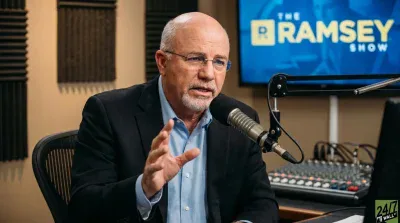
On a recent episode of The Ramsey Show, Dave Ramsey heard from a woman whose late common-law partner died about four years ago, leaving her roughly $1.6 million through a combination of life insurance, a house, savings, and a pension payout. She has honored his memory by continuing his tradition of giving his nieces and nephews money for summer camp and educational activities, raising the amount from $300 to $1,000 per child each year. Her new fiancé wants her to stop. Ramsey’s reply was blunt: “The actual inappropriate one is him. For him to dare to feel entitled for his family because his family’s poor, that they should be getting some of your money, that’s inappropriate.”
The stakes in a situation like this are both legal and financial. Assets brought into a marriage are typically separate property, but how they are spent, gifted, or commingled can set a precedent that becomes very difficult to undo in a divorce or estate dispute.
The verdict: the math sides with Ramsey
Ramsey’s framing went straight to the core of the matter. “Let’s just pretend you were a widow, that you were married. Okay, let’s just change the discussion and say that, because that’s how the law is treating this,” he told the caller. He then laid out the numbers plainly: “It’s $3,000 or $4,000 with the new baby on the way a year. Out of $1.6 million. Whoopie, who cares?”
With three children currently receiving gifts and a fourth on the way, the annual outflow runs about $4,000. On a $1.6 million principal invested at a conservative 4% withdrawal rate, the portfolio could generate roughly $64,000 a year in sustainable income, making the gifting a rounding error on that total. Even projecting the caller’s estimate of roughly $80,000 over 18 years, the cumulative figure represents about 5% of the inheritance principal spread across nearly two decades.
The tax picture is equally calm. The IRS annual gift tax exclusion for 2026 holds at $19,000 per recipient, unchanged from 2025. A $1,000 gift per child sits so far below that ceiling that no gift tax return is required, no lifetime exemption is eroded, and nothing needs to be filed. The 2026 lifetime estate and gift tax exemption stands at $15 million per individual, up from $13.99 million in 2025. The One Big Beautiful Bill Act, signed into law on July 4, 2025, made that higher threshold permanent and eliminated the sunset provision that would have slashed the exemption to roughly $7 million. On a $1.6 million estate, federal gift or estate tax simply does not enter the picture.
What the fiancé is really asking for
The caller described the gifts as modest and personal: “It’s just meant to be summer camp, you know, and dance classes. He’s met my late partner’s family and he knows I see them every summer and he’s always been very supportive, but I think he comes from a family that does not, $1,000 is realistically kind of a drop in the bucket to my late partner’s family.”
Co-host George Kamel, who authored the Publishers Weekly number one national bestseller Breaking Free From Broke and co-hosts The Ramsey Show, read the subtext clearly. “I think he doesn’t like the emotional attachment,” he said. Kamel went further, reframing the inheritance as a gift rather than a grievance: “I would look at that as a blessing. What a legacy this guy left to my now fiancee and how it set her up.” Ramsey called the fiancé’s posture “kind of an immature approach,” questioning why he could not accept that “this lady that I’m gonna marry comes with a package, and a package includes her past?”
The fiancé’s objection is not really about $4,000 a year. It is about control of a pool of money that was never his and that he had no part in building. Both Ramsey and Kamel recognized that dynamic immediately and gave it no sympathy.
The variable that decides everything: a prenup
Whether this marriage protects the inheritance or puts it at risk comes down to a prenuptial agreement. Ramsey’s closing recommendation was specific: “She’s got $1.6 million, she needs a prenup so that his family doesn’t think they come after her. Your family gets nada. Nothing. And if you leave, you get nothing.”
Without a prenup, inherited assets are generally separate property at the start of a marriage, but the real danger lies in commingling. Depositing inherited funds into a joint account, using them to cover shared household expenses, or retitling an inherited home jointly can all convert separate property into marital property subject to division in a divorce. Legal consequences vary by state: some allow courts to treat any commingling as tainting the entire inheritance, while others permit partial tracing if the original separate funds can be documented. Either way, untangling commingled assets after a divorce is filed is far harder than keeping them separated from the start. On a $1.6 million base, even a partial commingling claim can put six figures in play.
A properly drafted prenup walls off those assets entirely. Gifts to the late partner’s nieces and nephews, charitable contributions, and any other spending from that pool remain the inheriting spouse’s decision alone. The fiancé would have no legal standing to argue that gifting choices reduce a future marital estate, because the prenup establishes from the outset that the assets were never part of his estate to begin with.
What to do if you are in this situation
- Document the inheritance separately. Keep inherited funds in an account titled only in your name. Do not deposit a paycheck into it, pay joint bills from it, or retitle an inherited property jointly without getting legal advice first.
- Get a prenuptial agreement drafted by your own attorney. Your fiancé needs separate counsel as well. The agreement should identify the inherited assets by account and value, list the ongoing gifting tradition by name, and define clearly what stays separate property.
- Track gifts against the annual exclusion. As long as each recipient receives under $19,000 in 2026, no IRS filing is triggered. A $1,000 gift per child is well within that ceiling, with room to spare.
- Update your estate documents. Revise your will, beneficiary designations, and any trust language to reflect your wishes for the inheritance, including the niece-and-nephew gifting tradition if you want it to continue after you are gone.
A spouse can reasonably ask you to reconsider spending habits. Demanding that a late partner’s legacy be redirected toward their own family is something else entirely. The numbers confirm the gifting is trivial relative to the estate. The legal structure says protect the principal regardless.
Editor’s note: This pass added the signed date (July 4, 2025) for the One Big Beautiful Bill Act and clarified that the TCJA sunset would have cut the lifetime estate and gift tax exemption to roughly $7 million per individual, down from $13.99 million in 2025, before the law made the new $15 million threshold permanent. George Kamel’s book credential was also updated to reflect its Publishers Weekly number one national bestseller designation.
Contact [email protected] for any questions or corrections.
I am a long time investor and student of business, and believe finding good companies that can become great investments is the best game on earth. After 20 years of writing and researching the public markets it is clear that individuals have never had more tools and information to take control of their financial lives. From ETFs and $0 commissions to cryptos and prediction markets there has never been a greater democratization of access to investing.
I write to help people understand the investments available to them so they can make the best choice for their portfolio, whether they're starting out or looking for income in retirement.