Original Medicare Follows You Anywhere. Advantage Stops at Your Plan’s County Map.
A 67-year-old retiree splits the year between Cincinnati and Naples, Florida. Her $0-premium Medicare Advantage plan looked like the obvious choice at 65. Two years in, she learned that the plan’s routine-care network did not travel with her. The Ohio…

This post may contain links from our sponsors and affiliates, and Flywheel Publishing may receive compensation for actions taken through them.
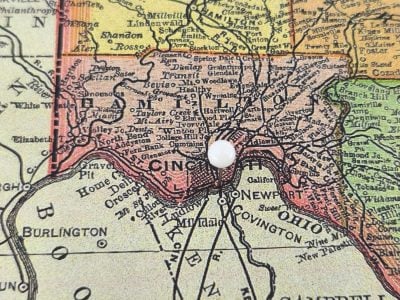
A 67-year-old retiree splits the year between Cincinnati and Naples, Florida. Her $0-premium Medicare Advantage plan looked like the obvious choice at 65. Two years in, she learned that the plan’s routine-care network did not travel with her. The Ohio doctors were in network. The Florida specialists she wanted to see were not.
Original Medicare and Medicare Advantage differ most sharply on geography. A retiree who rarely leaves one local provider network may never test that difference. A retiree who snowbirds, visits adult children in other states, travels often, or expects to move should treat the network map as one of the most important parts of the decision.
The Network Map Is the Product
Medicare Advantage plans are local private plans approved for defined service areas, often built around county-level markets and contracted provider networks. Step outside that network and the rules depend on the plan. HMOs generally cover routine care only from network providers, with exceptions for emergency care, urgent care, and out-of-area dialysis. PPOs may cover out-of-network care, but usually at higher cost and under a higher combined out-of-pocket ceiling.
Original Medicare works differently. You can use any doctor or hospital in the United States that accepts Medicare, without checking a private plan network first. In most cases, you do not need a referral to see a specialist. The card works the same in Naples as it does in Cincinnati.
What the Trade Actually Costs
Original Medicare paired with a Medigap Plan G supplement follows you anywhere Medicare is accepted and makes medical cost-sharing more predictable. The 2026 standard Part B premium is $202.90, up from $185.00 in 2025, and the Part B annual deductible is $283. Plan G covers Medicare-approved cost-sharing after that deductible, including the $1,736 Part A hospital deductible, $434 daily hospital coinsurance for days 61 through 90, and $217 daily skilled nursing facility coinsurance for days 21 through 100. Plan G premiums vary by age, state, insurer, and rating method.
A $0-premium Advantage plan can be cheaper in a healthy year spent inside the network. In a bad year, the math shifts. The 2026 in-network out-of-pocket maximum applies to covered Part A and Part B services and does not include Part D drug spending. For PPOs, covered out-of-network care can count toward a higher combined ceiling. For HMOs, routine out-of-network care may not be covered at all. That is where snowbirds can get surprised.
The Switch Back Is the Real Trap
Enrollees often assume they can start with Advantage and move to Original Medicare later if their situation changes. Switching out of Advantage can be allowed during certain enrollment periods, including the fall Annual Election Period. The problem is Medigap. The main federal Medigap open enrollment window lasts six months and begins when you are 65 or older and enrolled in Part B. Once that window closes, insurers in most states can medically underwrite, charge more because of health history, or deny coverage.
Connecticut and New York offer continuous guaranteed issue for Medigap, while Massachusetts and Maine provide broader annual protections. Most states do not go that far. A 72-year-old who developed diabetes or had a cardiac event during her Advantage years may find that buying a supplement later is expensive or impossible. She can return to Original Medicare and face uncapped Part B cost-sharing, or stay on Advantage and work within the network.
What to Do
- Map your next ten years before you enroll. If you plan to travel, snowbird, or move to be near family, price Original Medicare with Plan G and Plan N before defaulting to a $0-premium Advantage plan.
- If you already carry Advantage and your life has changed, check your state’s Medigap rules before the next enrollment decision. Guaranteed-issue protections vary by state and by trigger event. A broker who represents multiple carriers, or a SHIP counselor, can help you understand what you can actually qualify for.
- Read your Advantage plan’s Evidence of Coverage for the exact service area, network rules, referral rules, and out-of-network cost-sharing. For an HMO, the key issue may not be the out-of-network maximum. It may be whether routine out-of-network care is covered at all.
Do Not Buy a Local Network for a National Life
A Medicare Advantage plan can work well for a retiree whose doctors, hospitals, and routines stay inside one service area. The risk grows when life stretches across states. Before choosing the lower premium, ask where you expect to receive care over the next decade and whether the plan’s network follows you there. For snowbirds, geography is not a side detail. It is the product.
Figures reflect 2026 Medicare plan year rules. Part A and Part B premium, deductible, hospital, and skilled nursing facility figures come from CMS’s 2026 Medicare Parts A & B Premiums and Deductibles fact sheet. Medicare Advantage out-of-pocket maximums and Part D exclusions come from KFF’s 2026 Medicare Advantage analysis. HMO, PPO, service-area, and Original Medicare provider-access rules come from Medicare.gov. Medigap guaranteed-issue protections come from Medicare.gov and KFF’s state Medigap review.
Contact [email protected] for any questions or corrections.
Drew Wood has edited or ghostwritten nine books and published more than 1,500 articles on investing, business, politics, travel, world cultures, wildlife, and earth science. He holds a doctorate and four master's degrees and has nearly 30 years of college teaching experience. His travels have taken him to 25 countries, including three years living in Ukraine.