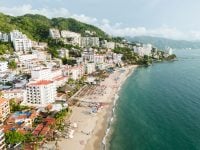
Sunset on $2,000 a Month: Why Retirees Are Choosing Ecuador at 60
A $2,000-a-month retirement in Ecuador is not a fantasy, but it is not a blank check either. It works best for someone who chooses the right city, keeps housing modest, has a plan for the two years before Social Security…

This post may contain links from our sponsors and affiliates, and Flywheel Publishing may receive compensation for actions taken through them.
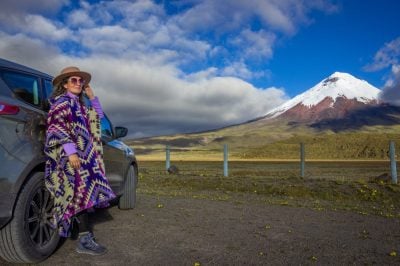
A $2,000-a-month retirement in Ecuador is not a fantasy, but it is not a blank check either. It works best for someone who chooses the right city, keeps housing modest, has a plan for the two years before Social Security begins, and understands that visa income rules and Medicare gaps can matter as much as rent. For a 60-year-old leaving a U.S. paycheck, the budget can work, but only if the numbers are built around those constraints from the start.
What $2,000 a month actually buys in Cuenca
Ecuador uses the U.S. dollar, which removes exchange-rate risk for Americans spending dollar-based retirement income. Many expat retirees choose Cuenca, an Andean city at roughly 8,300 feet with a mild climate that often ranges from cool nights in the mid-40s to daytime highs near the 60s or low 70s. That elevation matters: many households can avoid both air conditioning and heavy heating costs. Electricity bills can stay near $20 a month, cooking gas can run about $3, and internet often falls around $25 to $40.
A furnished two-bedroom in a desirable neighborhood can run $500 to $800 a month, though premium units and short-term leases can cost more. Groceries at local mercados may cost a couple $300 to $400; imported American brands at Supermaxi can add $100 to $150. A set lunch may be $3 to $5, while a higher-end dinner for two with wine can reach $60 to $80. Buses and taxis can keep transport near $30 to $80 a month.
A retired couple’s sample budget might look like this: housing $700, utilities and connectivity $125, food $450, transport $60, healthcare $200, and miscellaneous costs $450 for visa renewals, travel, home maintenance, and family flights. That totals $1,985 a month, or about $23,820 a year. A frugal single person may manage on $1,000 to $1,200, but that leaves less room for medical surprises, airfare, and rent increases.
The math that gets a 60-year-old there
At 60, Social Security is still at least two years away because retirement benefits can start no earlier than 62. The 2026 COLA was 2.8%, and the Social Security Administration estimated the average retired-worker benefit at $2,071 after that adjustment. A maximum earner claiming at 62 in 2026 can receive $2,969, but that is not a typical benefit. For planning, $1,700 a month is a reasonable placeholder only if the worker’s own Social Security estimate supports it.
Two phases matter. From 60 to 62, the portfolio funds the full budget, or about $48,000 over two years. From 62 onward, Social Security may cover most of the $1,985 monthly budget, with the portfolio filling the gap and covering lumpy costs such as airfare, medical bills, rent increases, and visa expenses. A $250,000 to $300,000 portfolio may work after Social Security begins, but a $325,000 to $400,000 starting portfolio is more realistic at 60 because it includes the two-year bridge, a cash cushion, and market-risk protection.
That is materially less than the seven-figure portfolio many U.S. early retirees would need to support similar spending at 60. But the tax claim should be handled carefully. U.S. citizens still face U.S. tax rules while living abroad, and Ecuador’s treatment of foreign-source income is not as simple as “Ecuador never taxes it.” The plan should not depend on a blanket assumption that Social Security, IRA distributions, or other U.S.-source retirement income will always be Ecuador-tax-free.
The two things most people miss
First, Ecuador’s retiree visa is tied to documented pension income. In 2026, Ecuador’s retiree visa requires at least $1,446 a month in documented pension-style income, plus $250 for each dependent. That threshold is based on three times Ecuador’s national minimum monthly salary, which is $482 in 2026. At 60, before Social Security begins, that usually means the applicant needs a qualifying private pension, a qualifying annuity, or a different visa path. This is where many early Ecuador plans stall: the applicant may have the portfolio, but not the documented recurring income Ecuadorian immigration requires.
Second, Medicare does not meaningfully follow you to Ecuador. Original Medicare generally does not cover care outside the U.S., except in limited situations, so a retiree living in Ecuador needs local coverage anyway. Ecuador’s public system, IESS, enrolls voluntary members at 17.6% of declared income, with the contribution base no lower than the unified basic salary. At the 2026 salary of $482, that minimum is $84.83 a month. Many expats add local private coverage or pay routine doctor visits out of pocket.
The catch sits on the US side. If you defer Medicare Part B while abroad and later move back without a qualifying Special Enrollment Period, the late-enrollment penalty is 10% for each full 12-month period you were eligible but not enrolled, and it usually lasts as long as you have Part B. Many people qualify for premium-free Part A at 65, but Part B is the bigger decision. Anyone with U.S.-based aging parents or a spouse’s medical history should price a return scenario with a lifetime Part B surcharge.
The number that actually makes it work
A 60-year-old landing in Cuenca on $2,000 a month needs three things: a $48,000 bridge to Social Security, a broader portfolio in the $325,000 to $400,000 range, and a documented income stream that clears the $1,446 monthly retiree-visa threshold. Add a healthcare plan that accounts for IESS, private coverage or out-of-pocket care, and the Medicare Part B decision at 65. Get those pieces right and the headline can hold. Miss one and the budget can break when the visa renews, markets fall, or a medical event forces a return to the U.S.
Contact [email protected] for any questions or corrections.
Drew Wood has edited or ghostwritten nine books and published more than 1,500 articles on investing, business, politics, travel, world cultures, wildlife, and earth science. He holds a doctorate and four master's degrees and has nearly 30 years of college teaching experience. His travels have taken him to 25 countries, including three years living in Ukraine.