Mexico or Florida: Which One Lets You Retire at 62 on $2,500 a Month?
A $2,500 monthly retirement can work in Mexico or Florida, but the two plans fail in different places. In Mexico, the daily budget can stretch further, but the residency math is harder than many articles admit. In Florida, the legal…

This post may contain links from our sponsors and affiliates, and Flywheel Publishing may receive compensation for actions taken through them.

A $2,500 monthly retirement can work in Mexico or Florida, but the two plans fail in different places. In Mexico, the daily budget can stretch further, but the residency math is harder than many articles admit. In Florida, the legal right to stay is not the problem; homeowners insurance, rent, healthcare before Medicare, and car-dependent living are. The question is not simply where $2,500 buys more. It is which version leaves enough margin after housing, healthcare, taxes, and residency rules.
Dollars Go Far in Mexico
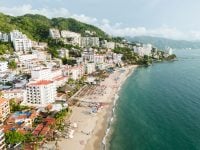
Use a recent exchange rate of about 17.5 pesos to $1 for Mexico costs in this article. At that rate, $2,500 converts to about 43,750 pesos. In a mid-tier expat city such as Mérida, Querétaro, or a non-prime part of Puerto Vallarta, a furnished one-bedroom may run roughly $685 to $1,030 a month. Groceries for one person can land near $340, and utilities with air conditioning, internet, and a phone plan may run about $170. That can leave roughly $900 to $1,300 for healthcare, transportation, restaurants, and reserves.
What Florida Actually Costs Now
Florida’s appeal is real. It ranks fifth in the 2026 State Tax Competitiveness Index and has no state income tax. MERIC’s first-quarter 2026 cost-of-living index put Florida at 100.7, barely above the national baseline. The problem is that the statewide average hides two line items that can break retiree budgets: housing and insurance. Even on a modest home, property taxes, HOA dues, and homeowners insurance can consume $900 to $1,200 a month before groceries, utilities, or a car.
Rent instead, and a decent one-bedroom outside Miami, Tampa, and Naples can still run $1,500 to $1,800. Add summer utilities, car costs, groceries, insurance, and a phone bill, and a $2,500 Florida budget is tight before healthcare. The point does not need a CPI index number: when rent, insurance, and utilities rise faster than a fixed budget, the margin disappears quickly.
The Pre-Medicare Bridge Nobody Prices Correctly
This is where the two scenarios diverge. Retiring at 62 means three years before Medicare. In Florida, a 62-year-old with about $30,000 of federal ACA modified adjusted gross income may qualify for substantial marketplace subsidies, but the premium depends on county, plan, tobacco status, household size, and the 2026 subsidy rules. The strategy works only if withdrawals keep MAGI in the right range. Large traditional IRA withdrawals, Roth conversions, dividends, interest, or capital gains can reduce subsidies or create repayment risk.
Mexico solves the bridge differently. Legal residents may be able to enroll voluntarily in IMSS, with age-banded annual premiums; one 2026 guide lists the cost for someone in their 60s at about 18,300 pesos, or roughly $1,050 at the exchange rate used here. Some retirees layer private or international coverage on top, while others pay cash for routine private care. The budget can still be lower than an unsubsidized U.S. plan, but eligibility, exclusions, waiting periods, and private coverage costs need to be checked before the move.
The Visa Math Most Articles Skip
Mexico’s temporary residency visa is the biggest problem with the simple $2,500 plan. Current consular financial requirements are much higher than many older articles show. Mexico’s Tucson consulate lists temporary-residency pension income above $4,393 a month, while 2026 residency guides commonly show temporary-residency income requirements around $4,200 to $4,800 a month depending on the consulate. Permanent residency is higher still, often around $7,300 to $8,000 a month by income.
That does not mean a $2,500 retiree cannot qualify, but the path may need to be savings-based rather than income-based. Some consulates allow temporary residency through investment or bank balances, commonly around the low-to-mid $70,000 range in 2026, depending on the post and calculation method. The retiree living on a modest Social Security check needs to confirm the consulate’s current rule before building the whole plan around Mexico. The day-to-day budget may work; the visa file may not.
The Number That Actually Makes This Work
Assume Social Security at 62 pays about $1,450 a month for a middle earner, reflecting the roughly 30% reduction that applies when full retirement age is 67. That leaves about $1,050 a month, or $12,600 a year, to cover from the portfolio. At a 3.5% withdrawal rate for a 30-plus-year retirement, that gap requires about $360,000. A portfolio built around broad index funds, a short Treasury or cash ladder, and one year of expenses in reserve gives the plan more staying power.
Mexico can make the $2,500 budget feel comfortable at that portfolio size, but only if the retiree qualifies for residency, prices healthcare honestly, and avoids assuming a tourist stay is the same as a retirement plan. Florida can also work, but usually only with a paid-off home, carefully managed ACA MAGI until 65, and enough room for homeowners insurance to keep rising. The scenario is real in both places. The monthly math is kinder south of the border; the residency math may not be.
Contact [email protected] for any questions or corrections.
Drew Wood has edited or ghostwritten nine books and published more than 1,500 articles on investing, business, politics, travel, world cultures, wildlife, and earth science. He holds a doctorate and four master's degrees and has nearly 30 years of college teaching experience. His travels have taken him to 25 countries, including three years living in Ukraine.