How One RMD Mistake Triggers a $690 Medicare Bill
Your RMDs could quietly trigger a Medicare surcharge that sends your monthly premiums soaring far beyond what most retirees expect. Here is what happens when a single retirement account withdrawal crosses the wrong income threshold.

This post may contain links from our sponsors and affiliates, and Flywheel Publishing may receive compensation for actions taken through them.

When you’re in the process of saving for retirement, it can be tempting to put your money into a traditional IRA or 401(k). These accounts give you a tax break on contributions, allowing you to legally shield income from the IRS.
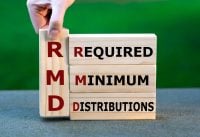
But traditional IRAs and 401(k)s come with consequences down the line. Once you’re retired, you’ll pay taxes on the money you withdraw from these accounts. And once you turn 73 or 75, depending on your year of birth, you’ll be forced to start taking required minimum distributions (RMDs).
But RMDs can do more than increase your tax bill. They can also make your Medicare premiums much more expensive than expected.
Beware this big RMD trap
The frustrating thing about RMDs is that they could force you into a larger tax bill — even if you don’t need the money you’re withdrawing. But it’s important to recognize that raising your taxable income substantially via RMDs could leave you paying a lot more for Medicare.
If your income climbs high enough, you could face surcharges on your Medicare premiums known as income-related monthly adjustment amounts, or IRMAAs. IRMAAs are based on your adjusted gross income (AGI) from two years prior. And they could make both Parts B and D more expensive.
In 2026, the standard monthly premium for Medicare Part B is $202.90. But thanks to IRMAAs, Medicare Part B premiums can reach as high as $689.90 per month for higher-income enrollees. And premiums that steep could deal your finances a major blow, even if you have a strong income.
Ways to avoid a big hit
The good news is that with careful planning, you may be able to avoid pushing yourself into the highest IRMAA tier. One of the most effective strategies for reducing your AGI is to do a qualified charitable distribution (QCD).
A QCD allows you to send money directly from your IRA to a qualified charity. The distribution can count toward satisfying your RMD, but the amount transferred generally isn’t included in your taxable income.
Another strategy is doing Roth conversions before RMDs begin. By converting a traditional retirement account to a Roth IRA over several years, you can reduce the size of your future RMDs or potentially eliminate them altogether, making it easier to stay below IRMAA thresholds in retirement.
However, Roth conversions require careful planning. The amount you convert is generally taxable in the year of the conversion. If you convert too much at once, you could actually increase your income enough to trigger an IRMAA surcharge for a future year. That’s why many retirees spread conversions over multiple years instead of making one large conversion all at once.
A little planning could help you avoid a much bigger Medicare bill
RMDs are unavoidable for many retirees. But the financial consequences don’t have to catch you by surprise. If you plan ahead, you may find that there are strategies you can use to avoid paying a massive amount of money for Medicare each month. And if you do get stuck paying IRMAAs and your income has decreased, you can look into filing an appeal.
Contact [email protected] for any questions or corrections.
Maurie Backman has more than a decade of experience writing about financial topics, including retirement, investing, Social Security, and real estate. Her work has appeared on sites that include The Motley Fool, USA Today, U.S. News & World Report, The Washington Post, and Kiplinger.
Prior to becoming a full-time financial writer, Maurie worked in the financial industry trading distressed debt. She then changed course and spent a few years designing electronic toys. After a stint in content marketing and UX, she shifted back into writing and has since covered everything from the housing market to estate planning to Medicare.
When she's not busy writing, Maurie can be found hiking, walking her dogs, driving her kids to their various sports practices and games, and curling up with a good book. She cooks on occasion and bakes way too often.