Your 401(k) Catch-Up Contribution Rule Already Changed in 2026. Here’s the Plan Detail High Earners Should Check
A rule buried inside SECURE 2.0 quietly took effect on January 1, and if you earned six figures last year and plan to make catch-up contributions, the way your employer routes that money could cost you more than you expect.

This post may contain links from our sponsors and affiliates, and Flywheel Publishing may receive compensation for actions taken through them.

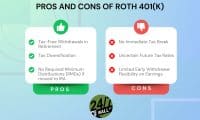
If you have a 401(k), turned 50 or older, and out-earned six figures last year, the rules on your catch-up contribution already changed. As of January 1, 2026, high earners can no longer drop that extra money into the plan pretax. It has to go into a Roth 401(k), which means after-tax dollars and no immediate deduction. Same contribution, different tax treatment, and most people who fall under the rule have no idea it took effect.
The Buried Rule Inside Your Plan
For 2026, if you are age 50 or older and earned more than $150,000 in 2025, any catch-up contribution above the standard employee limit has to be routed to a Roth 401(k). You still get to contribute the extra amount. You just lose the upfront tax break on it. A 55-year-old in the 24% bracket maxing the $8,000 catch-up would have shaved roughly $1,900 off their federal tax bill under the old rules. Under the new rules, that $8,000 is fully taxable income today.
Where the Rule Comes From
This is federal law. The mandate comes from the SECURE 2.0 Act, passed in 2022, with the Roth catch-up provision originally scheduled for 2024 and delayed to give employers and recordkeepers time to prepare. The IRS confirms it also applies to 403(b) plans offered by nonprofit employers and government 457(b) plans. It does not apply to IRAs.
Who the Rule Actually Hits
The threshold is measured by Box 3 of your 2025 W-2, the line showing wages subject to Social Security tax. That is a specific number. Earnings from a 1099 side gig or K-1 partnership income do not count toward the $150,000 test. The original statutory threshold was $145,000, and the amount is adjusted each year for inflation.
One quirk worth knowing: if you started with a new employer in 2026, you generally are not subject to the new rule this year, because that employer did not report W-2 income for you in 2025. If you earned under the threshold, you can still make catch-up contributions pretax through a traditional 401(k), or choose Roth if you prefer.
The 2026 Numbers to Anchor To
Here is what you can put in this year:
- Standard employee contribution cap: $24,500.
- Standard catch-up for age 50 and older: $8,000 over the cap, for a total of $32,500.
- “Super” catch-up for ages 60 to 63: up to $11,250 extra, for a total of $35,750.
- At age 64, the super catch-up ends and you revert to the standard $8,000 catch-up.
If you are over the wage threshold, every dollar of that catch-up money must land in the Roth bucket.
The Plan Detail to Check This Week
This is where high earners get tripped up. How the money actually gets to Roth depends entirely on how your employer administers the plan. Some plans automatically shift contributions above the standard catch-up amount into the Roth component. Others require you to affirmatively agree before directing the funds to a Roth. If yours is the second kind and you never signed the paperwork, your extra deferrals may be rejected or refunded mid-year.
Worse: if your employer does not offer a Roth 401(k) at all, workers earning more than the threshold cannot make any catch-up contributions to that job-based plan. Roth availability is now the gating factor. The good news is coverage is nearly universal. About 96% of 401(k) plans offered a Roth account in 2024, and the share is likely very close to 100% now.
The Catch
The tax bill. Under the old rules, catch-up dollars reduced your current taxable income. Under the new rules, they do not. A 62-year-old in the 24% bracket making the maximum $11,250 super catch-up contribution previously could have lowered their federal tax bill by roughly $2,700; that deduction is gone. The trade is future tax-free growth and no required distributions from the Roth 401(k) side, but the cash-flow hit lands in the current tax year. Call your plan administrator, confirm the routing rule, and make the election before your next payroll cycle if one is required.
Contact [email protected] for any questions or corrections.
I am a long time investor and student of business, and believe finding good companies that can become great investments is the best game on earth. After 20 years of writing and researching the public markets it is clear that individuals have never had more tools and information to take control of their financial lives. From ETFs and $0 commissions to cryptos and prediction markets there has never been a greater democratization of access to investing.
I write to help people understand the investments available to them so they can make the best choice for their portfolio, whether they're starting out or looking for income in retirement.