If You Earn $150,000+, Your 401(k) Catch-Up Contribution Now Has to Go Into a Roth
A quiet rule change took effect January 1st that redirects a chunk of high earners' retirement contributions without warning, and millions of workers above a certain income threshold may already be affected without realizing it.

This post may contain links from our sponsors and affiliates, and Flywheel Publishing may receive compensation for actions taken through them.
If you are 50 or older, still working and your 2025 wages topped $150,000, the extra money you drop into your 401(k) above the standard limit no longer lowers your tax bill. As of Jan. 1, 2026, that catch-up contribution has to go into the Roth side of your plan. Same dollars going in, very different tax treatment.
This is the SECURE 2.0 catch-up Roth mandate. It was enacted in 2022, originally scheduled for 2024 and delayed to give employers time to update their plans. It is live now, and payroll systems at most large employers have already been re-plumbed to route the money accordingly.
Who the Rule Actually Hits
Catch-up contributions exist because Congress assumed people in their 50s and 60s need to accelerate savings on the runway to retirement. The extra room sits on top of the regular elective deferral cap. For 2026, that regular cap is $24,500. The catch-up amounts stacked on top are $8,000 for workers age 50 to 59 and age 64 or older, and $11,250 for workers age 60 to 63. A 55-year-old worker who maxes everything out puts in a total of $32,500.
The Roth requirement applies to a narrower slice than the headlines suggest. You are affected only if your prior-year wages from the same employer exceeded $150,000. The original threshold was $145,000 and now adjusts annually for inflation, similar to how Social Security uses CPI-W to set its annual cost-of-living adjustment, currently tracking near 3% for 2027. For context on how selective the threshold is: median usual weekly earnings for full-time American workers ran $1,251 in the second quarter of 2026, well below an annualized $150,000.
One quirk worth knowing: if you started with a new employer in 2026, you are generally not subject to the rule this year because you had no W-2 income from that employer in 2025.
Tax Bill You Will Actually Feel
A traditional catch-up used to shave real dollars off your April return. The New York Times walked through two examples that make the change concrete. For a 55-year-old employee in the 24% tax bracket earning above the wage threshold, the maximum $8,000 catch-up would have reduced the federal tax bill by about $1,900 under the old rules. Under the new rules, that $8,000 is included in taxable income. For a 62-year-old in the same bracket making the maximum super catch-up of $11,250, the pretax version previously lowered federal income tax by about $2,700.
The payoff is on the back end. As Pamela Ladd of the American Institute of Certified Public Accountants put it, “You can let it grow and take it out tax-free” in retirement, provided you are at least 59½ and the funds have been in the account for at least five years. There is a second, quieter perk: since 2024, there has been no requirement to start taking money out of a Roth 401(k) after a certain age. That removes the RMD pressure that hits traditional balances at 73.
Plan-Level Trap Most Savers Miss
Here is the underreported piece. If your employer’s plan has no Roth option at all, workers earning above the threshold cannot make any catch-up contributions to their job-based plan. The regular $24,500 still works. The extra $8,000 or $11,250 simply disappears as a possibility.
Coverage is wide, but not universal. About 96% of 401(k) plans offered Roth accounts in 2024, and the Plan Sponsor Council of America expects the current figure is “very close to 100 percent”. If yours is in the shrinking minority, this is worth raising with HR now rather than in December.
Some employers automatically shift contributions above the standard limit into the Roth bucket. Others require workers to affirmatively agree before directing the funds to a Roth. If you have not signed anything and your plan uses the second approach, your catch-up may quietly not be happening.
What to Do This Week
- Check the Social Security wages box on your 2025 W-2: That is the figure the rule keys off, not your total household income and not your gross salary before pretax deductions. Side-gig earnings and partnership distributions do not count toward the $150,000 test.
- Confirm your plan offers a Roth 401(k) and that your catch-up is actually flowing there: If your employer requires an election, make it in writing. If the plan has no Roth option and you cleared the threshold, you have lost catch-up eligibility until that changes.
- Reset your withholding or estimated payments: The $1,900 or $2,700 you used to save in April is now owed. Adjust in September, not next March, so you are not writing a surprise check.
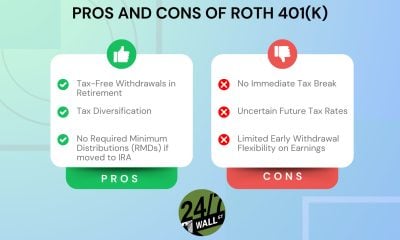
Frame this as a forced Roth conversion on a slice of your paycheck. You give up a deduction now in exchange for tax-free growth and no forced withdrawals later. For most high earners who expect meaningful retirement income from Social Security, a pension, or a taxable brokerage, the long-run trade is workable (the quiet years between your last paycheck and your first RMD are often the cheapest time to convert even more, which is the whole subject of our free Roth conversion guide). The mistake is not noticing it happened.
Contact [email protected] for any questions or corrections.
Joel South covers large-cap stocks, dividend investing, and major market trends, with a focus on earnings analysis, valuation, and turning complex data into actionable insights for investors.
He brings more than 15 years of experience as an investor and financial journalist, including 12 years at The Motley Fool, where he served as an investment analyst, Bureau Chief, and later led the Fool.com investing news desk. He has also co-hosted an investing podcast and appeared across TV and radio discussing market trends.