New for 2026: Earn Over $150,000 and Your 401(k) Catch-Up Money Now Goes In as Roth, Whether You Like It or Not.
A quiet rule change that took effect January 1 is reshaping how older, higher-earning workers handle one of their most powerful retirement savings tools, and many have no idea it already applies to them.

This post may contain links from our sponsors and affiliates, and Flywheel Publishing may receive compensation for actions taken through them.

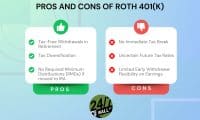
The rule took effect on January 1, and it changes how a specific slice of American workers save for retirement. If you are 50 or older and earned more than $150,000 in Social Security wages in 2025, any catch-up contribution you make to a 401(k) this year has to go into a Roth account. The pretax option that older, higher-income savers have relied on for years is no longer available to this group.
The threshold in the underlying law was originally set at $145,000, but it is adjusted annually for inflation, which is why the 2026 figure is $150,000. The number that matters is Box 3 on your 2025 W-2, which reports earnings subject to Social Security tax. Self-employment income on a 1099, or partnership income on a K-1, does not count toward the threshold, according to tax specialists cited by The New York Times.
What the Numbers Look Like in 2026
The standard employee deferral limit for a 401(k) this year is $24,500. Workers 50 and older can add a catch-up contribution of $8,000, for a total of $32,500. A separate “super” catch-up applies to workers aged 60 to 63, who can add $11,250 instead, bringing their total to $35,750. At age 64, the standard catch-up amount returns.
The mechanical impact of the Roth requirement shows up on the paycheck. Under the prior rules, a 55-year-old in the 24% federal bracket who maxed the catch-up would have reduced their federal tax bill by roughly $1,900. Starting this year, that amount stays in taxable income. For a 62-year-old in the same bracket using the super catch-up, the lost upfront deduction is closer to $2,700, based on figures from the National Association of Tax Professionals.
How the $150,000 Threshold Compares to Typical Earnings
The threshold captures a small share of workers. Median usual weekly earnings for full-time wage and salary workers were $1,251 in the second quarter of 2026. Average hourly earnings across the private sector were $37.62 in July 2026. Per capita disposable personal income sat at $68,958 in the second quarter, according to Bureau of Economic Analysis data. A $150,000 W-2 sits well above these benchmarks, but it is a threshold many dual-earner households, mid-career professionals, and senior individual contributors cross.
Context on household cash flow matters here because the Roth switch reduces take-home pay in the year contributions are made. The personal savings rate fell to 2.8% in the second quarter of 2026, down from 6.2% in the first quarter of 2024. Savers who used the pretax catch-up as a late-career tax-management tool will feel the change more sharply than those who were already contributing to Roth accounts.
Plan Mechanics and What to Check
The rule applies to 401(k), 403(b), and government 457(b) plans, and does not apply to IRAs, according to the IRS. If a plan does not offer a Roth option, catch-up contributions cannot be made at all for affected workers under the SECURE 2.0 framework. Plans offering Roth have expanded steadily. Vanguard reports that 86% of plans in its recordkeeping universe offered Roth contributions, up from 74% five years earlier, though participant use of Roth remains lower, at 18%, among those with access.
Contact [email protected] for any questions or corrections.
David Beren has been a Flywheel Publishing contributor since 2022. Writing for 24/7 Wall St. since 2023, David loves to write about topics of all shapes and sizes. As a technology expert, David focuses heavily on consumer electronics brands, automobiles, and general technology. He has previously written for LifeWire, formerly About.com. As a part-time freelance writer, David’s “day job” has been working on and leading social media for multiple Fortune 100 brands. David loves the flexibility of this field and its ability to reach customers exactly where they like to spend their time. Additionally, David previously published his own blog, TmoNews.com, which reached 3 million readers in its first year. In addition to freelance and social media work, David loves to spend time with his family and children and relive the glory days of video game consoles by playing any retro game console he can get his hands on.