Dave Ramsey Tells 25-Year-Old With $150k Savings: Pay Off $207k Debt Before Honeymoon
Twelve days before his wedding, a 25-year-old self-employed caller named Joe phoned The Ramsey Show with a question most people his age never get to ask: “I have about $150,000 in my just a savings account, personal savings things. I…

This post may contain links from our sponsors and affiliates, and Flywheel Publishing may receive compensation for actions taken through them.

Twelve days before his wedding, a 25-year-old self-employed caller named Joe phoned The Ramsey Show with a question most people his age never get to ask: “I have about $150,000 in my just a savings account, personal savings things. I think I know the answer to this, but should I write a check for $17,500 today and just pay everything off?”
Dave Ramsey did not hesitate. “Write a check for $17,500 today and just pay everything off. And then write another huge check once you guys are back from the honeymoon and clear a bunch of these debts.”
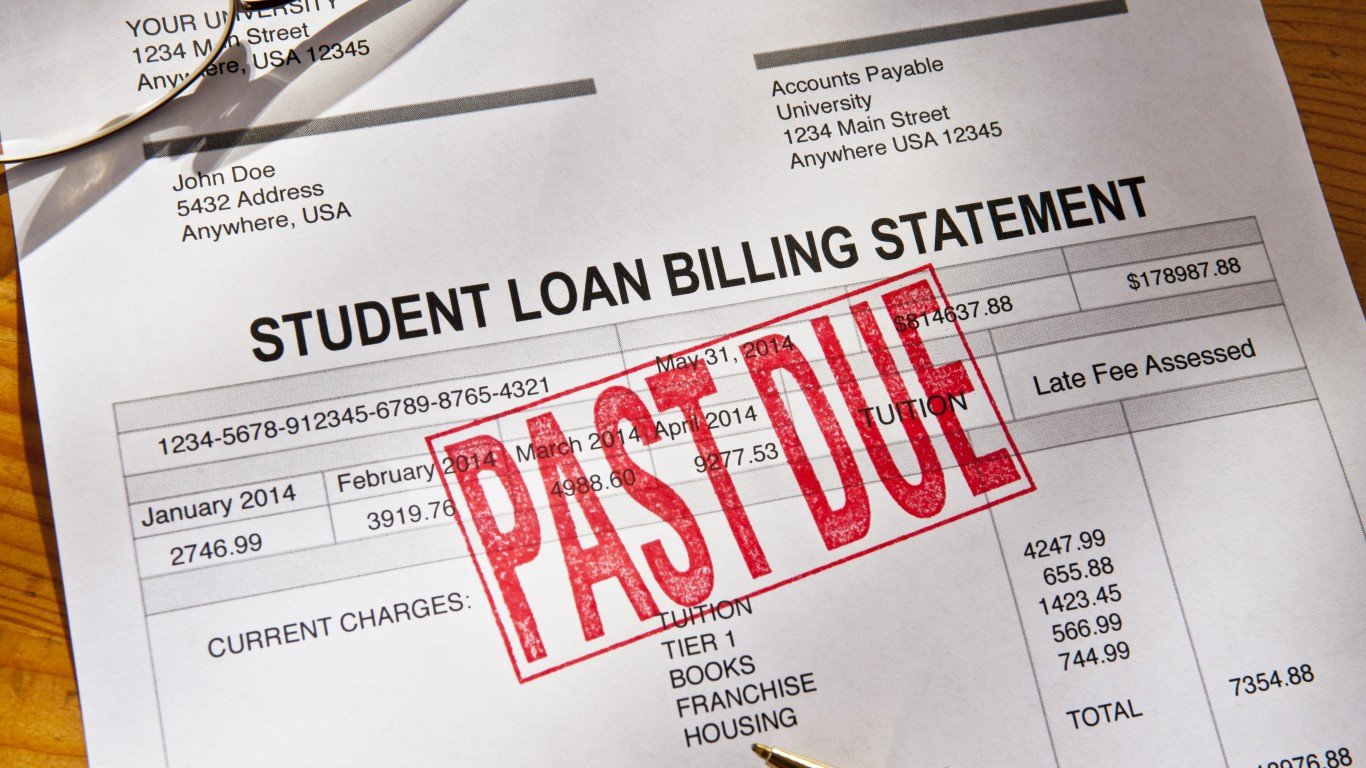
The stakes are real. Joe earns $181,000 a year. His fiancée is finishing chiropractic school with an expected $100,000 salary and $190,000 in student loans. Combined household debt at the altar: $207,500. Drain the savings and they enter marriage near zero liquidity but almost entirely debt-free. Keep the cash and they carry six-figure loans into a rate environment where borrowing has not been cheap for years.
The verdict: Ramsey is right, and the math is not close
The consumer debt decision is the easy one. Any unsecured balance sits well above the federal funds rate, which the Fed has held at a target range of 3.50% to 3.75%. Credit card APRs, by contrast, typically run in the low-to-mid 20s. Holding $17,500 of card debt against a savings account yielding roughly 4% is a guaranteed monthly loss. Write the check.
The bigger question is the $190,000 in student loans. Ramsey’s framing is the one to anchor on: “If you use that, now you’re down to $74,000 left to pay off, making $281,000, and now we’re done in a year.” A household earning $281,000 gross, with no consumer debt and a clear runway, can realistically eliminate $74,000 in twelve months without any dramatic sacrifice.
If they park the cash earning 4% in a high-yield account while the student loans carry a blended 7%, the spread costs them roughly 3% on the balance each year. On $190,000, that is a meaningful amount of money flowing the wrong direction, and it compounds the longer they delay. The 10-year Treasury yield has held around 4.55%, reflecting sustained pressure on long-term borrowing costs. Carrying debt is expensive by any modern historical comparison.
Inflation sharpens the argument further. The core PCE price index, the Fed’s preferred inflation gauge, pushed to a 12-month rate of 3.2% in March 2026, while headline PCE reached 3.5% year over year. Cash sitting idle loses real purchasing power at that pace, while every dollar applied to debt holds its full face value.
The variable that flips the answer
The one factor that determines whether Ramsey’s plan is brilliant or reckless is the interest rate on those student loans.
If the chiropractic loans are federal Grad PLUS at 7% to 9%, the most common scenario for health-professional graduate debt, every savings dollar thrown at them earns a risk-free return equal to the rate. On a $190,000 balance at 8%, that is roughly $15,000 a year in avoided interest. Paying aggressively is the highest-return move available.
If a meaningful portion is subsidized at 4% to 5%, the math tightens considerably. At a 4.5% loan rate against a 4% savings yield, the spread narrows to half a percent. In that case, holding a six-month emergency fund of $30,000 to $40,000 before attacking the loan balance is the better sequence. Joe is self-employed, which means no salary continuation if a client contract disappears. Liquidity has real value that he cannot zero out entirely.
The lifestyle trap Ramsey called out
The warning at the end of the call deserves a close read. “The biggest temptation after you get married and you’re making $281,000 at 25 is to look like you make $281,000.”
The national savings rate has been sliding in 2026, falling from 4.5% in January to 3.9% in February and then to 3.6% in March. By May, the household saving rate had settled at just 3%. Meanwhile, the University of Michigan Consumer Sentiment Index came in at a preliminary 54.4 for July 2026, still sitting at just the 2nd percentile of the series’ entire history despite back-to-back monthly gains. The households feeling most squeezed right now are often higher earners whose spending quietly scaled alongside their income. A new SUV, a stretched housing budget, and a premium vacation tab can absorb $281,000 with surprising efficiency.
What to do this week
- Pull every loan statement and write down the exact interest rate on each balance. Sort highest to lowest.
- Pay off any debt above 6% immediately from savings, keeping a liquidity floor of three to six months of combined fixed expenses, particularly given Joe’s self-employed income.
- Set a written household spending cap before the wedding, not after. Cars, housing, and recurring subscriptions are where lifestyle creep hides.
- Direct the entire income gap, the difference between $281,000 gross and the capped lifestyle budget, to the remaining loan balance until it reaches zero.
Ramsey’s answer was blunt because the situation rewards bluntness. Two incomes, one balance sheet, and a twelve-month window to start married life owing nothing is the kind of setup most couples never see. The math is clear. Use it.
Editor’s note: This article updates the federal funds rate from “about 4%” to the current target range of 3.50% to 3.75%, corrects the consumer sentiment reading from 53.3 to the preliminary July 2026 figure of 54.4, and adds context on the national savings rate having slipped further to 3% in May 2026 and on the 10-year Treasury yield holding around 4.55%.
Contact [email protected] for any questions or corrections.
Don Lair writes about options income, dividend strategy, and the kind of boring-but-durable investing that actually funds retirement. He's the founder of FITools.com, an independent contributor to 24/7 Wall St., and a former writer for The Motley Fool.