The Triple-Tax HSA Strategy Doctors Max Before Their 401(k) in 2026
Most physicians know the 401(k) gets first priority, but the partners closest to retirement quietly route money somewhere else first, and the reason comes down to a tax shelter the federal code has never offered anywhere else.

This post may contain links from our sponsors and affiliates, and Flywheel Publishing may receive compensation for actions taken through them.
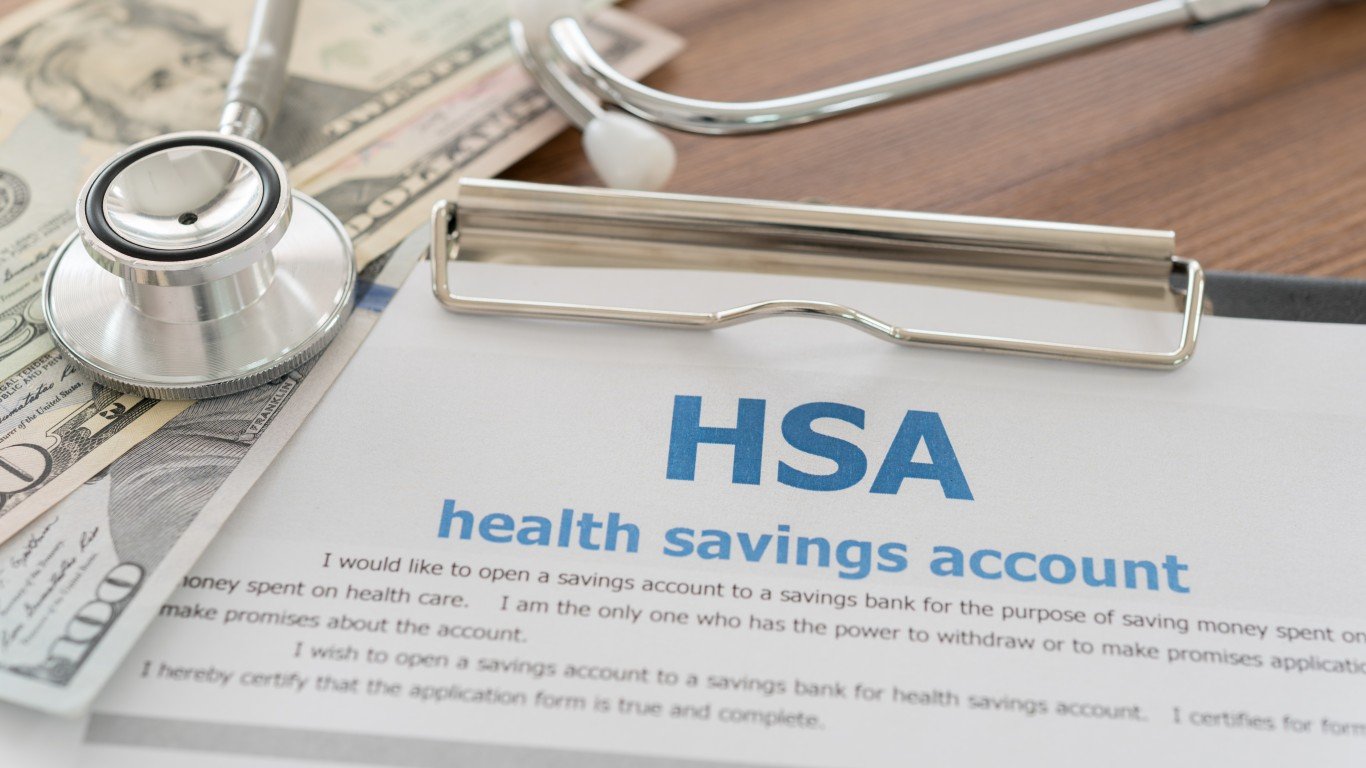
Walk into any physician lounge and you’ll hear the same advice from the partners closing in on 60: fund the match in your 401(k), then send the next dollar to your Health Savings Account before you finish the deferral. The HSA is the only account in the federal code that escapes tax three separate times, and the people who do tax math for a living treat it accordingly.
Consider a 58-year-old anesthesiologist with $1.7 million in her 401(k), a family high-deductible health plan, and a spouse who covers most of the household’s routine medical bills out of cash flow. In 2026 she can put $8,750 into the family HSA, plus a $1,000 catch-up because she’s over 55. Her spouse, also 55, can open a second HSA and add another catch-up of his own — roughly $10,750 the IRS will never see, this year or any year after, if the money is eventually spent on qualified medical care.
What the “triple-tax-free” label actually buys you
The contribution comes off federal taxable income and skips FICA when it goes in through payroll. The balance grows tax-free inside the account. Withdrawals for qualified medical expenses come out tax-free at any age. A 401(k), by comparison, only delivers the first leg of that benefit. A Roth IRA only delivers the last two. The HSA is the only retirement vehicle that delivers all three.
For a household in the 22% bracket, the deduction alone is worth more than $2,000 against the federal bill, before any state savings. For a physician household pushed into the 32% bracket above $403,550 married filing jointly, the same contribution is worth closer to $3,400 in the year it’s made. The growth then compounds untaxed for decades.
The mistake most plans won’t flag
Roughly 90% of HSA dollars sit in cash earning a money-market yield while the 10-year Treasury hovers around 4.48%. That is the entire game in miniature. An HSA used as a checking account for copays is a mediocre tax shelter. An HSA invested in a broad equity index for 20 or 30 years, with current medical bills paid from a taxable account, becomes the most tax-efficient retirement asset on the balance sheet.
The mechanic that unlocks it is the receipt shoebox. The IRS does not require you to reimburse a qualified medical expense in the year it occurs. If you pay $40,000 in out-of-pocket medical costs between 55 and 65 from cash, and you keep the receipts, you can reimburse yourself tax-free from the HSA at 72, 80, or whenever you want the money. The account grows untouched in the meantime.
Why this matters more after 65
At 65 the 20% penalty for non-medical withdrawals disappears. From that point an HSA functions like a traditional IRA for anything non-medical, and like a Roth for anything medical, which now includes Medicare Part B, Part D, and Medicare Advantage premiums. Medigap is the one exclusion.
That distinction matters because HSA distributions for qualified medical care do not count toward modified adjusted gross income. They do not push you over the IRMAA thresholds that lift Medicare premiums by hundreds of dollars per month per spouse. A 401(k) withdrawal does. For a couple in their early 70s trying to keep MAGI under the first IRMAA tier, paying Medicare premiums and out-of-pocket care from the HSA instead of the 401(k) can be the difference between the standard Part B premium and a surcharge that runs for the full calendar year.
What to do this week
- Confirm your health plan qualifies as a high-deductible plan under the 2026 rules (deductible of at least $2,900 self-only or $5,850 family), then set payroll to hit the $4,400 or $8,750 cap plus the $1,000 catch-up if you’re 55 or older.
- Move the HSA balance out of cash and into a diversified equity fund inside the account. Pay current medical bills from your checking account and file the receipts. This is the single change that turns the HSA from a spending account into a retirement asset.
- If your W-2 wages topped $150,000 in 2025, your 401(k) catch-up now has to go to the Roth side under SECURE 2.0. Fund the HSA before you re-engineer that contribution. The HSA’s triple shield beats the Roth catch-up’s double shield in every bracket above 22%.
Contact [email protected] for any questions or corrections.
Marc Guberti is a personal finance writer who has written for US News & World Report, Business Insider, Newsweek and other publications. He also hosts the Breakthrough Success Podcast which teaches listeners how to use content marketing to grow their businesses.