Health Savings Account Strategy: How to Turn Your 401(k) Into a Tax-Free Retirement Machine
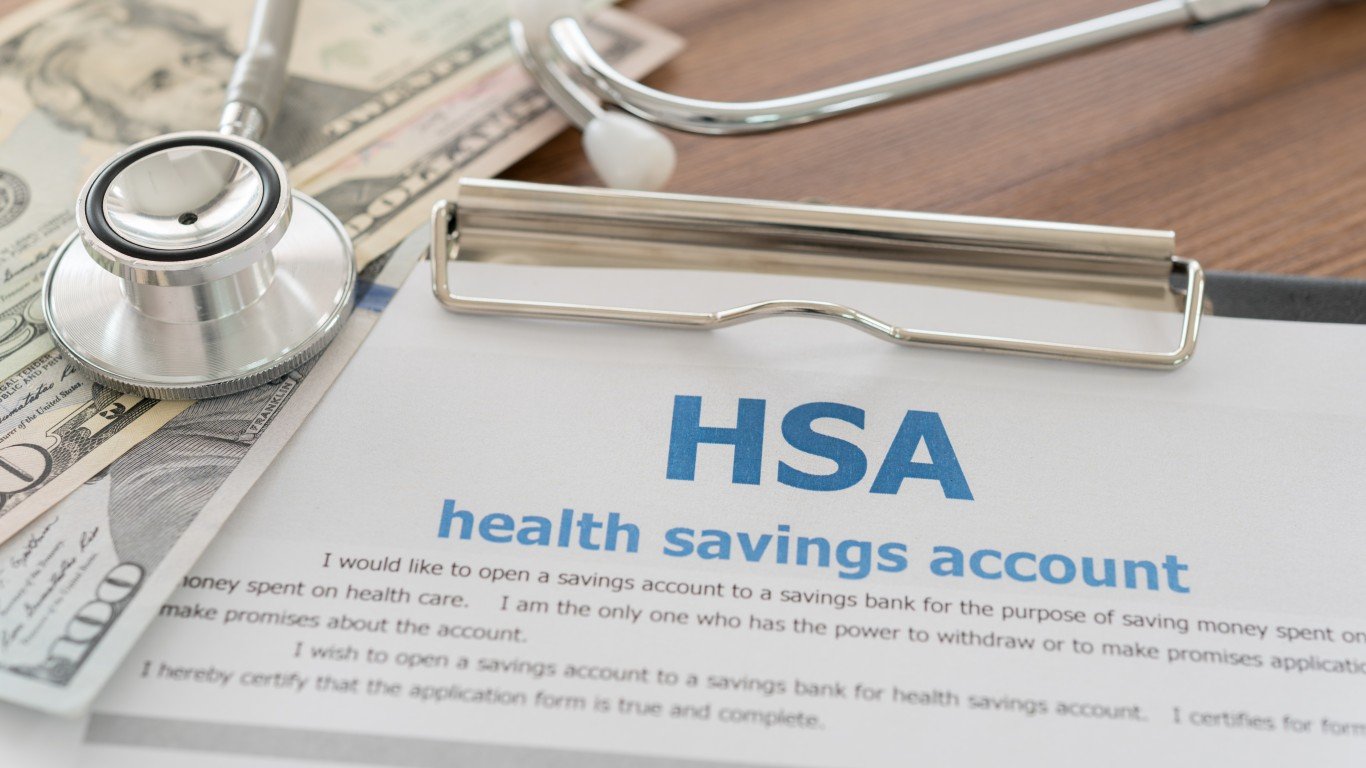
Most workers eligible for a Health Savings Account treat it like a medical checking account, and that single habit could cost them hundreds of thousands of dollars in avoidable taxes during retirement.

This post may contain links from our sponsors and affiliates, and Flywheel Publishing may receive compensation for actions taken through them.

Most 401(k) savers in their late 50s have a blind spot on their open enrollment form. The Health Savings Account paired with a high-deductible health plan is the only triple-tax-advantaged container the IRS offers, yet most eligible workers fund it as a checking account for copays instead of treating it as a retirement vehicle.
Picture a reader at 58 with $1.3 million in a 401(k) and $180,000 in a Roth IRA. She funds her HSA every year and spends it down by December. She should be doing the opposite: funding it, investing it, and earmarking it for healthcare in her 70s.
Why the $410,000 Number Matters
Fidelity’s most recent retiree health care estimate puts medical costs for a 65-year-old couple at roughly $345,000 after tax, with individuals at $172,500. Layer in long-term care, dental, and the IRMAA premium surcharges a heavy 401(k) drawdown can trigger, and the planning figure for a couple climbs to about $410,000 over a 25-year retirement. That is the bill the HSA was built to pay.
The container is generous in 2026. Self-only coverage allows $4,400. Family coverage allows $8,750. Workers 55 and older add a $1,000 catch-up. A married couple where both spouses are 55-plus, each holding a separate HSA, can park $10,750 a year into the strategy, every dollar federally deductible and free from Social Security and Medicare payroll tax when funded through payroll.
The Tax Math the 401(k) Cannot Match
A traditional 401(k) offers a deduction now and a tax bill later. A Roth offers the reverse. The HSA does both: contributions reduce taxable income, growth compounds tax-free, and qualified medical withdrawals are never taxed at any age. That structural edge gets sharpest at Medicare enrollment, when three rules kick in:
- Qualified medical withdrawals stay fully tax-free. Medicare Part B and D premiums, dental, vision, hearing aids, and long-term care insurance premiums all qualify. A retiree pulling $15,000 a year from the HSA for these costs reports zero of it on the 1040.
- Non-medical withdrawals work like a traditional IRA. The 20% early-withdrawal penalty disappears at 65, so money pulled for other needs is taxed as ordinary income. One critical edge: HSAs carry no required minimum distributions, ever.
- The receipt buffer becomes usable cash. Any qualified medical expense paid out of pocket in prior years can be reimbursed tax-free decades later as long as the receipt is saved. A couple who paid $40,000 of medical bills out of pocket through their 50s and 60s holds a $40,000 tax-free withdrawal coupon for any future year.
Where the Tax Cascade Gets Defused
This is the piece 401(k)-heavy households miss. Every dollar pulled from a traditional 401(k) counts as modified adjusted gross income for IRMAA. Cross the first threshold and Medicare Part B and D premiums jump by roughly $75 per person per month. Cross the top tier and the per-person surcharge approaches $440 a month. HSA medical reimbursements do not appear in MAGI at all.
A couple covering $20,000 of annual healthcare from their HSA can hold their 401(k) draw $20,000 lower. That is often the exact gap between staying under an IRMAA bracket and triggering one. The same arithmetic suppresses the Social Security tax cascade. Provisional income above $34,000 single or $44,000 joint makes up to 85% of benefits taxable, and HSA reimbursements never feed that calculation. For a household already pushing the personal savings rate ceiling, this is meaningful: the national savings rate has slid to 3.7% in the first quarter of 2026.
What to Do Before Open Enrollment Closes
- Switch to the HDHP if your typical year of medical spend is below the deductible. For healthy savers in their 50s, premium savings plus the HSA deduction beats the lower-deductible plan by roughly $2,000 to $5,000 a year before any investment growth.
- Max the HSA and invest the balance. Most custodians sweep dollars above a $1,000 to $2,000 cash floor into index funds. Pay current medical bills from cash flow so the account compounds for 10 to 20 years before you touch it.
- Build the receipt file now. Scan every qualifying receipt into a folder labeled by year. Those receipts become tax-free withdrawal coupons in your 70s, when 401(k) RMDs would otherwise push income into an IRMAA bracket.
The 401(k) is still the workhorse of retirement saving. The HSA is the lever that keeps the workhorse from kicking back at tax time.
Contact [email protected] for any questions or corrections.
Marc Guberti is a personal finance writer who has written for US News & World Report, Business Insider, Newsweek and other publications. He also hosts the Breakthrough Success Podcast which teaches listeners how to use content marketing to grow their businesses.