Retired Air Traffic Controller With a $71,000 Pension Slammed by Three Layers of Tax
Mandatory retirement at 56 sounds like a gift, but one former air traffic controller collecting a $71,000 pension discovered that three overlapping tax traps can quietly drain a comfortable retirement before a single TSP dollar is ever touched.

This post may contain links from our sponsors and affiliates, and Flywheel Publishing may receive compensation for actions taken through them.

Air traffic controllers face mandatory retirement at age 56. To most people, that sounds great. But the early retirement can come with some heavy tax burdens.
Consider a former air traffic controller who is two years into retirement at age 58. He collects a $71,000 Federal Employees Retirement System (FERS) pension, receives the FERS Special Retirement Supplement bridging him to age 62, and holds $1.3 million in a Thrift Savings Plan (TSP) he has not touched. On paper it looks comfortable, but three layers of tax are stacking on his income.
The entire $71,000 pension arrives as ordinary income from month one. That reshapes every other tax decision that follows, because a 58-year-old controller starts retirement already sitting inside the 22% federal bracket, which begins at $50,400 for single filers and $100,800 for joint filers in 2026. This is before a dollar of TSP or Social Security enters the picture.
Tax Layer One: The Pension
FERS pension income is fully taxable at ordinary rates. After the 2026 standard deduction of $32,200 for a married couple filing jointly, most of the $71,000 is taxed in the 12% bracket, but every additional dollar lands on top of it. That matters because three more income streams wait in the wings.
Tax Layer Two: The Supplement
The FERS Special Retirement Supplement uses its own earnings test, distinct from Social Security’s, and it kicks in the year after retirement. Once wages from work exceed the annual limit, the supplement is reduced by $1 for every $2 of excess earnings. Consulting income, part-time tower jobs, and simulator instructor gigs all count. A controller who takes a $40,000 consulting contract can watch a meaningful slice of the supplement disappear, then pay ordinary income tax on the consulting dollars that triggered the clawback. So it is possible to earn a raise and take home less.
Layer Three: The TSP
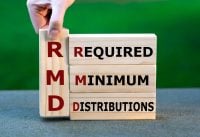
Leaving the $1.3 million TSP alone feels prudent, but it carries a hidden cost. Required minimum distributions begin at age 73, and by then the account could easily be worth well over $2 million. Those forced withdrawals will stack directly on top of the pension and full Social Security, likely pushing MAGI past the first IRMAA tier of $218,000 for joint filers in 2026. Crossing that line adds about $81 per month to Part B and about $15 per month to Part D, per spouse, on top of the roughly $203 standard Part B premium. TSP withholding rules make this worse: the plan applies mandatory federal withholding on distributions and offers less flexibility than an IRA rollover.
A Window That Never Reopens
Ages 58 to 62 are the strategic sweet spot. During this window, Social Security has not started, RMDs are 15 years away, and the household sits in the 12% or low 22% bracket. This is the moment to convert TSP dollars to a Roth IRA (after rolling out of the TSP, since the TSP’s Roth conversion mechanics are restrictive). We sized up the stretch between the last paycheck and the first required withdrawal in a free guide on the Roth window.
A conversion strategy that fills the 22% bracket each year, staying under the $218,000 IRMAA threshold, can move a large share of the TSP into a Roth before age 63, the two-year lookback year for Medicare premiums at 65. Once Social Security begins at 62 or later, the same conversion costs more because it drags more of the Social Security benefit into taxable territory. Once RMDs begin at 73, the conversion window closes. The retiree is forced to withdraw and cannot un-stack the income.
What to Evaluate First
- Check the supplement earnings test now. If consulting income triggers a clawback, either restructure the work below the annual limit or accept that the marginal after-tax value is far lower than it appears.
- Model a five-year Roth conversion ladder. Roll the TSP to an IRA to get conversion flexibility, then convert enough each year to fill the 22% bracket without crossing $218,000 MAGI.
- Avoid the common mistake of treating the untouched TSP as “safe.” Deferral compounds a future tax bill. Every year of growth without conversion enlarges the future RMD and the future IRMAA bill.
Multi-decade Roth conversion sequencing, coordinated with Social Security claiming age and IRMAA brackets, is a math problem that shouldn’t be solved on a napkin. Consider hiring a fee-only advisor to run the numbers across ages 58 through 75. The cost of getting the sequence wrong is measured in six figures of avoidable tax.
Contact [email protected] for any questions or corrections.
Carl Sullivan has been a Flywheel Publishing contributor since 2020, focusing mostly on personal finance, investing and technology. He started his journalism career covering mutual funds, banking and financial regulation in Washington.Carl is a contributing editor at Financial Advisor Magazine and previously served as managing editor at Financial Planning Magazine. He is a long-time manager of editorial teams covering a variety of topics including news, business and politics. He’s currently the North America Managing Editor for Flipboard and worked previously for Microsoft News and Newsweek.Carl loves exploring the world and lived in India for several years. Today, he resides in New York City’s Queens borough, where you can hear hundreds of different languages just by riding the subway.